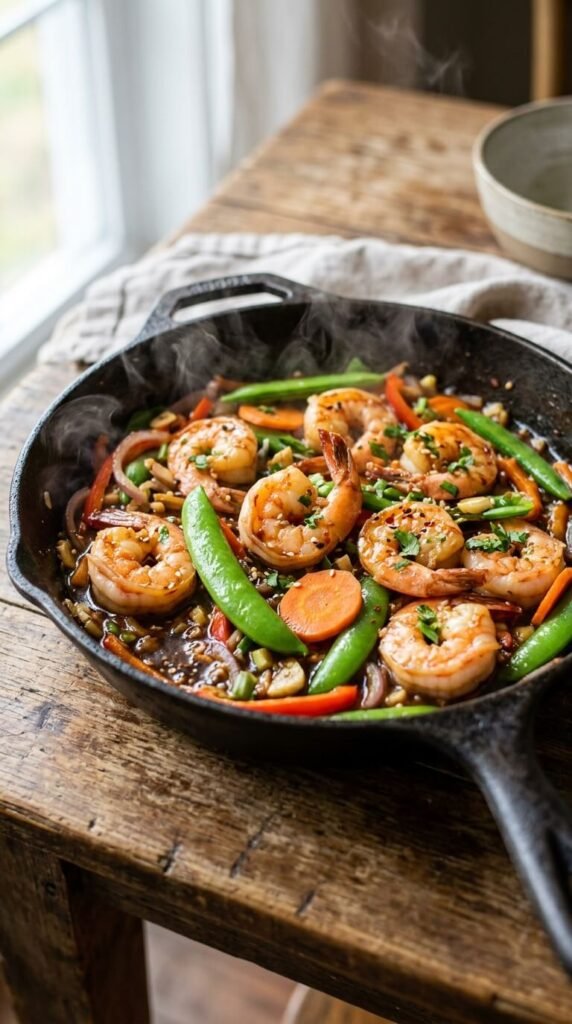
Shrimp stir fry with snap peas and carrots is one of the fastest dinners you can put on the table. It takes less than 20 minutes from cutting board to plate, and it works with pantry staples you already own. The shrimp cook quick, the snap peas stay crunchy, and the carrots add a pop of color that makes the dish look like it came from a restaurant. Whether you’re feeding a family on a tight budget or cooking a single-serving bowl for lunch, this style of stir fry bends to whatever you have on hand. Below are 24 ways to mix up flavors, swap ingredients, and turn a basic shrimp stir fry into a rotation of meals you’ll actually want to cook again. Each idea sticks to simple steps, affordable grocery swaps, and real kitchen shortcuts anyone can use tonight.
Classic Garlic Ginger Shrimp Stir Fry
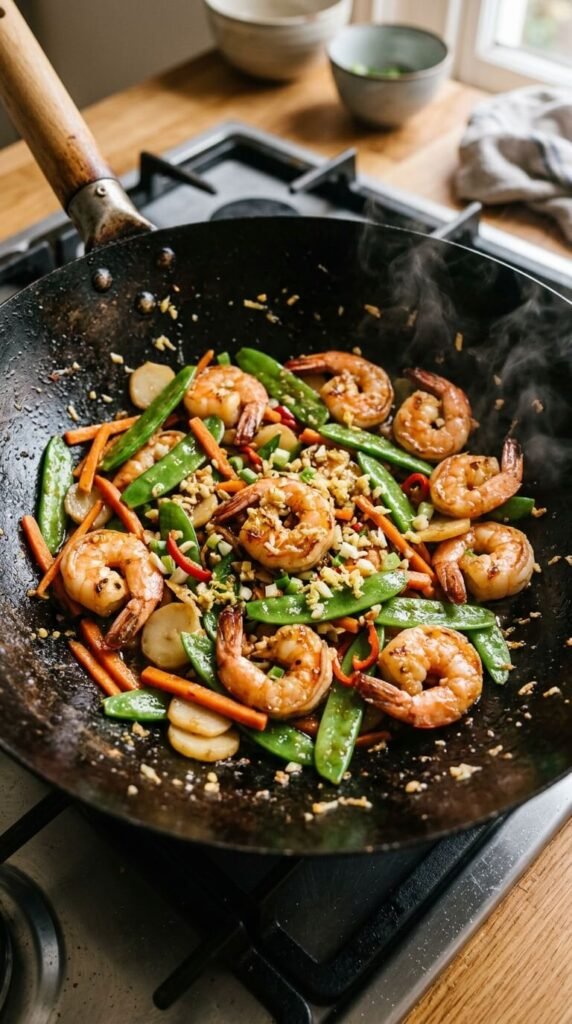
This is the stir fry everyone should learn first. Mince garlic and ginger fine so every bite gets coated. Heat oil until it shimmers, then toss in shrimp for two minutes. Add snap peas and carrot strips right after. Keep the pan moving so nothing burns. Pour in soy sauce and a small pinch of sugar. Cook until shrimp turn pink and curl up. This dish costs very little to make. Buy garlic and ginger in bulk at a local market to save money. Store leftovers in a sealed jar for later in the week. Serve it over rice for a full plate.
Sweet and Spicy Honey Sriracha Shrimp Stir Fry
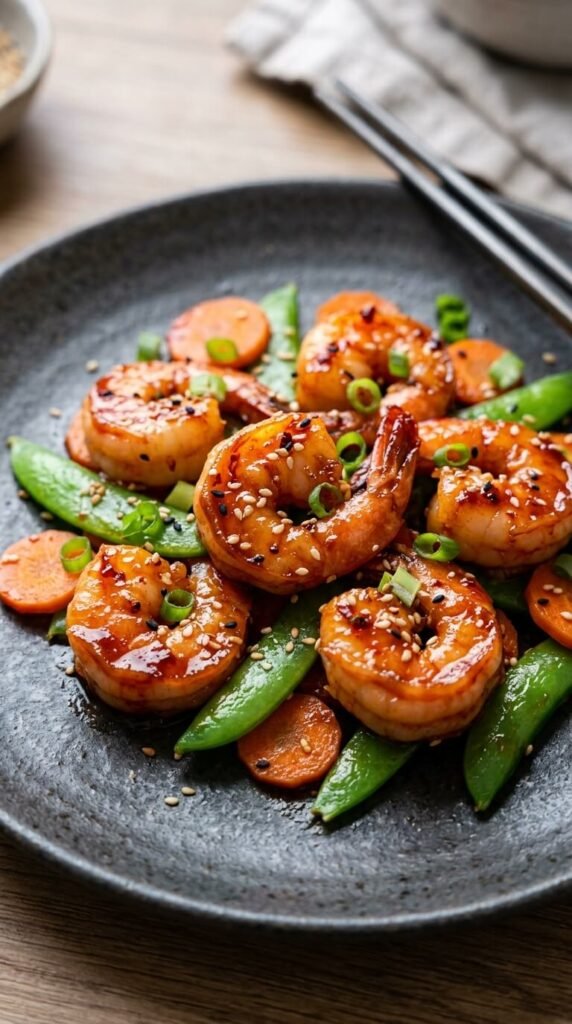
Sweet and spicy always wins at dinner. Mix honey and sriracha in a small bowl. Pour it over shrimp while the pan is hot. Let the sauce cook down until sticky. Toss in snap peas and carrot slices for the last two minutes. The heat softens the peas just enough. This dish costs less than takeout and tastes better. Buy honey in a large jar to use across many meals. Adjust the sriracha amount to match your spice comfort. Serve with rice to soak up the extra sauce. Kids tend to like this one more than plain soy sauce versions.
Sesame Soy Shrimp with Snap Peas
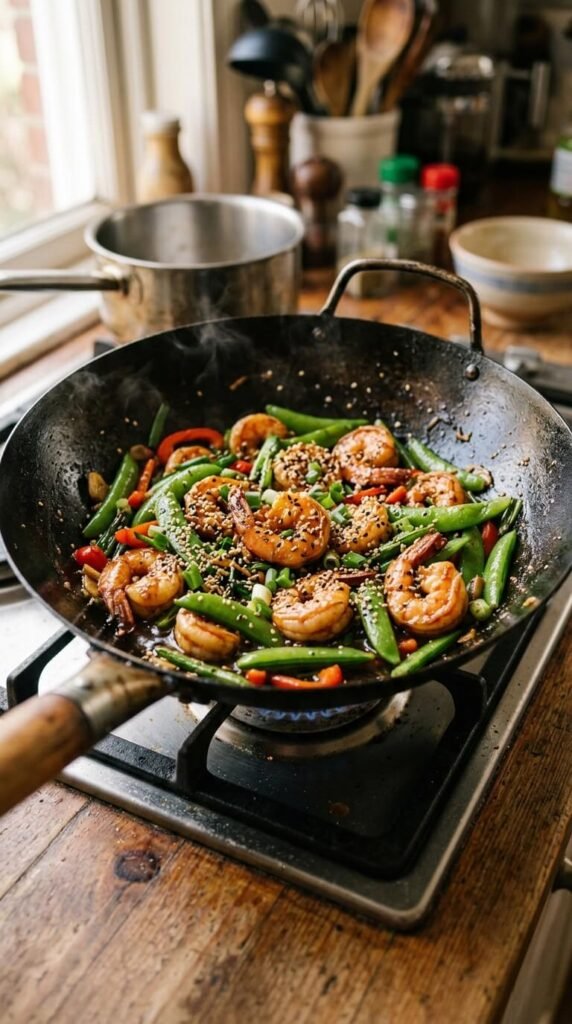
Sesame oil turns a plain shrimp stir fry into something special. Add a spoonful at the end of cooking, not the start. Heat makes sesame oil bitter, so save it for last. Toss shrimp with soy sauce and a little rice vinegar. Add snap peas for crunch and color. Sprinkle toasted sesame seeds on top before serving. This dish takes under 15 minutes start to finish. Buy sesame oil in a small bottle since a little goes a long way. Store it in a cool cabinet so it lasts months. Serve over steamed rice or cold noodles for variety.
Teriyaki Shrimp and Carrot Stir Fry
Teriyaki sauce makes this dish taste like a restaurant order. Mix soy sauce, brown sugar, and a little garlic in a pan. Simmer until it thickens into a glaze. Add cooked shrimp and toss until coated. Throw in carrot coins and snap peas for the last few minutes. The sauce sticks to every piece. Make a bigger batch of teriyaki sauce and store it in the fridge for later meals. It keeps for about two weeks in a sealed jar. Serve over rice or roasted vegetables. This swap saves money compared to buying bottled teriyaki sauce every time.
Lemon Garlic Butter Shrimp Stir Fry
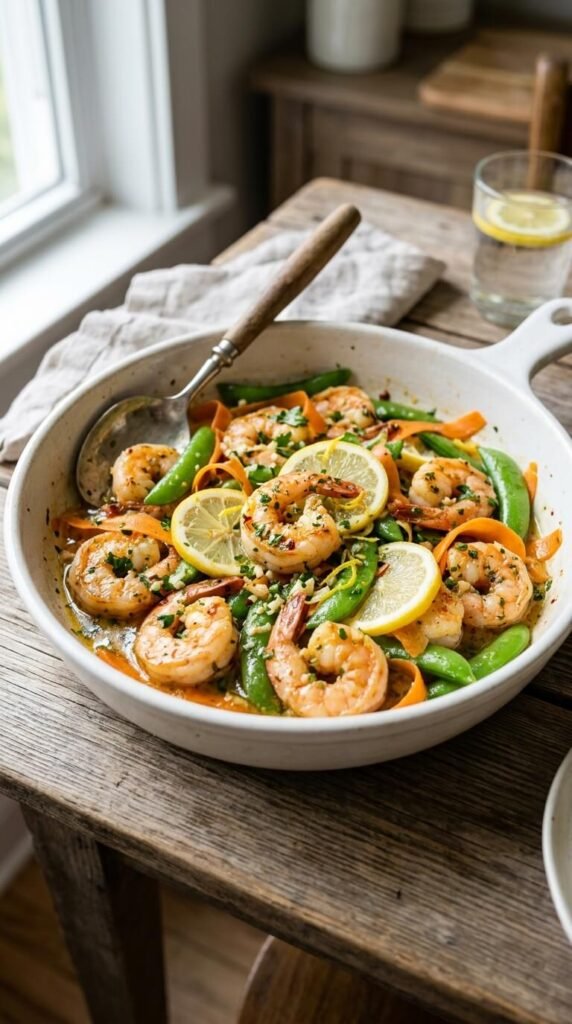
Butter and lemon make shrimp taste rich without much work. Melt butter in a pan with minced garlic. Add shrimp and cook until pink. Squeeze lemon juice over the top right before serving. Toss in snap peas and carrot strips for color and crunch. The acid from lemon cuts through the butter nicely. This dish uses only a few ingredients most kitchens already have. Buy a bag of lemons instead of bottled juice to save money over time. Zest the peel before juicing for extra flavor. Serve with crusty bread to catch the buttery sauce.
Coconut Curry Shrimp with Snap Peas
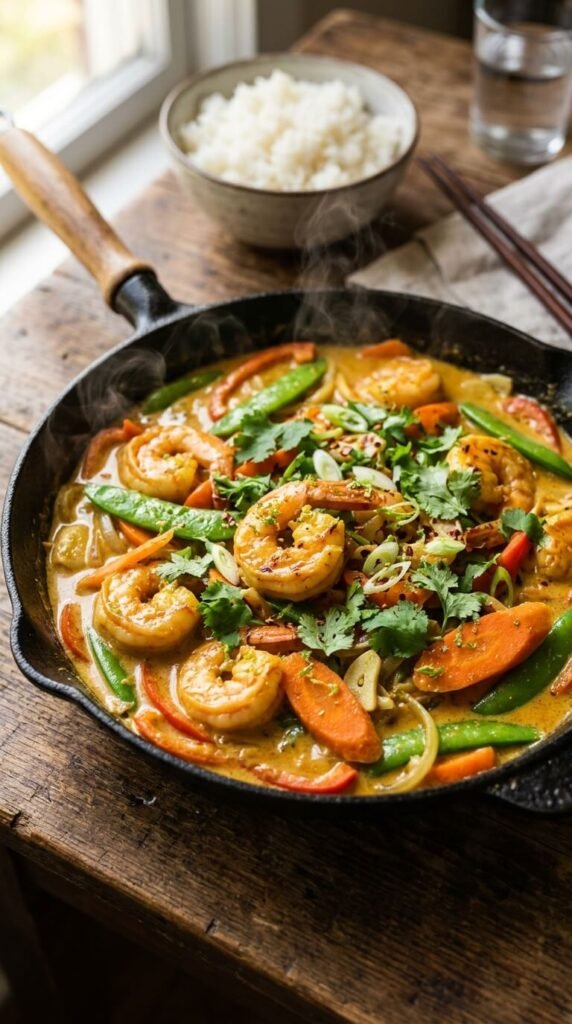
Coconut milk turns a plain stir fry into a warm curry bowl. Heat curry paste in a pan until it smells strong. Pour in coconut milk and let it simmer. Add shrimp and cook until pink. Toss in snap peas and carrot slices near the end. The sauce coats everything in a creamy layer. Buy canned coconut milk since it costs less than the carton kind. Store leftover coconut milk in a sealed container for another dish later in the week. Serve over rice to catch every drop of sauce. This dish works well for meal prep too.
Orange Zest Shrimp Stir Fry
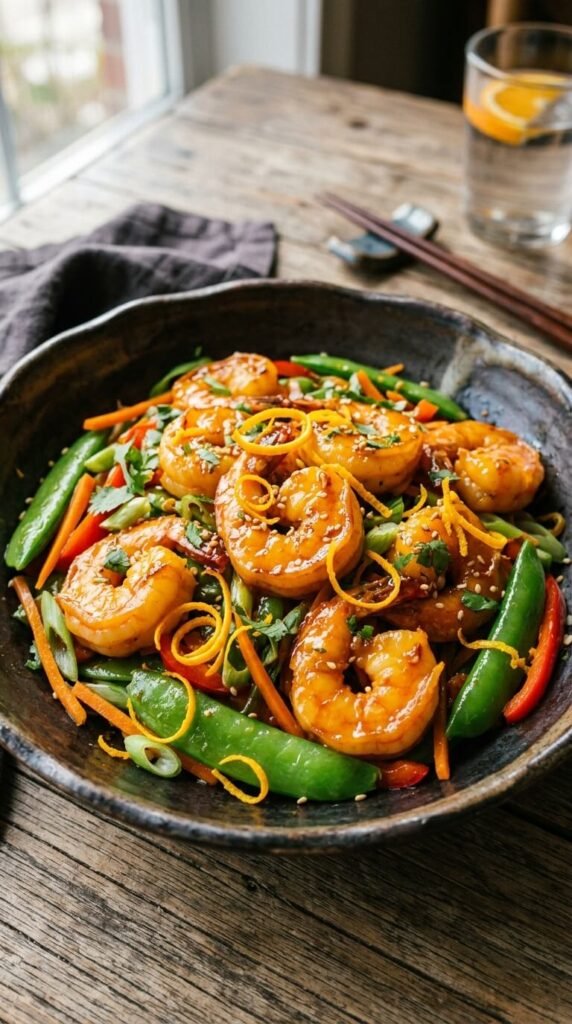
Orange zest adds a bright citrus note without extra sugar. Grate the peel of one orange before juicing it. Mix the juice with soy sauce and a little cornstarch. Pour the sauce over cooked shrimp and let it thicken. Add snap peas and carrot strips for crunch. Stir until everything is coated in the glaze. This dish costs less than most citrus-based takeout orders. Buy oranges when they go on sale and freeze extra zest in small bags. Use frozen zest straight from the freezer next time you cook. Serve with steamed rice for a full plate.
Black Pepper Shrimp and Carrot Stir Fry
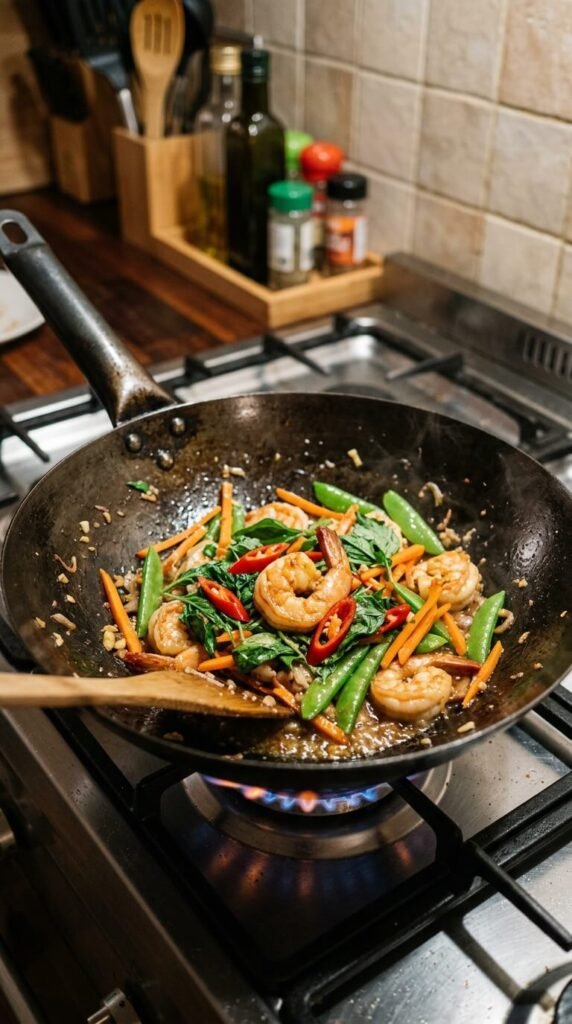
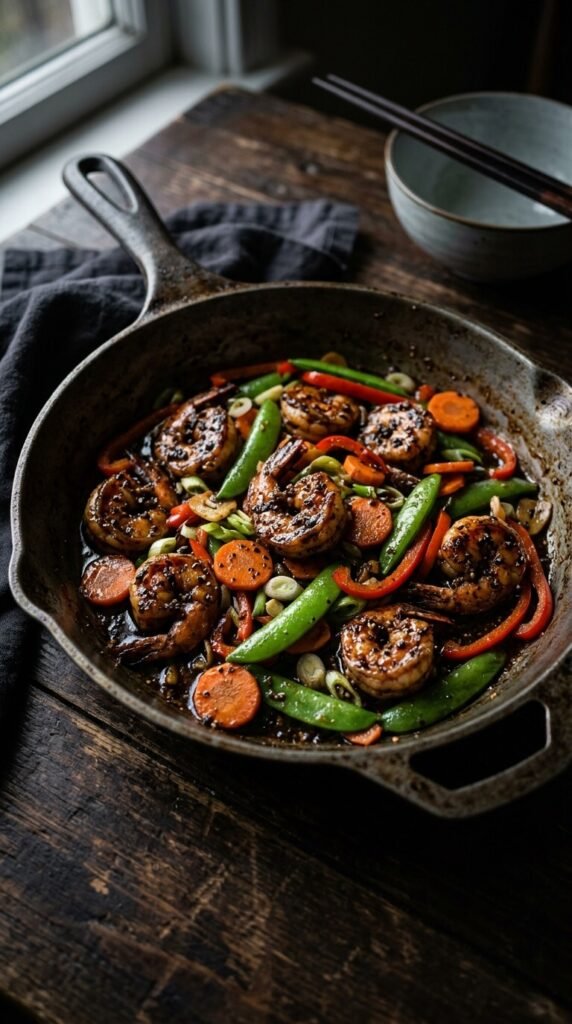
Black pepper shrimp brings heat without using chili. Crack whole peppercorns instead of using the pre-ground kind. The flavor stays bolder that way. Cook shrimp in a hot pan with a little oil. Add soy sauce, a touch of sugar, and the cracked pepper. Toss in carrot coins and snap peas until just cooked. The dish stays simple but tastes bold. Buy whole peppercorns and a small grinder since it pays off over many meals. Store the grinder in a dry spot near your stove. Serve over rice or noodles for a filling dinner.
Thai Basil Shrimp Stir Fry
Thai basil changes the whole personality of a stir fry. Tear the leaves by hand instead of chopping them with a knife. Add them at the very end so they stay bright. Cook shrimp with garlic, chili, and a splash of fish sauce. Toss in snap peas and carrot strips near the finish. Stir in the basil right before taking the pan off heat. Grow a small basil plant on a windowsill to save on grocery trips. One plant can supply leaves for months of cooking. Serve over rice for a dinner that feels like takeout.
Cashew Shrimp with Snap Peas
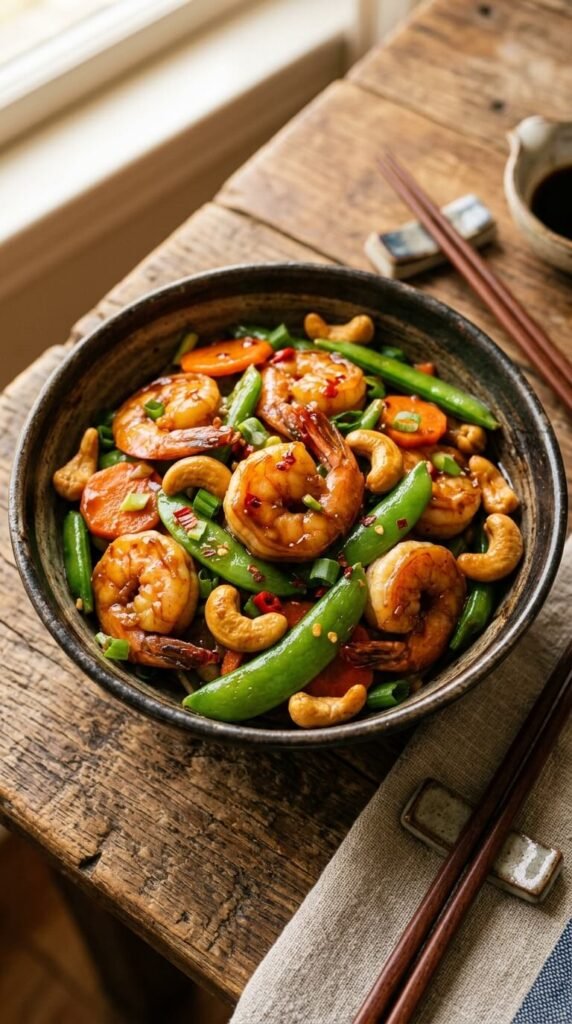
Cashews add crunch and a little protein to this dish. Toast them in a dry pan for a minute before cooking the shrimp. This step brings out more flavor. Cook shrimp with garlic, soy sauce, and a touch of sugar. Toss in snap peas and carrot pieces near the end. Add the toasted cashews last so they stay crunchy. Buy raw cashews in bulk since they cost less than the roasted, salted kind. Toast small batches as you need them. Store the rest in a sealed bag in the freezer. Serve over rice or on its own as a light meal.
Spicy Kung Pao Shrimp Stir Fry
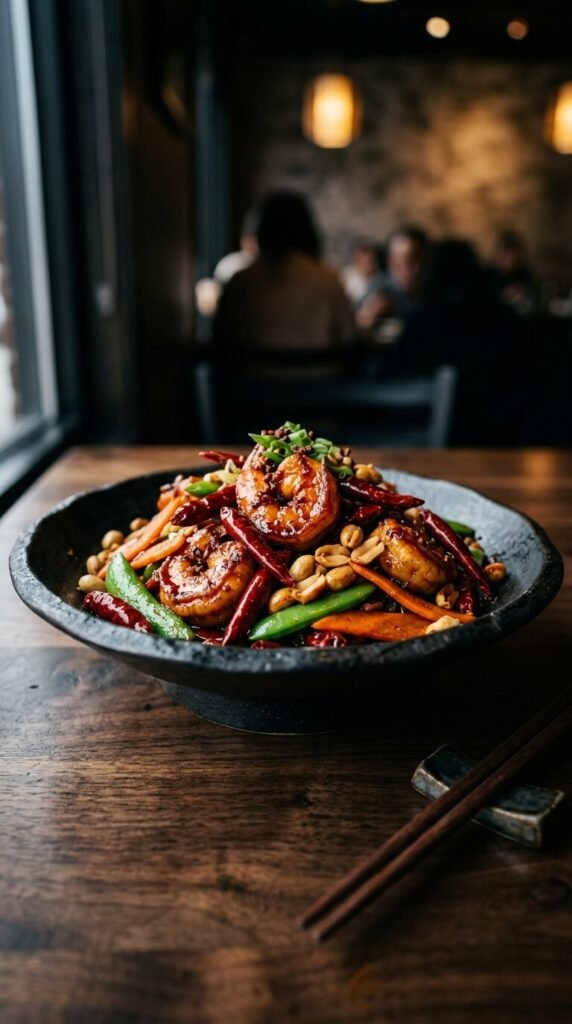
Kung pao style brings heat, crunch, and a little tang. Cook dried chilies in oil first to build the base flavor. Add shrimp and cook until pink. Mix soy sauce, vinegar, and a little sugar for the sauce. Pour it over the shrimp and toss well. Add snap peas, carrot pieces, and roasted peanuts near the end. This dish comes together in about 20 minutes. Buy dried chilies in a small bag since they last a long time in the pantry. Adjust the count based on your spice tolerance. Serve over rice for a filling weeknight plate.
Pineapple Shrimp Stir Fry
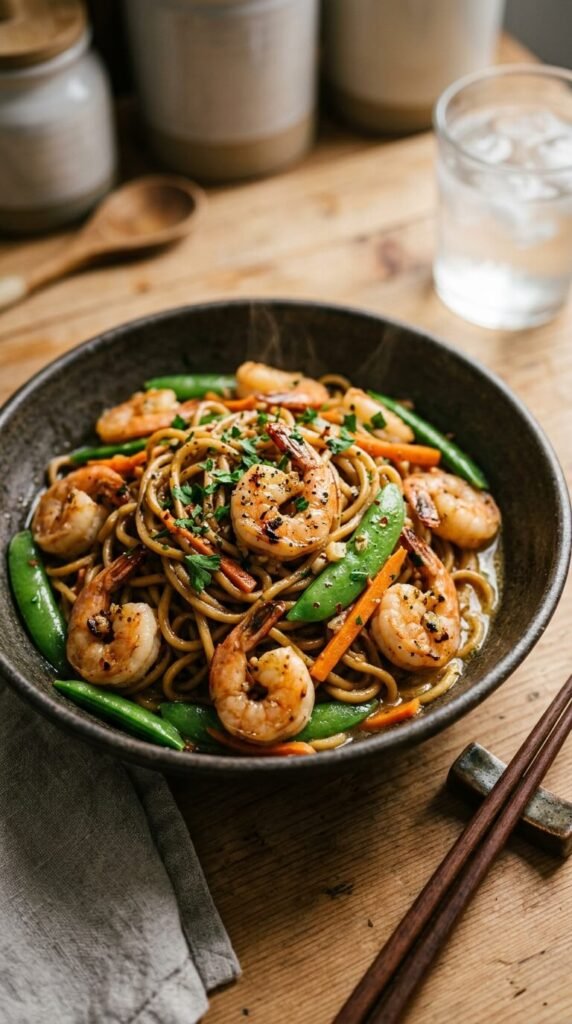
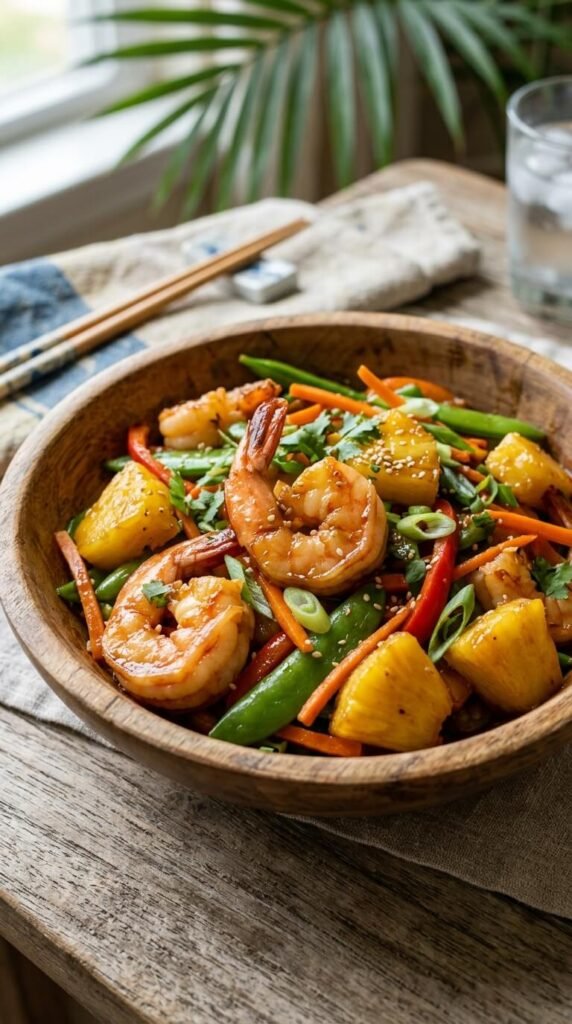
Pineapple adds sweetness that pairs well with shrimp. Use canned pineapple chunks to save time and money. Drain the juice but save it for the sauce. Mix the juice with soy sauce and a little cornstarch. Cook shrimp until pink, then add the pineapple chunks. Toss in snap peas and carrot strips near the end. The sauce thickens fast once it starts to bubble. This dish tastes like a tropical takeout order for a fraction of the price. Serve over rice or a bed of noodles. Leftovers taste just as good the next day.
Garlic Butter Shrimp Noodle Stir Fry
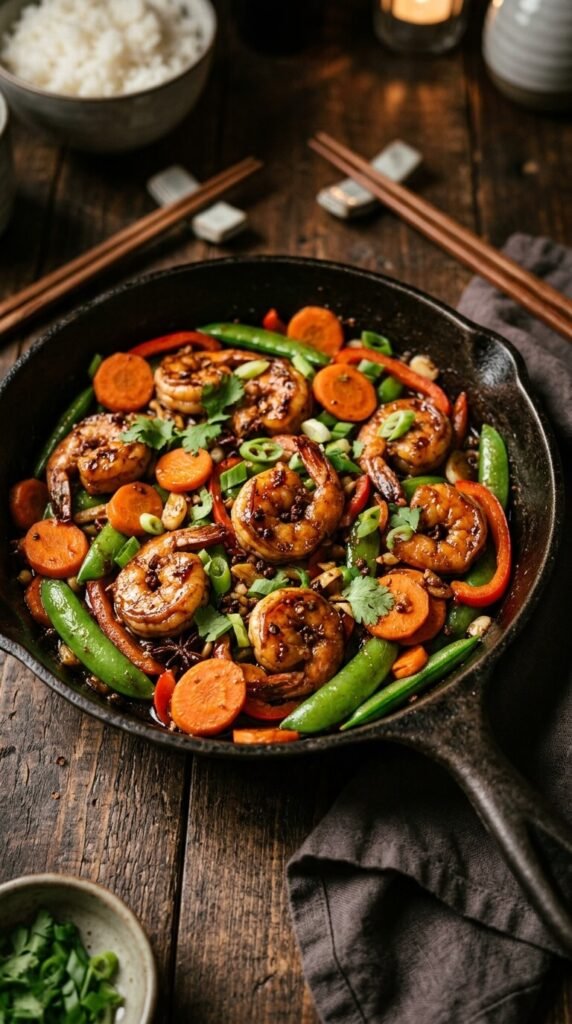
Turn your stir fry into a noodle dinner in one pan. Cook noodles first and set them to the side. Melt butter with garlic in the same pan. Add shrimp and cook until pink. Toss in snap peas and carrot strips for a minute. Add the noodles back in and mix everything together. This dish stretches a small amount of shrimp into a full meal. Buy dried noodles in bulk bags since they cost less per serving. Store extra noodles in a dry pantry spot. Serve hot with a sprinkle of black pepper on top.
Five-Spice Shrimp and Carrot Toss
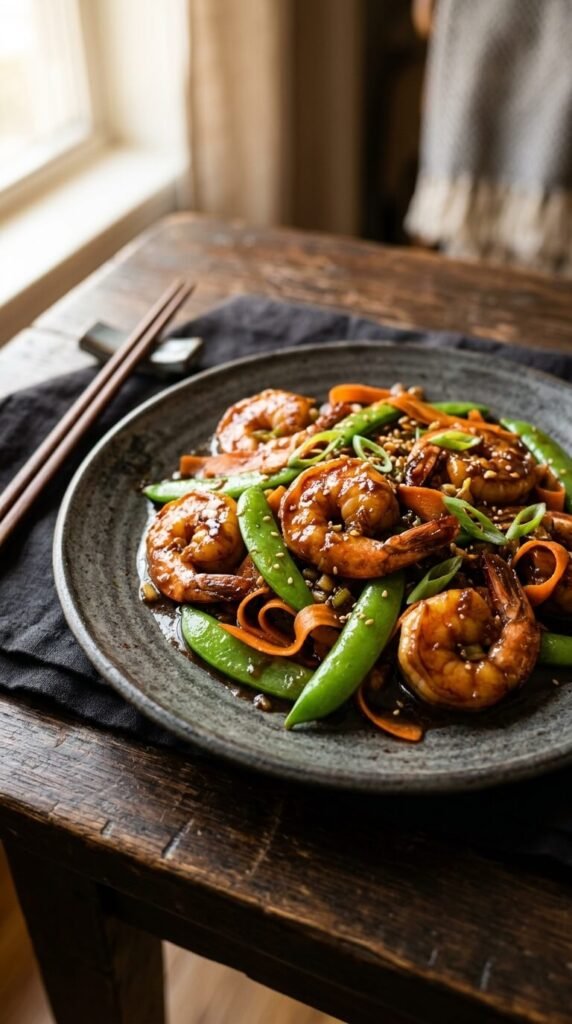
Five-spice powder brings warmth without a long list of ingredients. Rub a small amount over raw shrimp before cooking. Heat oil and cook the shrimp until pink and curled. Add soy sauce and a touch of sugar to build the glaze. Toss in carrot coins and snap peas near the end. Stir until the glaze coats everything evenly. This spice jar lasts a long time since a little goes far. Buy it once and use it across many other dishes. Store it in a cool, dry cabinet away from heat. Serve over rice for a warm dinner.
Hoisin Shrimp Stir Fry
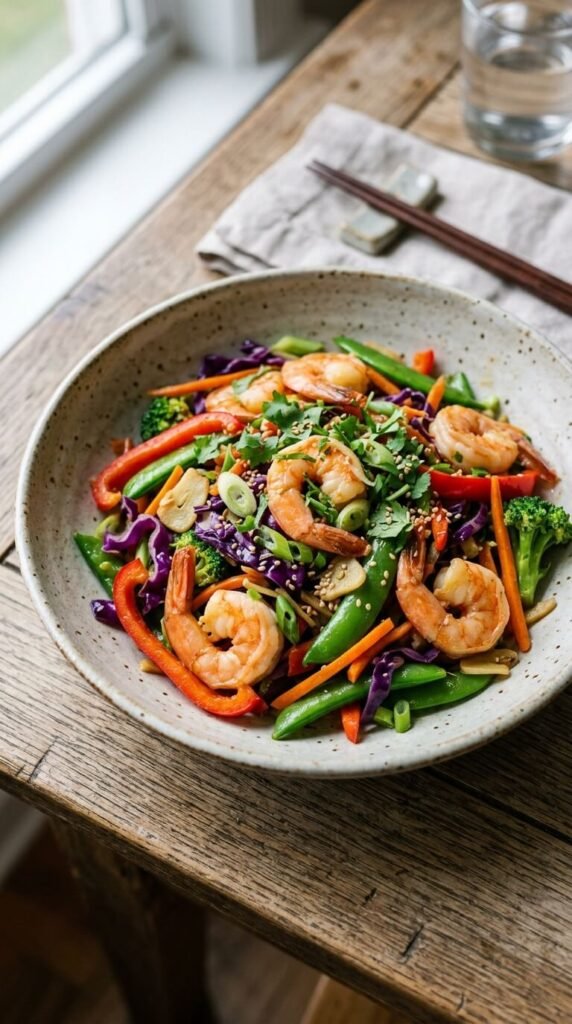
Hoisin sauce brings a sweet, savory coating to shrimp fast. Cook shrimp in a hot pan with a little oil. Add a few spoonfuls of hoisin sauce once the shrimp turn pink. Stir until every piece is coated. Toss in snap peas and carrot ribbons for the last two minutes. The sauce thickens slightly as it cooks. One bottle of hoisin sauce lasts through many meals, so it pays for itself fast. Store it in the fridge once opened. Serve over rice or in lettuce wraps for a lighter option. This dish takes under 15 minutes total.
Rainbow Veggie Shrimp Stir Fry
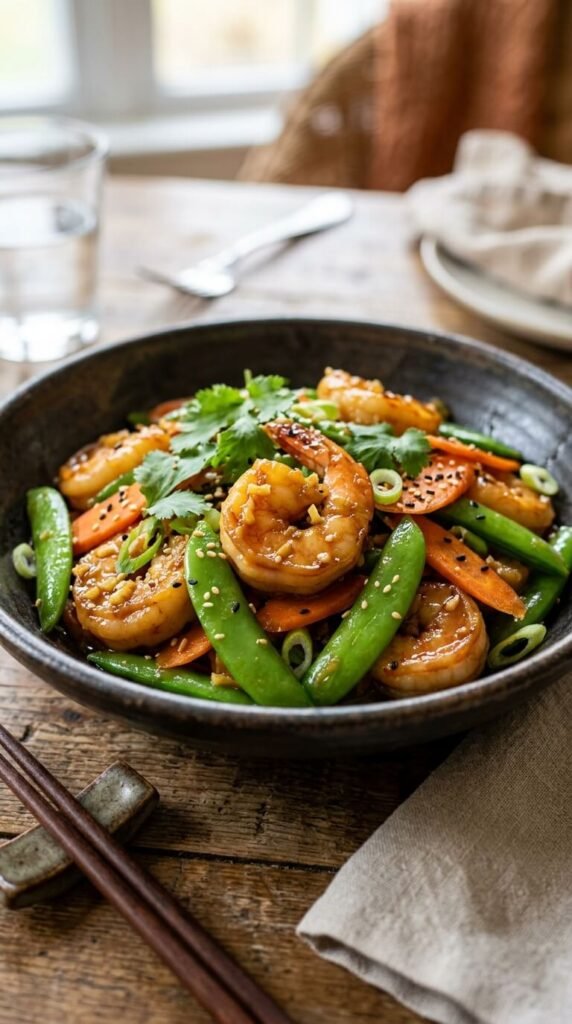
More color on the plate makes the meal feel bigger. Add red bell pepper and a little purple cabbage to the usual mix. Cook shrimp first, then set them aside. Stir fry the vegetables until just tender. Add shrimp back in with soy sauce and garlic. Toss everything together until it looks like a rainbow. This dish uses whatever colorful vegetables are on sale that week. Shop the discount produce bin for the best deals. Mix and match based on what looks good and costs little. Serve over rice for a full, colorful plate.
Miso Ginger Shrimp Stir Fry
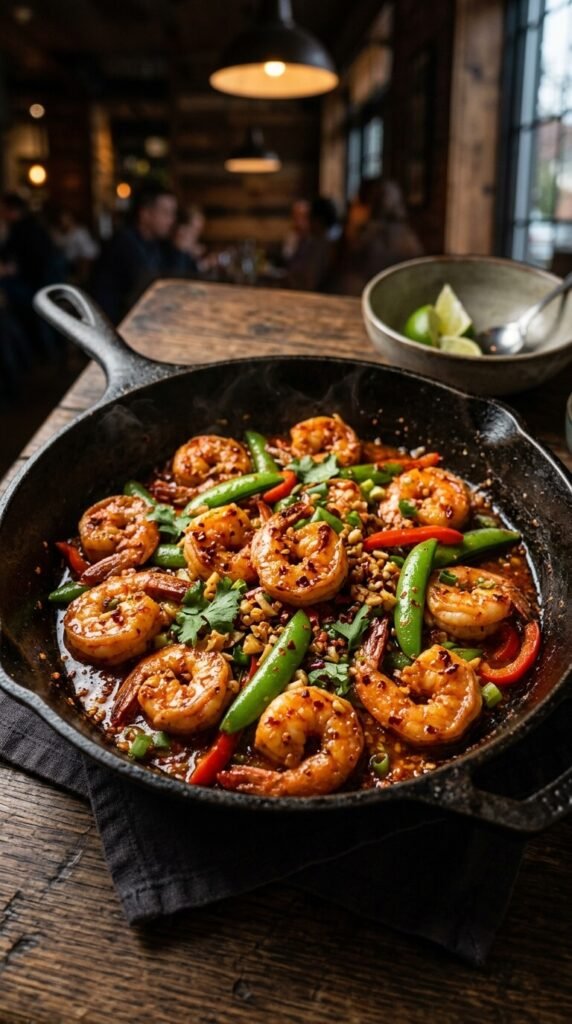
Miso paste adds a deep, savory note most stir fries skip. Mix a spoonful of miso with warm water until smooth. Pour it over cooking shrimp along with grated ginger. Stir until the shrimp are fully coated. Add snap peas and carrot slices for the last few minutes. The miso gives the dish a rounder flavor than soy sauce alone. Buy a small tub of miso paste since it lasts for months in the fridge. Use it in soups and dressings too, not just this dish. Serve over rice for a warm, filling plate.
Chili Garlic Shrimp with Snap Peas
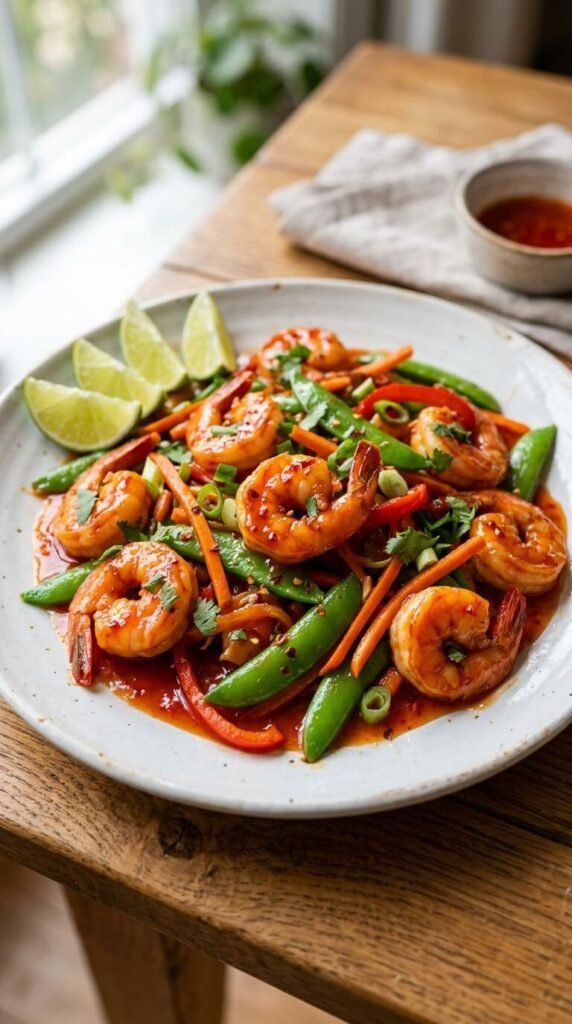
Chili garlic sauce turns a basic stir fry into something with real kick. Cook minced garlic in oil until it smells strong. Add shrimp and a spoonful of chili garlic sauce. Stir until every piece is coated red. Toss in snap peas for crunch near the end. Skip the carrots here if you want more heat in every bite. One jar of chili garlic sauce covers many meals for very little cost. Store it in the fridge after opening. Serve over rice with a glass of something cold nearby. This dish works well for spice lovers on a budget.
Sweet Chili Lime Shrimp Stir Fry
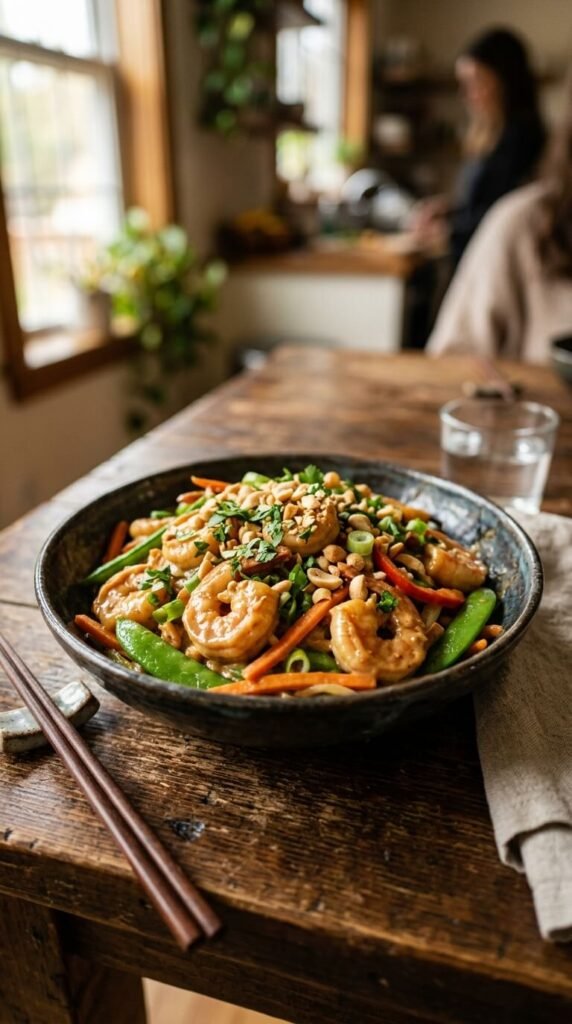
Sweet chili sauce and lime juice make a bright, tangy glaze. Cook shrimp until pink, then add a few spoonfuls of sweet chili sauce. Squeeze lime juice from a whole lime over the top right before serving. Toss in snap peas and carrot strips near the end. The lime cuts through the sweetness nicely. Buy a bag of limes instead of bottled juice to save money over several meals. Zest one before juicing for extra flavor in the sauce. Serve over rice or a light salad. This dish tastes bright without using many ingredients.
Peanut Sauce Shrimp Stir Fry
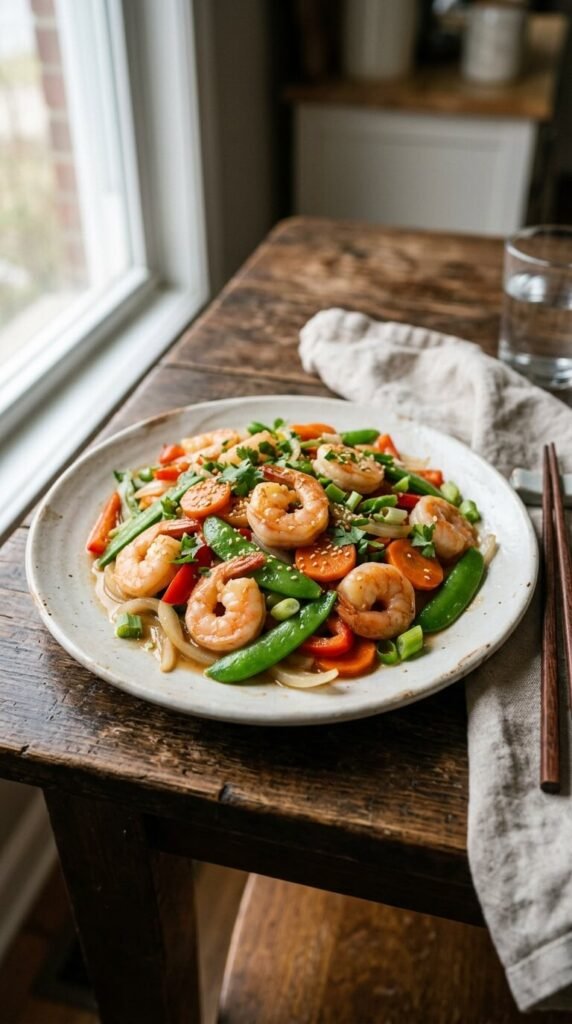
Peanut sauce turns shrimp into something closer to a Thai-style dish. Mix peanut butter, soy sauce, and a little warm water until smooth. Cook shrimp in a hot pan first. Pour the peanut sauce over the shrimp and stir well. Add snap peas and carrot strips near the end. The sauce clings to every piece. Buy a jar of peanut butter you already use for sandwiches to skip a special ingredient purchase. This keeps the grocery bill low. Sprinkle crushed peanuts on top for extra crunch. Serve over rice or cold noodles for a filling plate.
Low-Carb Zucchini Noodle Shrimp Stir Fry
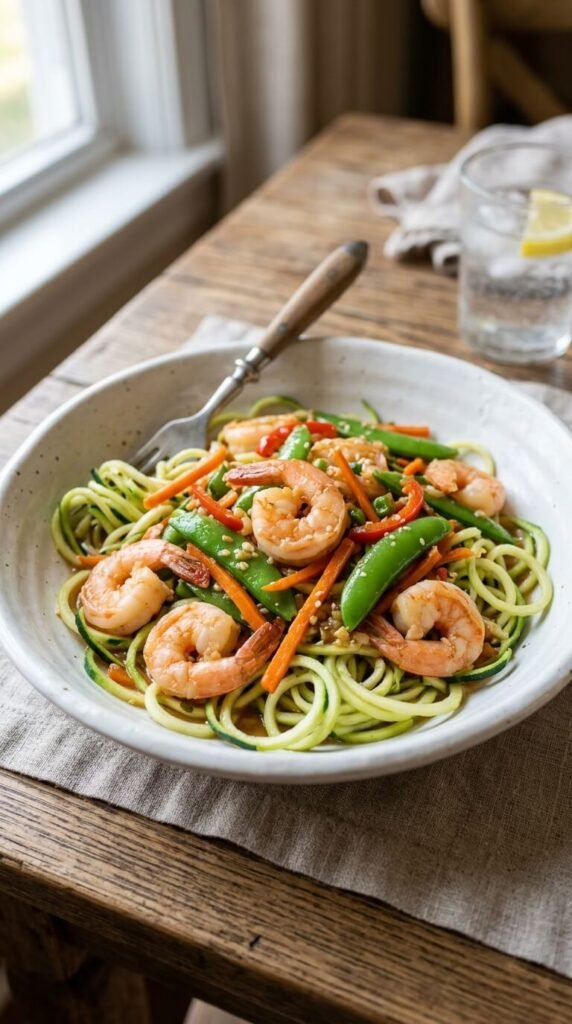
Swap rice for zucchini noodles to cut carbs without losing the meal. Spiralize a zucchini or buy one already cut at the store. Cook shrimp with garlic and soy sauce as usual. Add snap peas and carrot strips near the end. Toss the zucchini noodles in during the last minute so they stay a little firm. Overcooking makes them watery fast. A spiralizer tool costs little and pays off over many meals. Look for one at a discount kitchen store. Serve right away since zucchini noodles do not hold up well as leftovers.
One-Pan Shrimp and Snap Pea Skillet
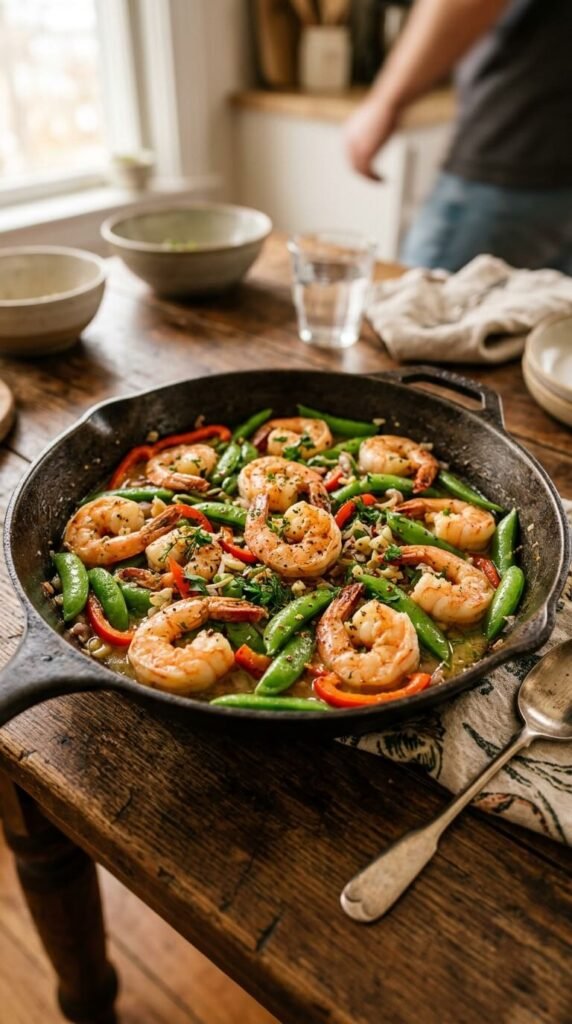
One pan means less cleanup after a long day. Cook everything in the same skillet from start to finish. Start with shrimp, then push them to one side. Cook carrots first since they take longer than peas. Add snap peas and garlic near the end. Mix everything together with a splash of soy sauce. This method saves both time and dish soap. A single cast iron skillet handles this whole meal and lasts for years. Buy one used or on sale instead of new. Serve straight from the pan for even less cleanup.
Budget Frozen Shrimp Stir Fry
Frozen shrimp works just as well as the pricier kind sold on ice. Thaw it under cold running water for about 10 minutes. Pat it dry before adding it to a hot pan. This step keeps the shrimp from steaming instead of searing. Cook as you would with any other shrimp stir fry recipe. Add snap peas and carrot strips near the end. Buying frozen shrimp in a large bag costs far less per pound than the thawed kind at the counter. Store extra in the freezer and thaw only what you plan to cook. This swap keeps the grocery bill low.
Meal-Prep Shrimp Stir Fry Bowls
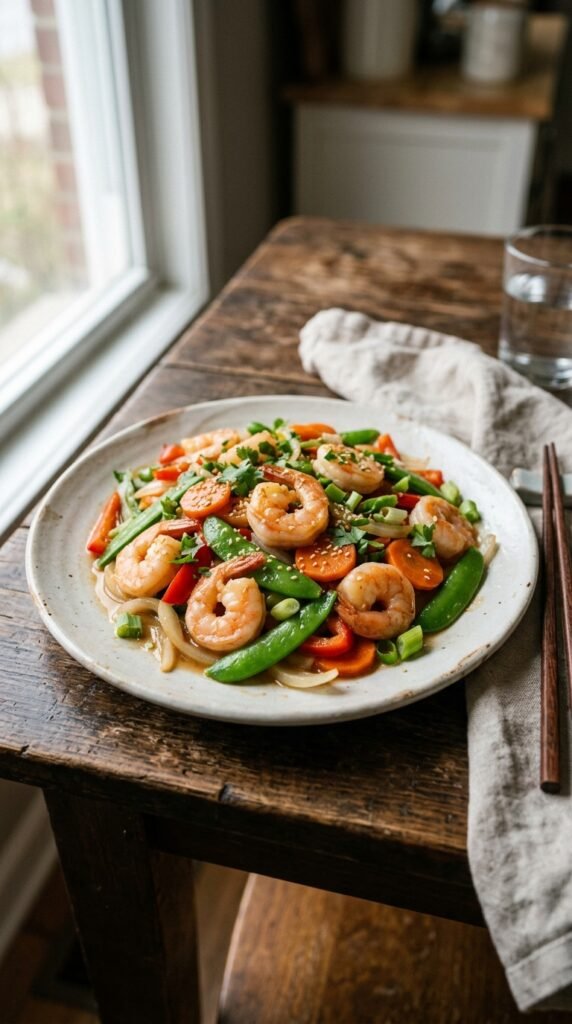
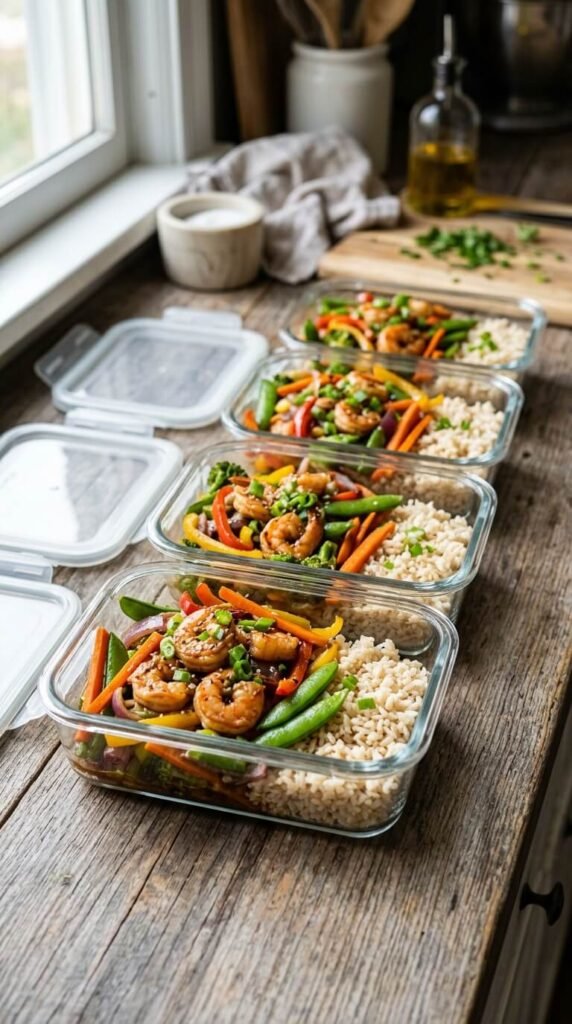
Cook once and eat all week with this approach. Make a large batch of shrimp stir fry on a Sunday. Divide it into containers with a scoop of rice in each. Add snap peas and carrot strips to every bowl. Let everything cool before sealing the lids. Store the containers in the fridge for up to four days. Glass containers cost more upfront but last for years compared to plastic ones. Buy a set on sale to keep the cost down. Reheat each bowl for about two minutes before eating. This method saves time on busy weeknights.
Conclusion
Shrimp stir fry with snap peas and carrots turns into a different meal every time you change the sauce or swap one ingredient. Twenty-four ideas is a lot, but the steps stay almost the same each time: hot pan, quick shrimp, crisp vegetables, and a sauce that ties it together. Pick two or three that sound good and try them this week. Keep the ingredients simple, shop the sales, and reuse what you already have in the pantry. Once you get comfortable with the basic method, mixing your own flavor combos gets easy fast. Cook one tonight and see which version becomes your new go-to dinner.