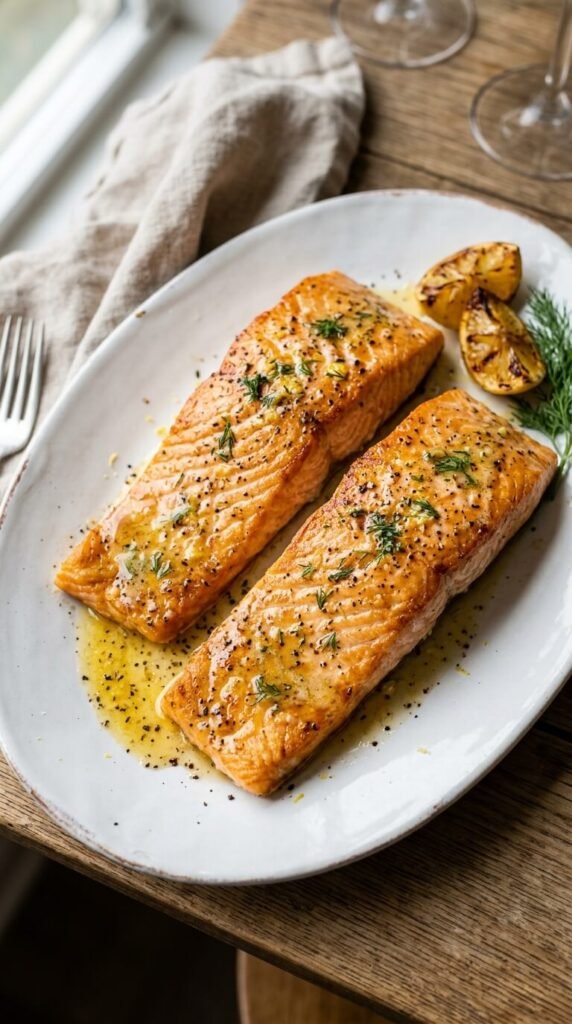
Weeknight dinners don’t have to be complicated, and baked salmon with lemon butter proves it. This dish comes together with a handful of ingredients, one pan, and about twenty minutes of oven time. It’s the kind of recipe that works for a rushed Tuesday or a small dinner with guests. The lemon cuts through the richness of the butter, and the oven does most of the work while you set the table. Below are 28 practical, budget-friendly ways to cook salmon that turns out flaky, buttery, and full of flavor every single time — no culinary school required.
Choose the Right Salmon Cut
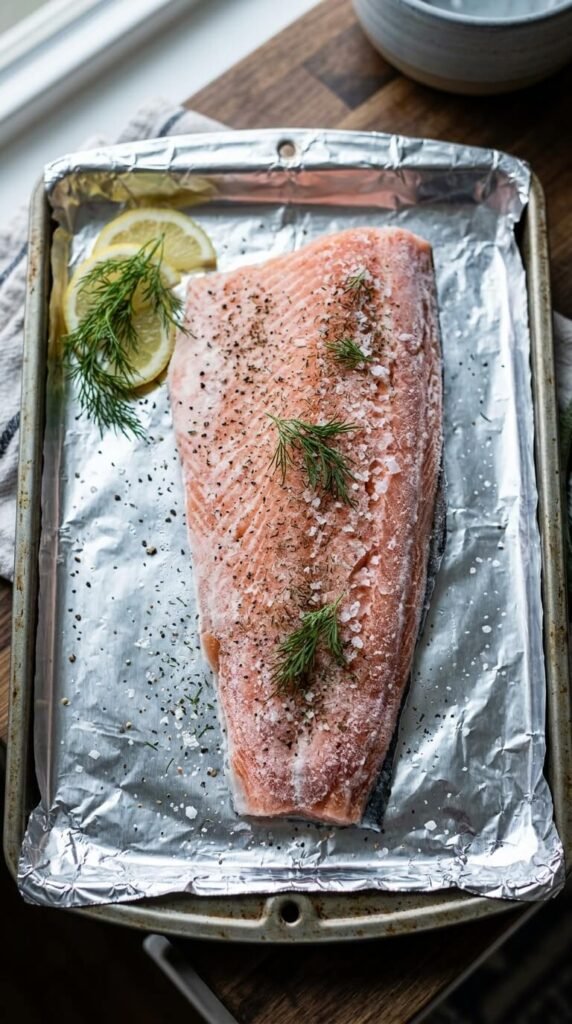
Not all salmon cuts bake the same way. Center-cut fillets cook evenly because they’re the same thickness all the way through. Tail pieces cook faster and can dry out if you’re not watching. If you’re shopping on a budget, look for frozen fillets — they’re often cheaper than the ones sitting in the fresh case and taste just as good once baked. Buy a larger side of salmon and portion it yourself at home. This saves money compared to pre-cut fillets and lets you control the size of each piece for your family.

Let the Fillets Sit Out Before Cooking
Cold salmon straight from the fridge cooks unevenly. The outside finishes before the inside catches up. Set your fillets on the counter for 10 to 15 minutes before baking. This small step helps the fish cook at the same pace all the way through. It costs nothing and takes almost no effort. While you wait, this is a good time to mix your lemon butter sauce or preheat the oven. Just don’t leave the salmon out for more than 20 minutes, especially in a warm kitchen, to keep things food-safe.
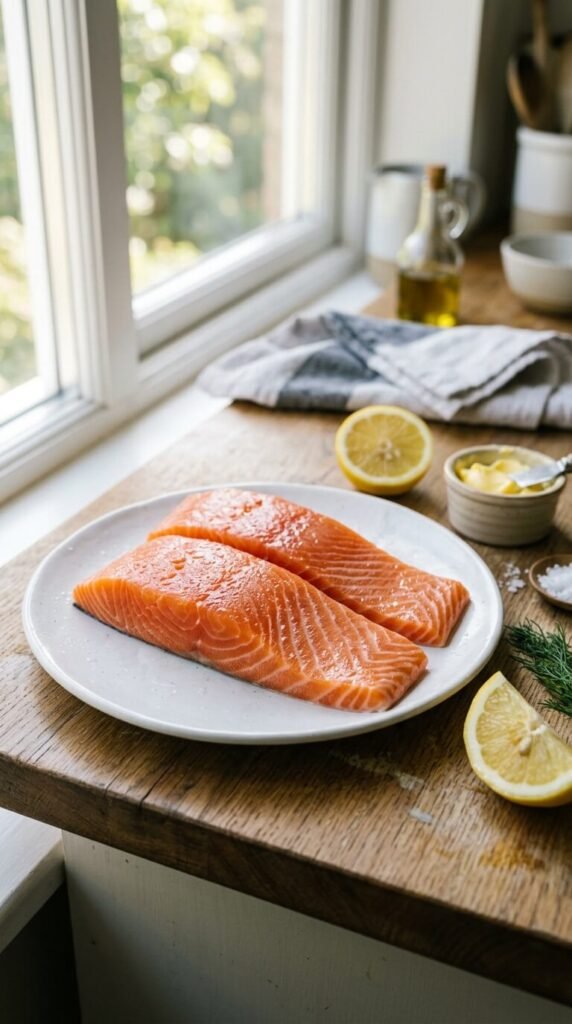
Pat Every Fillet Bone-Dry
Wet salmon won’t brown properly in the oven. Grab a paper towel and pat each fillet dry on both sides before seasoning. This one habit makes a bigger difference than people expect. Moisture sitting on the surface steams the fish instead of letting it roast, which leaves you with a pale, soft top instead of a nicely set crust. It’s a free step that takes ten seconds per piece. Keep a stack of paper towels near your cutting board so this becomes part of your normal prep routine.

Keep the Seasoning Simple
You don’t need a long spice list for this dish. Salt, black pepper, and a little garlic powder cover most of what salmon wants. Anything more can compete with the lemon butter instead of supporting it. Season both sides of the fillet and let the sauce do the heavy lifting on flavor. If you’re stocking a budget pantry, these three seasonings go a long way across other meals too, so they’re worth keeping on hand. Skip pricey seasoning blends — plain salt and pepper from a large container costs pennies per use.

Mix a Three-Ingredient Lemon Butter Sauce
The sauce is what makes this recipe stand out, and it only takes three things: melted butter, lemon juice, and minced garlic. Whisk them together in a small bowl or measuring cup. That’s it. No cream, no flour, no extra steps. Melt the butter in the microwave in 20-second bursts so it doesn’t separate. Squeeze the lemon fresh instead of using bottled juice if you have one on hand — the flavor is noticeably brighter. This sauce works on chicken and vegetables too, so make extra and store it for later meals.

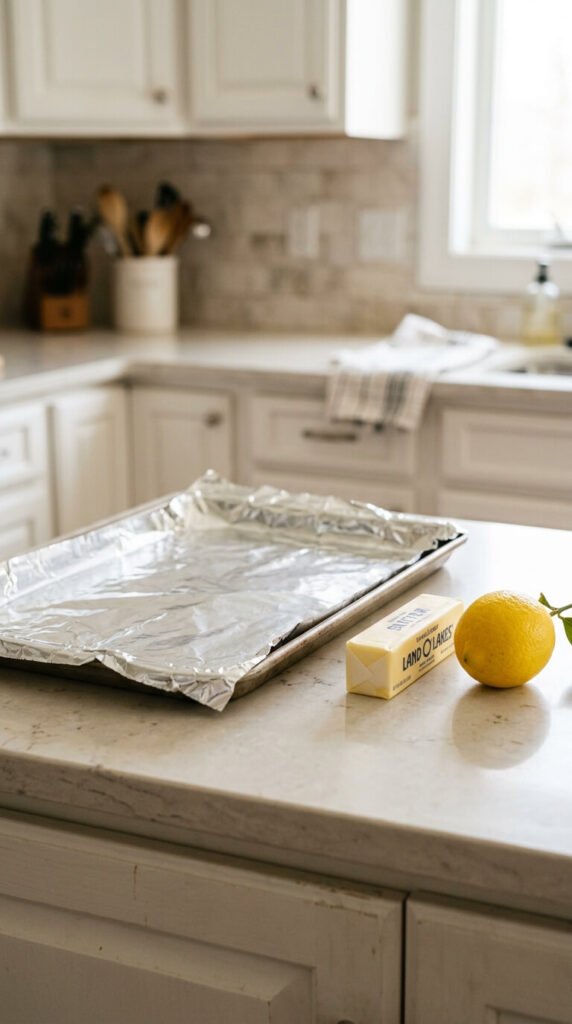
Line Your Pan with Foil or Parchment
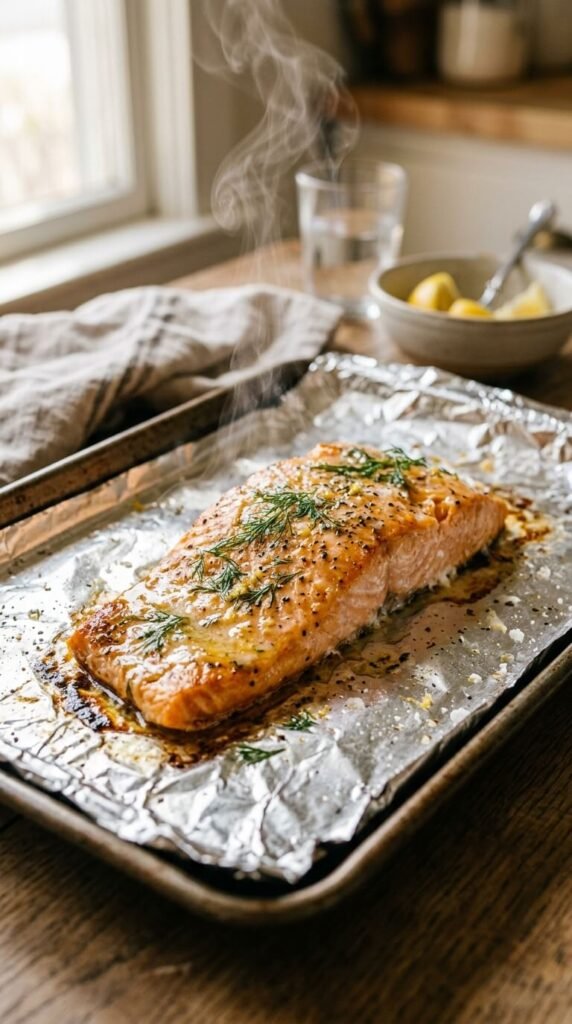
Cleanup is the part nobody enjoys, so skip it. Line your baking sheet with foil or parchment paper before adding the salmon. Butter and juices drip during baking, and scrubbing a pan afterward gets old fast. Once the fish is done, just lift the liner out and toss it. This also stops the fish from sticking, which means your fillets come off the pan looking whole instead of falling apart. A roll of foil costs very little and stretches across dozens of meals, making it one of the cheapest kitchen upgrades you can make.
Bake at 400°F for Even Cooking
Temperature matters more than people think. 400°F gives you a good balance — hot enough to brown the top, gentle enough that the inside doesn’t overcook before the outside catches up. Lower temperatures take longer and can leave the fish rubbery. Higher temperatures risk drying it out fast. Set your oven timer and don’t guess. If your oven runs hot or cold, an inexpensive oven thermometer from a hardware store can help you get a more accurate reading and avoid overcooked edges.
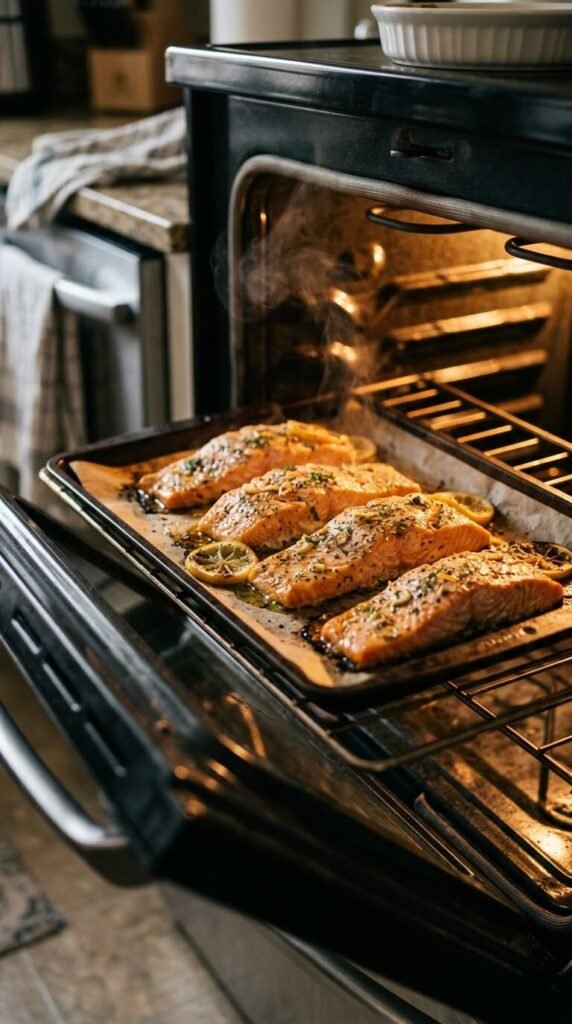
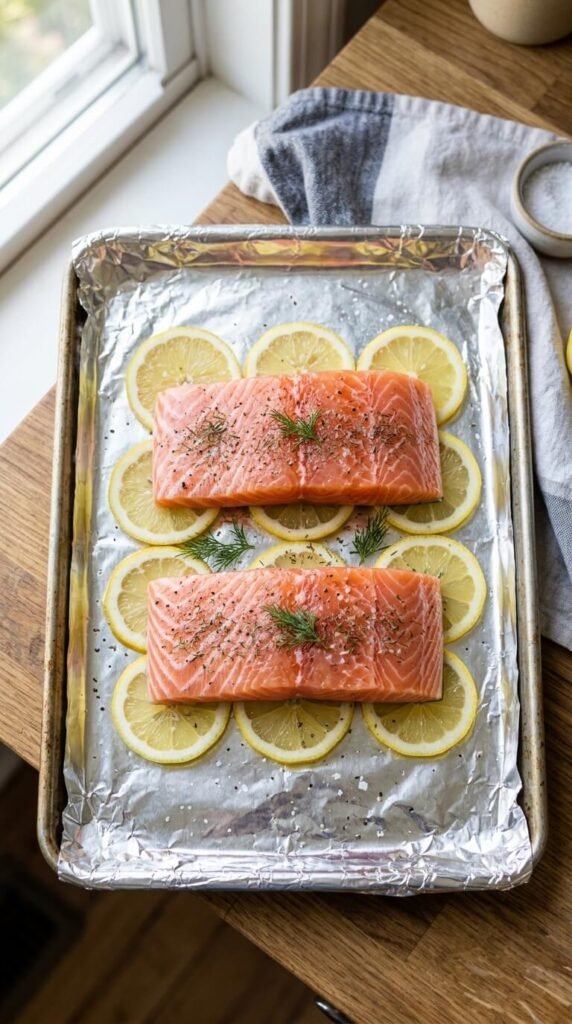
Slide Lemon Slices Under Each Piece
Thin lemon slices placed under the salmon do double duty. They keep the bottom of the fish from sticking to the pan, and they add a soft citrus flavor as the fish bakes. Slice a lemon thin, about ⅛ inch thick, and lay two or three slices under each fillet before adding your seasoning. One lemon usually covers four fillets, so this trick barely adds to your grocery bill. It also makes the finished plate look more put-together without any extra effort.
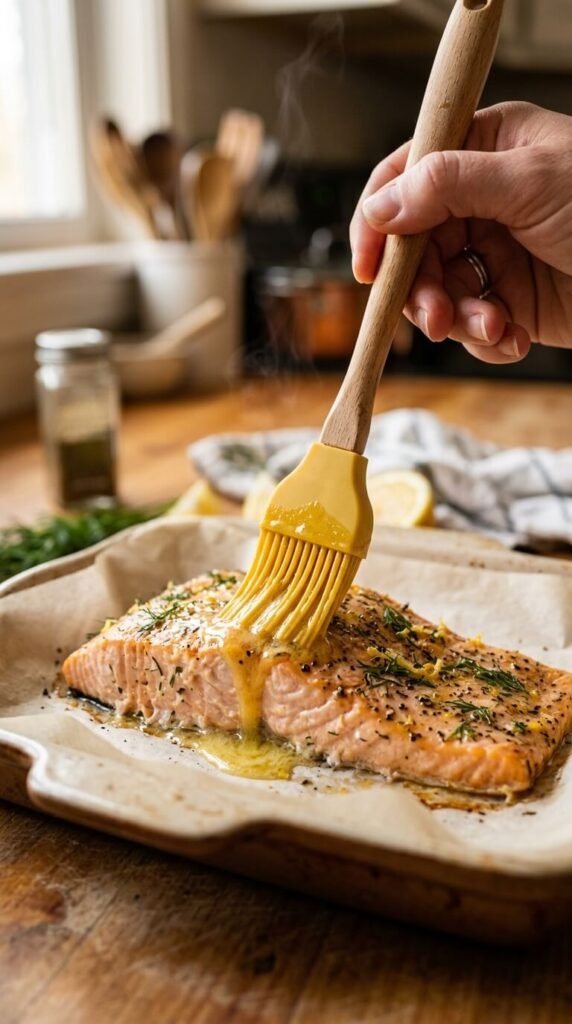
Brush the Butter On Twice
Don’t pour all your lemon butter on at once. Brush half the sauce on before baking, then save the rest to brush on right after the salmon comes out of the oven. This keeps the flavor bright instead of letting it all cook off in the heat. A basting brush works best, but a spoon does the job too if that’s what you have. This two-step method is a simple way to get more flavor out of the same amount of sauce, no extra cost involved.
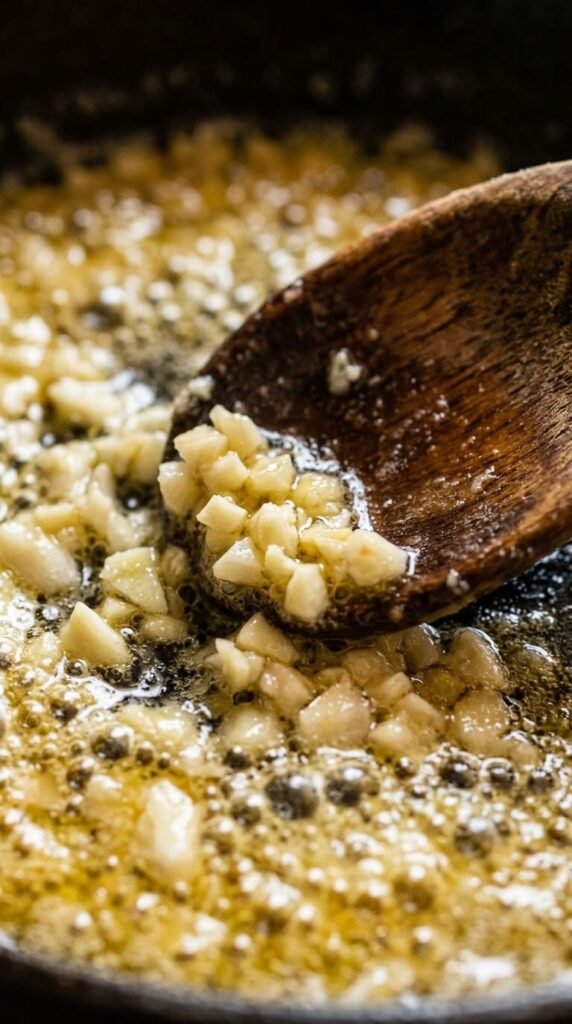
Stir Garlic Into the Butter
Garlic and lemon butter belong together. Mince one or two cloves and stir them into your melted butter before brushing it on the salmon. If you’re short on time, jarred minced garlic works fine and saves a few minutes of prep. Garlic adds depth without adding cost — a whole bulb runs less than a dollar at most grocery stores and stretches across several meals. Just don’t let the garlic sit in hot butter too long before using it, or it can turn bitter instead of fragrant.
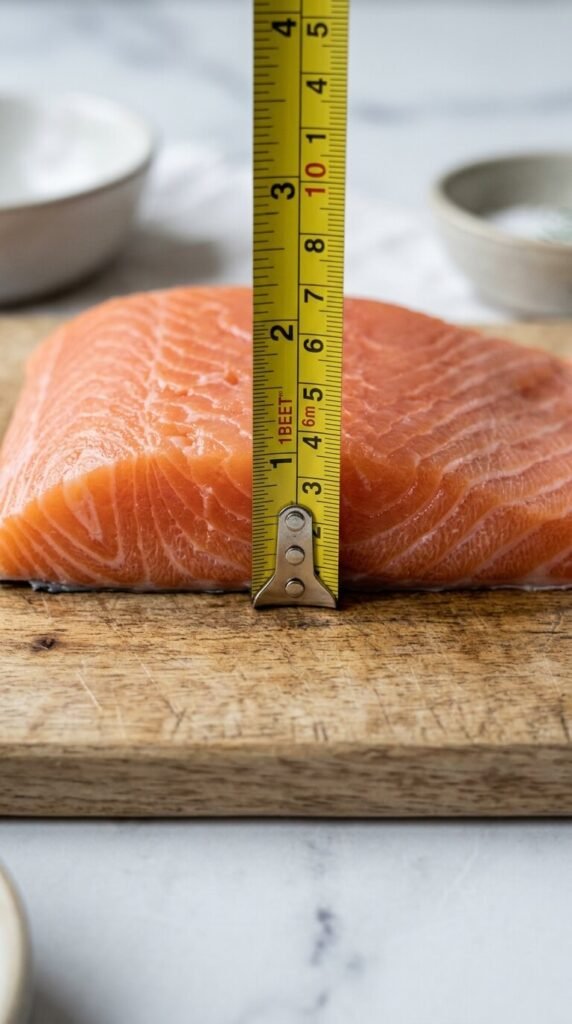
Follow the Ten-Minute-Per-Inch Rule
A simple way to time your salmon: bake it about 10 minutes for every inch of thickness. A one-inch fillet takes roughly 10 to 12 minutes at 400°F. Thicker cuts need a few extra minutes, thinner ones need less. Use a ruler or just eyeball it against your finger for a rough measurement. This rule isn’t perfect for every oven, but it gives you a solid starting point instead of guessing blindly and ending up with dry fish.
[Image Prompt: A tape measure placed alongside a raw salmon fillet on a cutting board, showing its thickness. Overhead flat-lay angle, natural light, clean minimal background, shallow depth of field.]
Test Doneness with a Fork
The easiest way to check if salmon is done costs nothing: grab a fork. Gently press it into the thickest part of the fillet and twist slightly. If the fish flakes apart easily and looks opaque instead of translucent, it’s ready. If it resists or still looks glassy in the center, give it a few more minutes. This method works without any special tools and is more reliable than just watching the clock, since ovens can vary quite a bit from one kitchen to the next.
Use a Thermometer for a Perfect Result
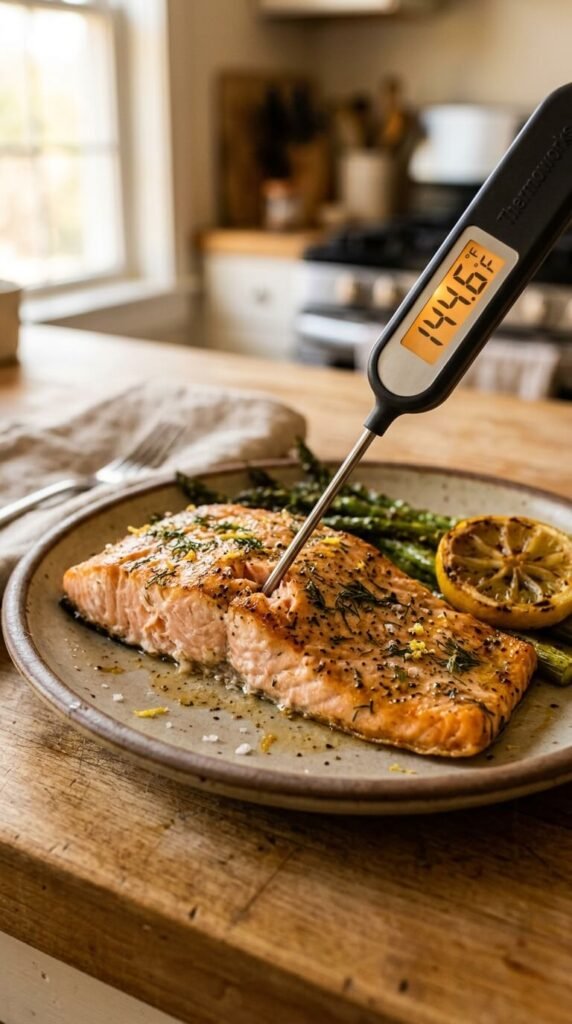
If you want a more exact result, a cheap instant-read thermometer takes the guesswork out completely. Salmon is done at 145°F in the thickest part. Insert the probe sideways into the center of the fillet, away from the pan, for the most accurate reading. These thermometers cost very little and work for meat, poultry, and baked goods too, so it’s a small purchase that pays for itself across many meals. Pull the salmon out right at 145°F, since it keeps cooking slightly after it leaves the oven.

Let the Salmon Rest Before Serving
Pulling salmon straight from the oven to the plate skips an easy step. Let it rest for 2 to 3 minutes on the pan before serving. This lets the juices settle back into the fish instead of running out onto the plate the second you cut into it. It’s a free step that makes a real difference in texture. Use this short window to plate your sides or grab the extra lemon butter you saved for brushing on top.
Top with Herbs Like Dill or Parsley
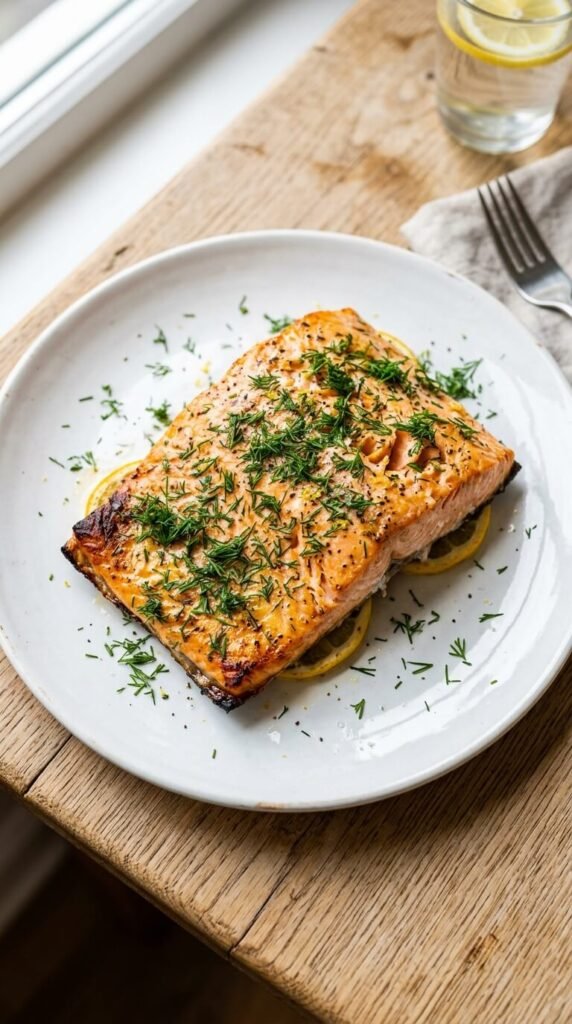
A small handful of chopped herbs changes the whole look and taste of the dish. Dill pairs naturally with salmon, but parsley works fine too and tends to be cheaper year-round. Chop a tablespoon or two and sprinkle it over the top right before serving. If a small bunch of herbs feels like it goes to waste, chop the rest and freeze it in an ice cube tray with a little water or oil for the next time you cook.
Add a Squeeze of Lemon at the End
Baking mellows out lemon’s sharpness, so add one more squeeze of raw lemon juice right before you serve the fish. This wakes the dish back up and adds a brighter finish than the cooked lemon butter alone. Use the same lemon you sliced earlier — just save one wedge for this final touch. It’s a small habit that costs nothing extra since you already bought the lemon for the sauce.
Pair It with a Simple Green Salad
Salmon doesn’t need a complicated side. A basic green salad with lettuce, cucumber, and a light vinaigrette rounds out the plate without much prep or cost. Bagged salad mix works fine if you’re short on time. Skip the store-bought dressing and mix your own with olive oil, vinegar, salt, and pepper — it’s cheaper and takes under a minute. This kind of side keeps the meal light instead of heavy, letting the salmon stay the main focus of the plate.

Serve Over Rice for a Full Plate
Rice stretches this meal further and keeps it filling. Plain white or brown rice works well under the salmon, soaking up any extra lemon butter that drips down. A rice cooker makes this hands-off, but a covered pot on the stove works just as well. Buying rice in bulk is one of the cheapest ways to stretch a family meal across more servings without spending more on the salmon itself.

Sprinkle On Some Parmesan
A light dusting of grated parmesan adds a salty, savory edge to the lemon butter without overpowering it. Sprinkle it on during the last few minutes of baking so it softens slightly instead of just sitting on top raw. A small block of parmesan lasts a long time in the fridge and works across pasta, salads, and vegetables too, so it’s a practical pantry addition rather than a one-use splurge.

Try a Honey Lemon Butter Twist
For a slightly sweeter take, stir a teaspoon of honey into your lemon butter sauce. It balances the tartness of the lemon and adds a light glaze once it bakes onto the fish. This works well if you’re cooking for kids who might find plain lemon butter too sharp. Honey is inexpensive and keeps for a long time in the pantry, so this variation doesn’t add much to your grocery list.

Add Heat with Red Pepper Flakes
If your household likes a little kick, sprinkle in a pinch of red pepper flakes with the seasoning or stir some into the butter sauce. It’s an easy way to change up the flavor without changing the whole recipe. Start small — a quarter teaspoon goes further than you’d expect. A jar of red pepper flakes costs very little and lasts through dozens of meals, so it’s worth keeping in the spice cabinet for nights you want more flavor.

Cook Straight From Frozen When Short on Time
No time to thaw? Frozen salmon can go straight into the oven. Just add about 50% more baking time and season it once it’s partially thawed, around the halfway mark, so the seasoning actually sticks. This trick saves you from last-minute grocery runs and lets you buy salmon in bulk when it’s on sale, then freeze portions for later. It’s one of the easiest ways to keep this meal affordable and stress-free on busy nights.

Store Leftovers the Smart Way
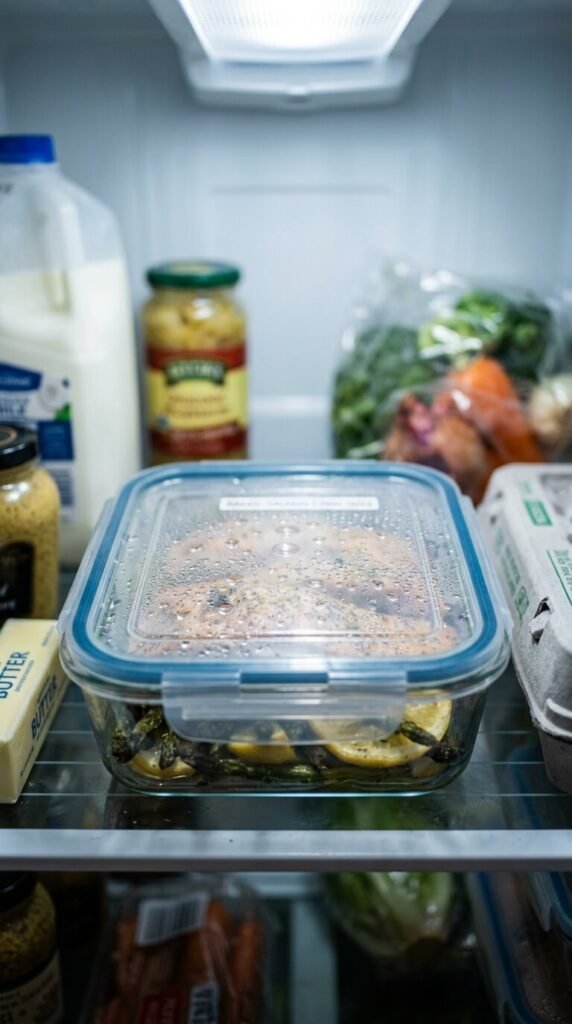
Extra salmon doesn’t have to go to waste. Let it cool, then store it in an airtight container in the fridge for up to three days. Skip leaving it out on the counter, since fish spoils faster than most leftovers. A basic set of reusable containers costs little upfront and pays off across every meal you store afterward, not just this one. Label the container with the date if you tend to forget what’s inside your fridge.
Reheat Without Drying It Out
Microwaving leftover salmon often turns it rubbery. Instead, reheat it in the oven at 275°F for about 10 minutes, covered loosely with foil. This warms the fish gently instead of blasting it with high heat. If you’re in a rush, a covered skillet on low heat with a splash of water works too. Both methods keep the salmon closer to how it tasted the first night, instead of drying it out.
Turn Extra Salmon Into a Quick Salad
Leftover salmon works well flaked over a salad the next day. Break it apart with a fork, toss it over lettuce, and add a light dressing. This turns one meal into two without any extra cooking. It’s a practical way to stretch your grocery budget instead of letting leftovers sit forgotten in the fridge. Add a hard-boiled egg or some chickpeas if you want to make the salad more filling.

Prep Salmon Ahead for the Week
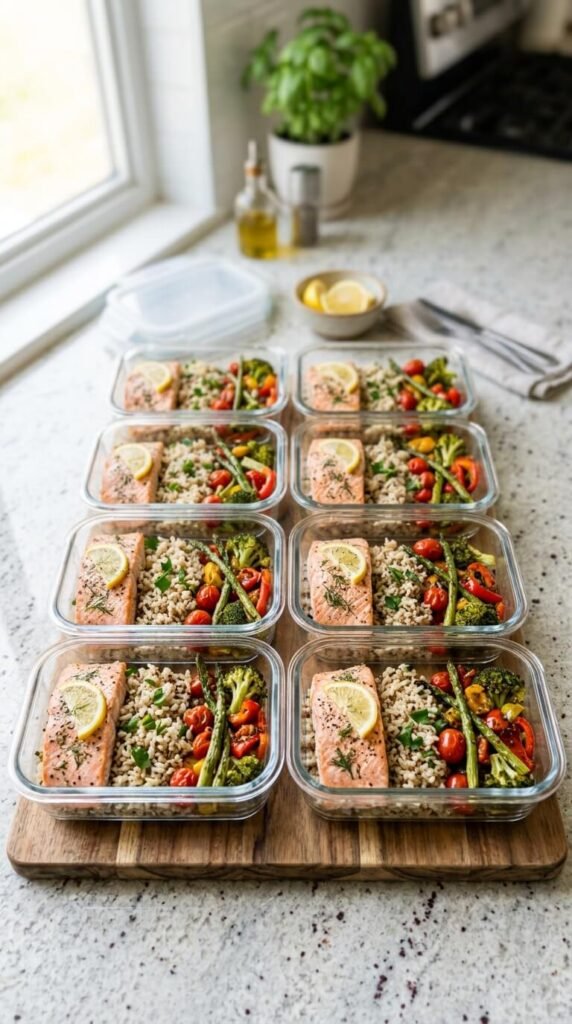
If your schedule is packed, bake a larger batch of salmon on a Sunday and portion it into containers for the week. Reheat gently each night using the method above. This cuts down on weeknight cooking time and makes it easier to stick to home-cooked meals instead of ordering out. Buying salmon in bulk when it’s discounted and prepping it ahead is one of the more affordable habits you can build into your routine.

Try Foil Packets for Zero Cleanup
Instead of a baking sheet, wrap each salmon fillet in its own foil packet with butter, lemon, and seasoning sealed inside. Bake the same way, then just open the packet at the table. This locks in moisture and means almost no dishes afterward. It’s also an easy way to portion individual servings if you’re cooking for a household with different preferences, since each packet can be seasoned a little differently.
Finish with a Few Capers
For a briny, savory finishing touch, scatter a small spoonful of capers over the salmon right before serving. They add a pop of flavor that pairs naturally with the lemon butter. A small jar lasts a long time in the fridge since you only need a few at a time. This is an easy way to make a simple dish feel a little more put-together without spending much or adding extra prep time.

Conclusion
Baked salmon with lemon butter proves that a good dinner doesn’t need a long ingredient list or complicated steps. With a few pantry staples, one pan, and the tips above, you can turn out a meal that tastes like it took more effort than it did. Whether you’re cooking for one or feeding a full table, these small adjustments — from drying the fish properly to timing it right — add up to a dish that’s flaky, buttery, and easy to repeat any night of the week. Save this list, keep your pantry stocked with the basics, and let this become one of your go-to meals.