If there’s one meal prep trick that instantly makes weeknight dinners faster, it’s having a big batch of perfectly cooked rice ready to go in your fridge. No more 20-minute wait while everything else gets cold. Just scoop, reheat, and build your meal in minutes.
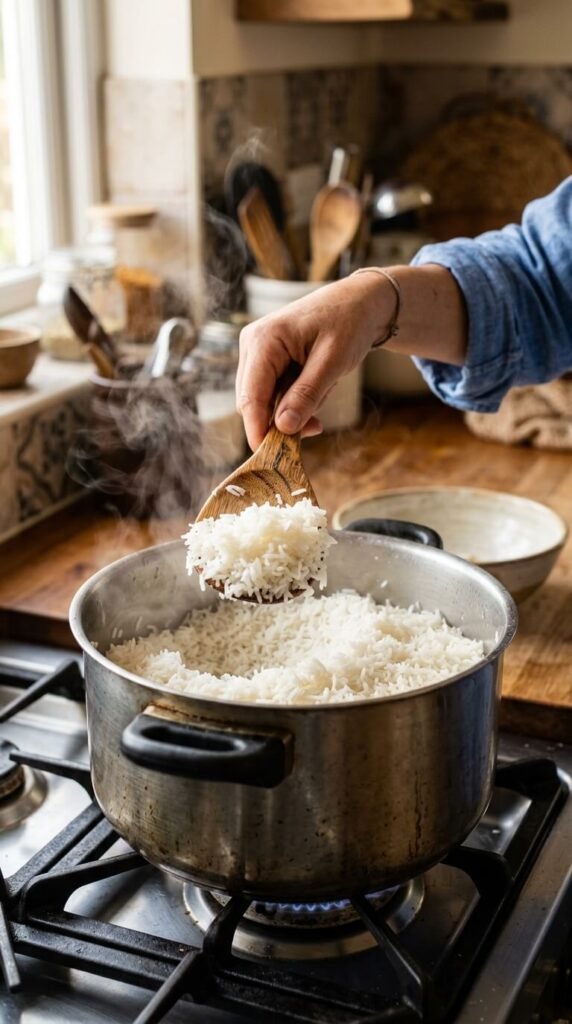
If you’ve never thought to batch cook rice ahead of time, this one simple habit might just change your entire weeknight dinner routine. Let’s break down exactly how to do it right.
Why Batch Cooking Rice Is a Total Time-Saver
Rice is one of the easiest things to prep ahead, and the payoff is huge:
- It reheats beautifully. Unlike some foods, rice holds up well in the fridge and freezer.
- It’s endlessly versatile. Use it in bowls, stir-fries, burritos, soups, or as a simple side.
- It saves real time. No more waiting 20 minutes for rice to cook after a long day.
- It reduces decision fatigue. With rice ready to go, dinner becomes an assembly job, not a full cook.
Step 1: Choose the Right Rice for Your Needs
Different rice varieties serve different purposes, so pick based on how you’ll use it most.
- White rice – neutral, fast-cooking, great for almost any meal
- Brown rice – more fiber and nutrients, holds up well for grain bowls
- Jasmine rice – fragrant and fluffy, perfect for Asian-inspired dishes
- Basmati rice – light and aromatic, great alongside curries
- Quinoa or rice blends – good for added protein and texture variety
Tip: If you eat a variety of cuisines throughout the week, consider batch cooking two types of rice to keep meals feeling different.
Step 2: Rinse the Rice First
This small step makes a noticeable difference in texture.
- Rinse rice under cold water until the water runs mostly clear.
- This removes excess starch that can make rice gummy or clumpy.
- Drain well before cooking.
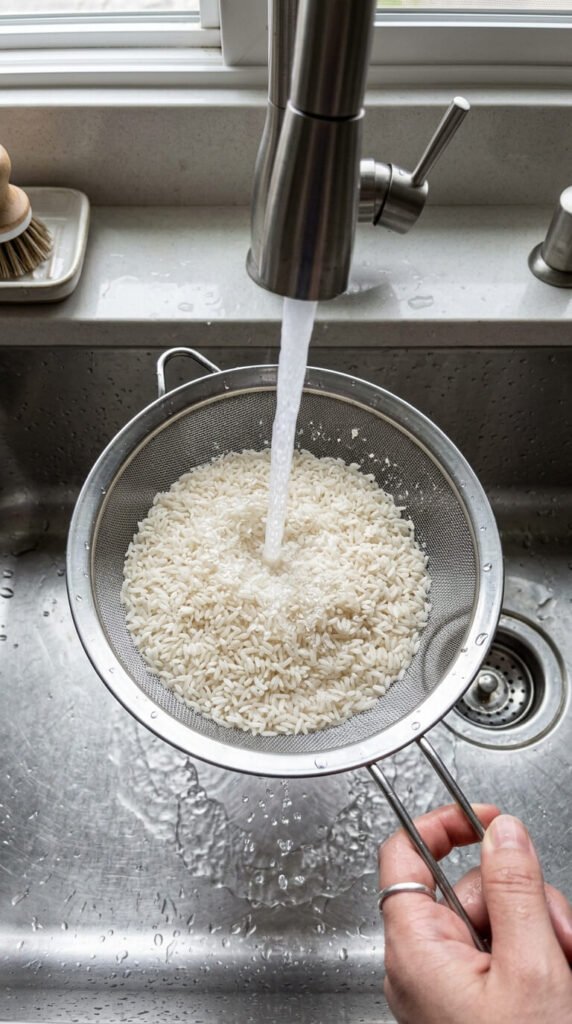
Tip: Skipping this step is one of the most common reasons batch-cooked rice turns out sticky and clumps together when reheated.
Step 3: Use the Right Water-to-Rice Ratio
Getting this ratio right ensures fluffy, evenly cooked rice every time.
- White rice: 1 cup rice to 1¾ cups water
- Brown rice: 1 cup rice to 2¼ cups water
- Jasmine rice: 1 cup rice to 1½ cups water
- Basmati rice: 1 cup rice to 1½ cups water
Tip: When batch cooking, simply multiply the ratio based on how many cups of rice you’re making — just make sure your pot is large enough to avoid overflow.
Step 4: Cook It Low and Slow
- Bring the rice and water to a boil, then immediately reduce the heat to low.
- Cover tightly with a lid and simmer without stirring for the recommended time (usually 15–18 minutes for white rice, 40–45 minutes for brown rice).
- Resist the urge to lift the lid and peek — this lets out steam needed for even cooking.
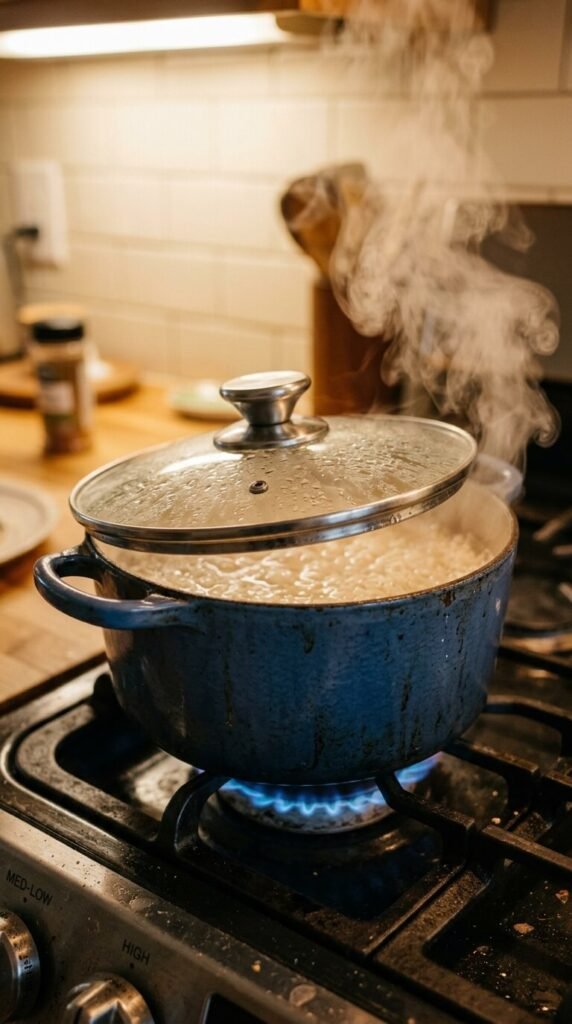
Tip: A rice cooker or Instant Pot makes this step even more foolproof if you batch cook rice often.
Step 5: Let It Rest Before Fluffing
This step is often skipped, but it makes a real difference in texture.
- Once cooked, remove the pot from heat and let it sit, covered, for 5–10 minutes.
- This allows the steam to finish the cooking process evenly.
- After resting, fluff the rice gently with a fork to separate the grains.
Tip: Fluffing too early can make rice gummy, since it hasn’t fully finished steaming yet.
Step 6: Cool Before Storing
Proper cooling is key for both food safety and texture.
- Spread the rice out on a baking sheet to cool quickly, rather than leaving it in a deep pot.
- Once cooled to room temperature, transfer to airtight containers.
- Portion into meal-sized servings for the easiest grab-and-go reheating later.
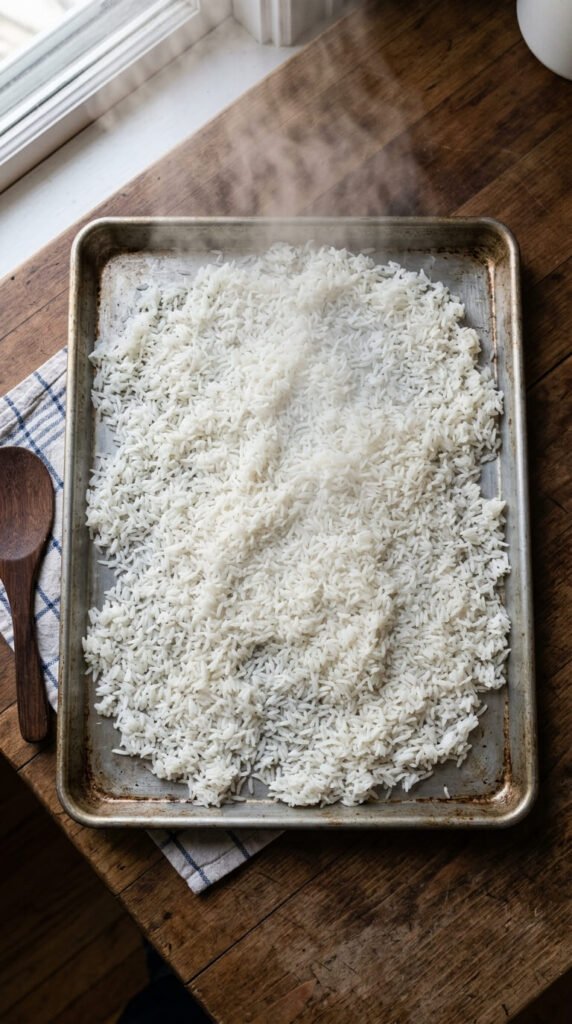
Tip: Cooling rice quickly (rather than letting it sit out for hours) is important for food safety, especially before refrigerating or freezing.
Step 7: Store It the Right Way
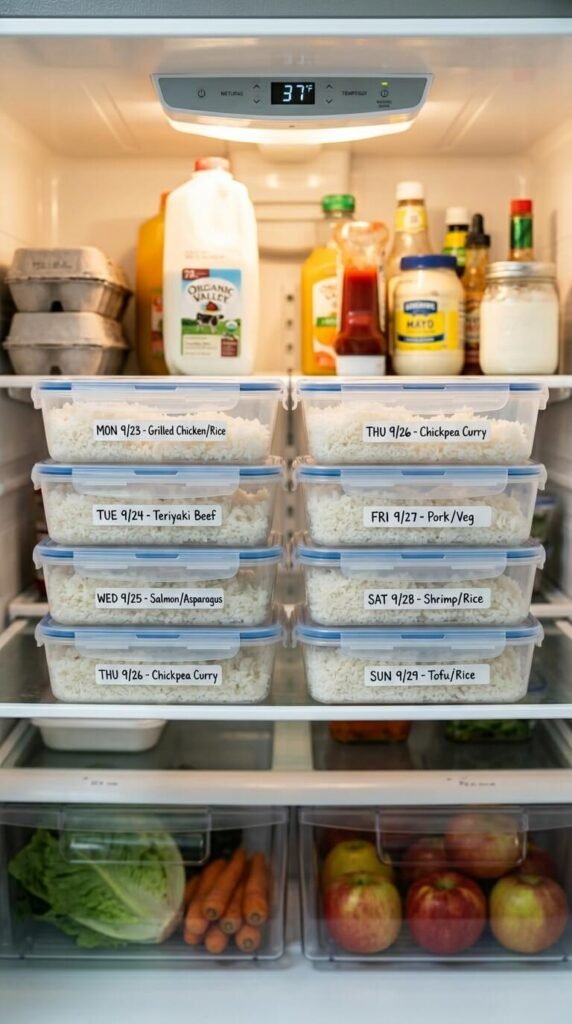
- Fridge: Store in airtight containers for up to 4–5 days.
- Freezer: Portion rice into freezer bags or containers, flattening bags for faster freezing and thawing; keeps well for up to 2 months.
- Labeling: Mark containers with the cooking date so you always know what’s freshest.
Step 8: Reheat Without Drying It Out
- Add a splash of water before reheating to restore moisture.
- Cover with a damp paper towel or lid in the microwave to trap steam.
- For stovetop reheating, use low heat with a splash of water or broth, stirring gently.
Tip: Avoid reheating rice on high power for long stretches — this is the fastest way to end up with dry, hard grains.
Easy Ways to Use Batch-Cooked Rice
- Stir-fries with whatever protein and vegetables you have on hand
- Burrito bowls with beans, salsa, and avocado
- A simple side with grilled chicken or fish
- Fried rice using day-old rice (it actually works best slightly dried out)
- Soups and grain bowls for a quick, filling base
The Bottom Line
Batch cooking rice is one of the simplest habits you can build into your weekly routine — and the payoff is huge. With just one cooking session, you’ll have a versatile base ready to transform into multiple easy dinners throughout the week.
Save this recipe for later so you always have a quick, reliable method for perfectly batch-cooked rice!