If your past attempts at cauliflower rice turned into a soggy, watery pile of disappointment, you’re not alone — and the good news is, it’s not your fault. Cauliflower rice has a bit of a reputation problem, but it’s almost always a technique issue, not a cauliflower issue. Done right, it’s light, fluffy, and genuinely satisfying.

Let’s fix the mushy texture problem once and for all so you can actually enjoy this low-carb rice swap instead of dreading it.
Why Cauliflower Rice Turns Mushy in the First Place
Before fixing the problem, it helps to know what causes it:
- Too much moisture. Cauliflower is over 90% water — if that water isn’t removed, it steams instead of “frying.”
- Overcrowding the pan. Too much cauliflower at once traps steam and softens the texture.
- Overcooking. Cauliflower rice cooks fast — a few extra minutes can take it from fluffy to mush.
- Skipping the drying step. Many recipes jump straight to cooking without removing excess water first.
Once you understand these culprits, the fix becomes pretty simple.
What You’ll Need
- 1 medium head of cauliflower (or 4 cups pre-riced cauliflower)
- 1 tbsp olive oil or butter
- 1 garlic clove, minced (optional)
- Salt and pepper to taste
- Paper towels or a clean kitchen towel
Step 1: Rice the Cauliflower Properly
If you’re starting with a whole head:
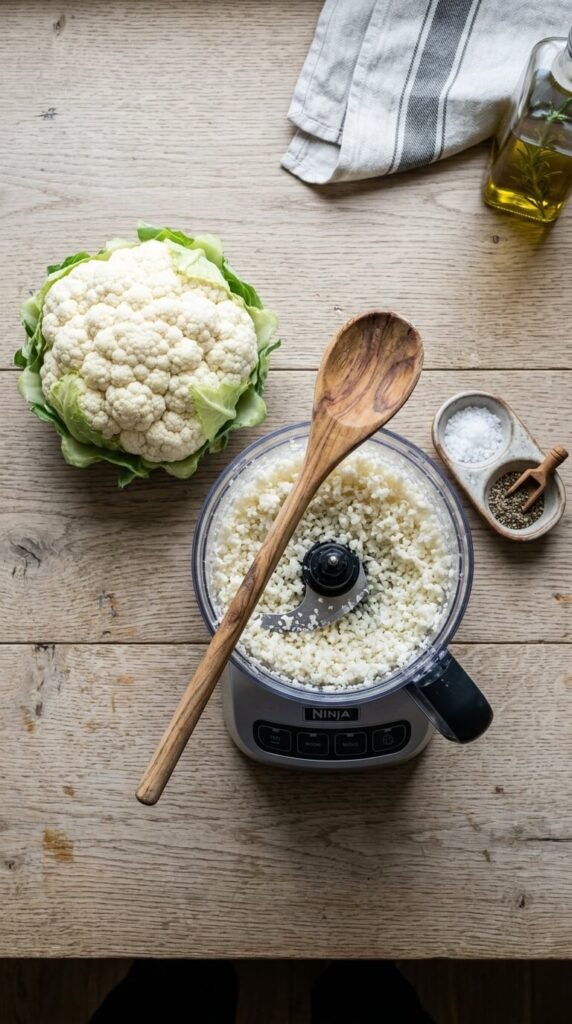
- Cut the cauliflower into florets, removing the thick stems.
- Pulse the florets in a food processor in small batches until they resemble rice grains. Don’t over-process, or it turns into mush at this stage already.
- No food processor? A box grater works great too — just grate the florets like cheese.
Tip: Pulse in short bursts rather than holding the button down. This keeps the texture even and rice-like instead of pasty.
Step 2: Remove Excess Moisture (The Most Important Step)
This is the step that makes or breaks your cauliflower rice.
- Spread the riced cauliflower onto a clean kitchen towel or several layers of paper towels.
- Gather the edges and twist tightly over a bowl or sink, squeezing out as much liquid as possible.
- You’ll be surprised how much water comes out — this is exactly what prevents mushiness later.
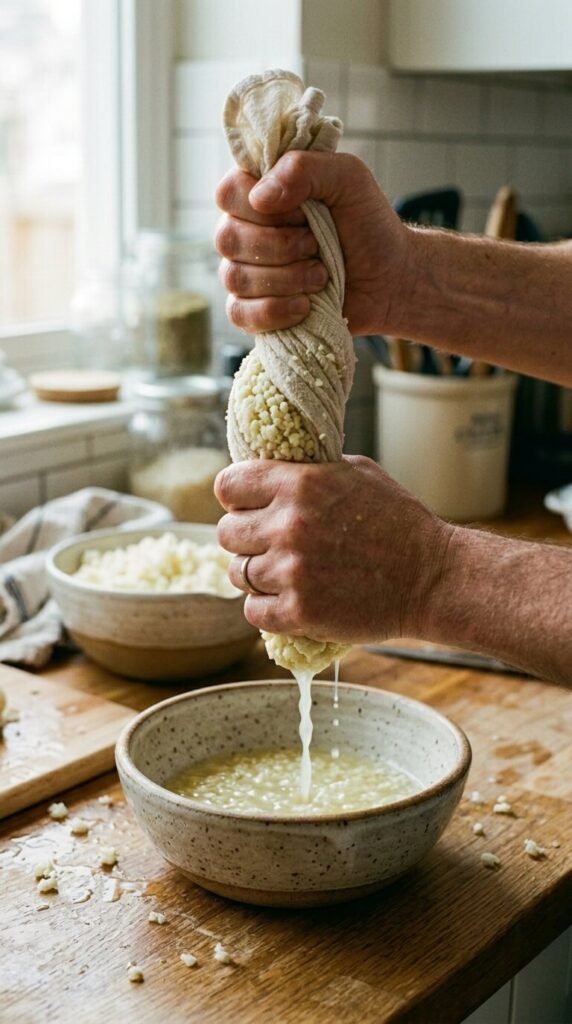
Tip: Don’t skip this step even if you’re short on time. A quick 30-second squeeze makes a huge difference in the final texture.
Step 3: Cook It Hot and Fast
Now for the actual cooking — and the key here is high heat and minimal time.
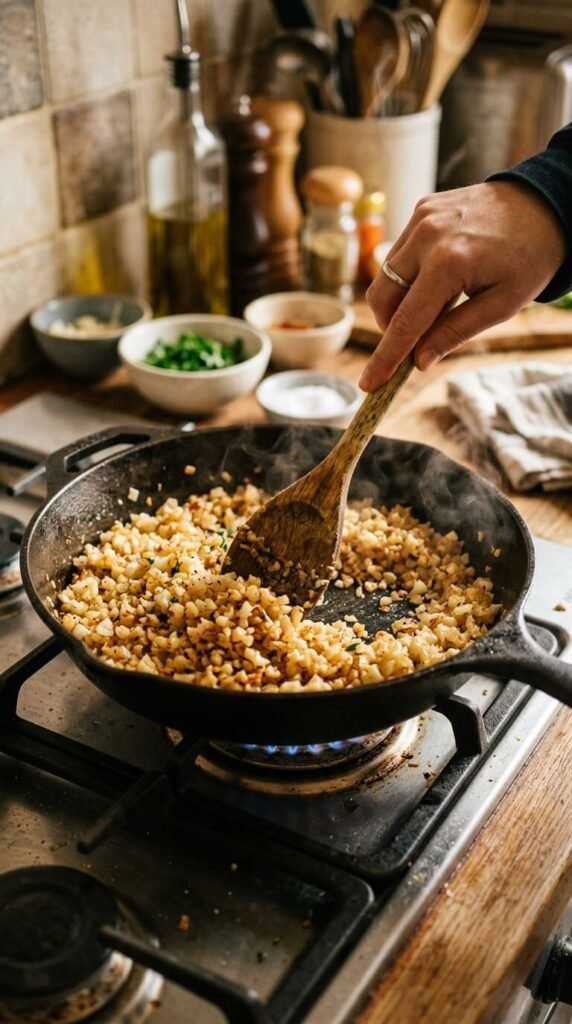
- Heat olive oil or butter in a large skillet over medium-high heat.
- Add the cauliflower rice in a single, even layer. If your pan is small, cook in batches rather than overcrowding.
- Add minced garlic if using, along with salt and pepper.
- Sauté for 4–6 minutes, stirring occasionally, until just tender with a slight bite — not soft and mushy.
Tip: Resist the urge to stir constantly. Let it sit for a few seconds at a time so it can lightly brown instead of just steaming.
Step 4: Know When to Stop Cooking
Cauliflower rice goes from perfect to mushy fast, so timing matters:
- It should look slightly glossy but still hold its shape.
- It should have a gentle bite, similar to al dente pasta — not fully soft.
- Once it starts looking translucent or watery again, it’s overcooked.
Tip: Taste-test around the 4-minute mark and adjust from there. Every stove and pan heats slightly differently.
Step 5: Serve It Up
Cauliflower rice is incredibly versatile and pairs well with:
- Stir-fries and fried rice-style dishes
- Grilled chicken, shrimp, or tofu bowls
- Mexican-inspired bowls with beans, salsa, and avocado
- As a simple side with roasted vegetables

Bonus Tips for Perfect Cauliflower Rice Every Time
- Don’t rice it too far in advance. Fresh cauliflower rice cooks better than rice that’s sat in the fridge releasing moisture.
- Use a wide, shallow pan. This helps moisture evaporate quickly instead of pooling.
- Skip the lid. Covering the pan traps steam, which leads straight back to mushiness.
- Season generously. Cauliflower is mild, so don’t be shy with garlic, herbs, or spices.
Storage and Reheating
- Fridge: Store in an airtight container for up to 3 days.
- Reheat: Use a hot skillet rather than the microwave to help re-crisp the texture instead of adding more moisture.
- Freezer: Riced cauliflower freezes well raw; just be sure to thaw and squeeze out moisture again before cooking.
The Bottom Line
Mushy cauliflower rice isn’t inevitable — it’s almost always a moisture problem with an easy fix. Once you rice it properly, squeeze out the extra water, and cook it hot and fast, you’ll get a light, fluffy texture every single time.
Save this recipe for later so you always have a foolproof method for perfect, non-mushy cauliflower rice!