We’ve all been there — you cut into a piece of chicken only to find it dry, rubbery, and about as appetizing as cardboard. But here’s the thing: juicy, perfectly cooked chicken doesn’t require hours of slow roasting or years of culinary school. It just requires knowing why chicken dries out — and how to fight back.

Whether you’re working with breasts, thighs, or tenders, this guide covers every quick-cooking method so you can get dinner on the table fast — without sacrificing a single drop of moisture.
Why Chicken Dries Out in the First Place
Before fixing the problem, it helps to understand it. Chicken dries out when:
- It’s overcooked. Proteins contract and squeeze out moisture once internal temp climbs past 165°F.
- It’s uneven in thickness. Thin ends cook faster than thick centers, leaving parts overdone.
- It skips the rest. Cutting chicken immediately after cooking lets all the juices run out onto your board instead of staying in the meat.
The fix? Control your heat, even out your chicken, and be patient for just a few minutes at the end.
Method 1: The Pound-and-Sear (Stovetop)
This is the fastest method for boneless chicken breasts and it works every single time.
Steps:
- Place your chicken breast in a zip-lock bag and pound it to an even ½-inch thickness using a meat mallet or rolling pin.
- Season generously with salt, pepper, garlic powder, and a drizzle of olive oil.
- Heat a skillet over medium-high heat until it’s very hot — you want a sizzle the second the chicken hits the pan.
- Cook for 3–4 minutes per side without touching it (that crust locks in moisture).
- Remove from heat, tent loosely with foil, and rest for 5 minutes.
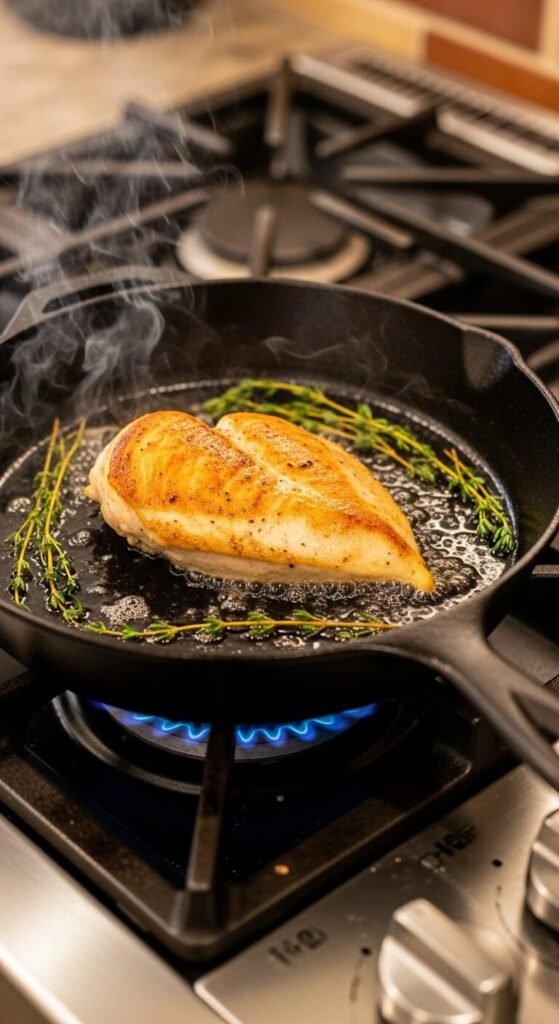
Pro tip: Add a tablespoon of butter in the last minute and baste the chicken as it finishes. Game changer.
Method 2: The High-Heat Oven Roast
Counterintuitive as it sounds, high heat is your friend when roasting chicken quickly. A 425–450°F oven creates a caramelized exterior that seals in juices before they have a chance to escape.
Steps:
- Brine your chicken for even 15–30 minutes in salted water (1 tbsp salt per cup of water). This alone dramatically improves moisture.
- Pat completely dry, coat with oil, and season.
- Roast at 425°F — boneless breasts take 20–25 minutes, bone-in thighs take 35–40 minutes.
- Use a meat thermometer and pull it at exactly 165°F.
- Rest for 5–10 minutes before cutting.
Method 3: Poaching (The Underrated Hero)
Poaching gets a bad rap for being boring, but it’s actually one of the most foolproof ways to keep chicken moist — and it’s surprisingly fast.
Steps:
- Place chicken in a pot and cover with cold water or chicken broth.
- Add aromatics: garlic, peppercorns, a bay leaf, a squeeze of lemon.
- Bring to a gentle simmer (not a rolling boil — that toughens the meat).
- Cook for 10–15 minutes for boneless breasts, then remove from heat and let sit in the liquid for 5 more minutes.
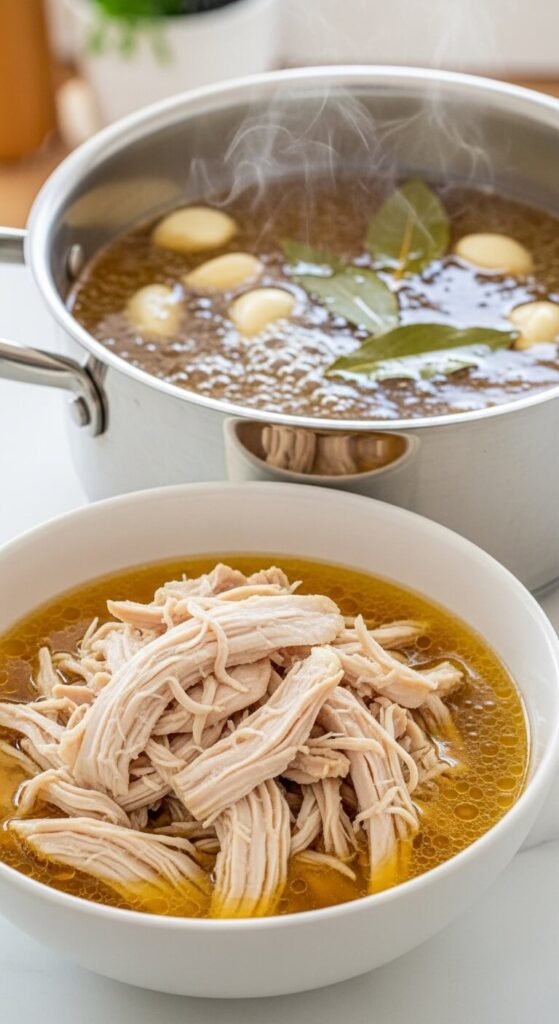
Poached chicken is perfect for meal prep — shred it for salads, tacos, grain bowls, or sandwiches all week long.
Method 4: Air Fryer Chicken
If you have an air fryer, this is your fastest route to juicy, crispy chicken.
- Preheat to 380°F
- Cook boneless thighs for 16–18 minutes, flipping halfway
- Breasts take about 18–20 minutes depending on thickness
- Always check with a thermometer — air fryers vary
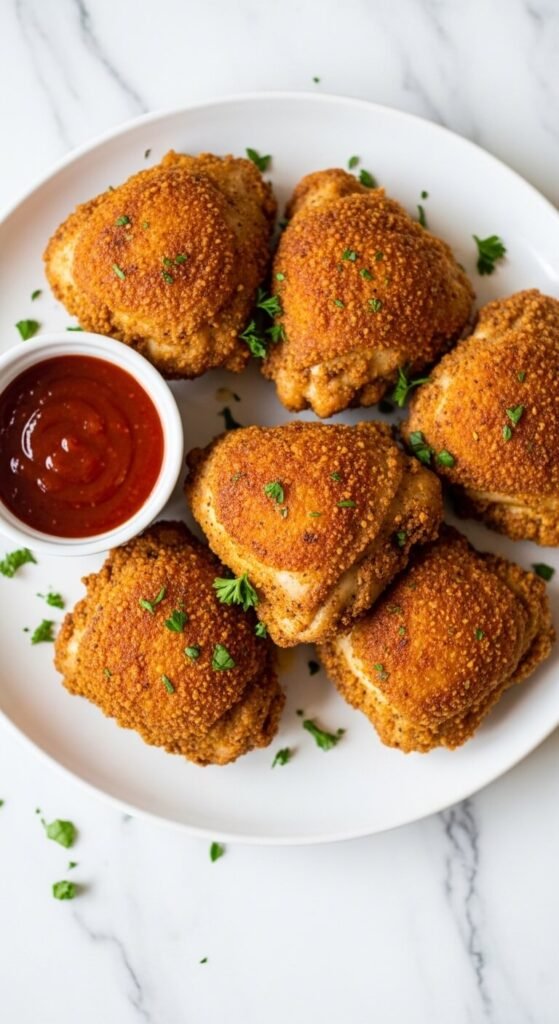
The circulating hot air cooks evenly and fast, making it nearly impossible to undercook — just don’t overcook it.
The Universal Rules for Juicy Chicken (No Matter the Method)
Regardless of how you cook it, these rules apply across the board:
- Season generously — under-seasoned chicken tastes dry even when it isn’t
- Don’t skip the rest — 5 minutes makes a real difference
- Use a thermometer — guessing is how chicken gets ruined
- Thighs over breasts when you’re in a rush — they’re more forgiving and stay moist longer
You’ve Got This
Dry chicken is 100% avoidable, and now you have every tool you need. Pick your method based on what you have available, follow the temperature rules, and always, always let it rest.