Let’s be honest — fish is one of the most nutritious, delicious, and budget-friendly proteins out there. But the moment someone mentions cooking it at home, the first thought is: “But the smell!” Here’s the good news: that dreaded fishy odor is almost entirely avoidable. With a few simple tricks, you can cook a restaurant-worthy fish dinner without your home smelling like a harbor at low tide.

Start With the Freshest Fish You Can Find
The biggest culprit behind that overwhelming fishy smell? Old fish. The fresher your fish, the less odor it produces — both raw and during cooking.
Here’s what to look for when buying fish:
- Clear, bright eyes (for whole fish) — cloudy eyes = older fish
- Firm flesh that springs back when pressed
- A mild, ocean-like scent — it should smell like the sea, not a fish market
- Moist, shiny skin with no discoloration
If you’re buying pre-packaged fillets, check the sell-by date and give the package a gentle sniff through the seal. When in doubt, buy from a fishmonger who turns over stock daily.

Choose the Right Cooking Method
Not all cooking methods are created equal when it comes to smell. Some methods trap odors; others minimize them significantly.
Low-odor cooking methods:
- Baking or roasting — enclosing the fish in foil or a covered dish traps steam and aroma inside
- Poaching — cooking fish gently in seasoned broth or water produces almost no airborne smell
- Air frying — a surprisingly odor-friendly method with minimal splatter
Methods that create more smell:
- Pan-frying at high heat (still doable — just requires ventilation, more on that below)
- Deep frying
- Grilling indoors
If you’re sensitive to smell, baking in a foil packet (en papillote style) is your best friend. Seal the fish with lemon, herbs, and a drizzle of olive oil — the packet locks everything in while the fish steams to perfection.
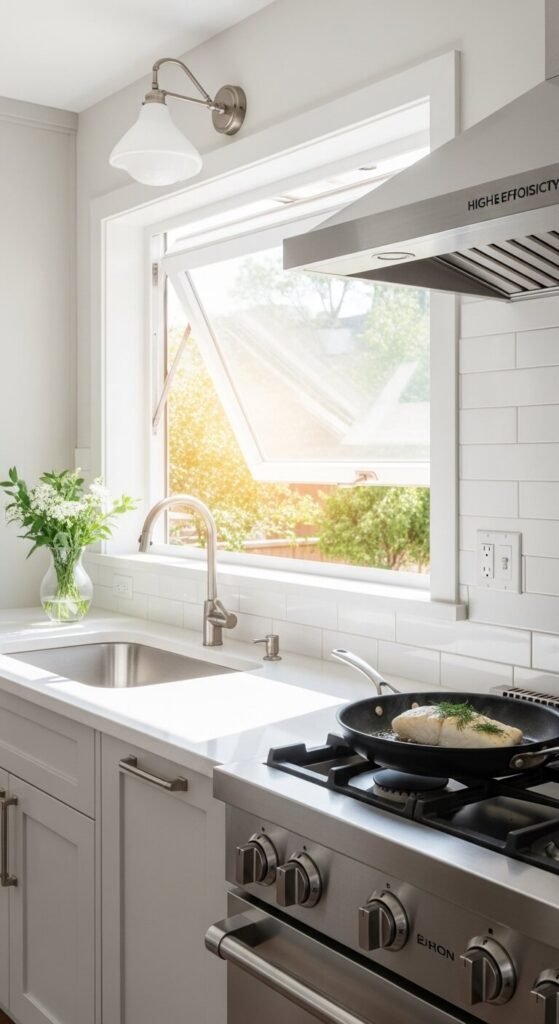
Ventilate Like You Mean It
Ventilation is everything. Before you even turn on the stove:
- Turn on your range hood at the highest setting
- Open a window or two to create cross-ventilation
- Run a small fan near the kitchen to push air outward
Start ventilating before cooking and keep it going for at least 10–15 minutes after. Air movement is your best odor-fighting tool.
Use Acid — It’s a Game Changer
Lemon, lime, and vinegar are not just flavor boosters — they chemically neutralize the compounds (trimethylamine) that cause fishy odor.
How to use acid to fight fish smell:
- Marinate the fish in lemon juice for 20–30 minutes before cooking
- Squeeze lemon over the fish halfway through cooking
- Add a splash of white wine to the pan — it deglazes and deodorizes at the same time
- After cooking, wipe down your pan with a little white vinegar before washing
You can also simmer a small pot of water with lemon slices and a few cloves on the stove while cooking. It acts as a natural air freshener that counters any lingering odor in real time.
Clean Up Fast and Smart
The smell that lingers overnight usually comes from dishes, pans, and surfaces — not the actual cooking.
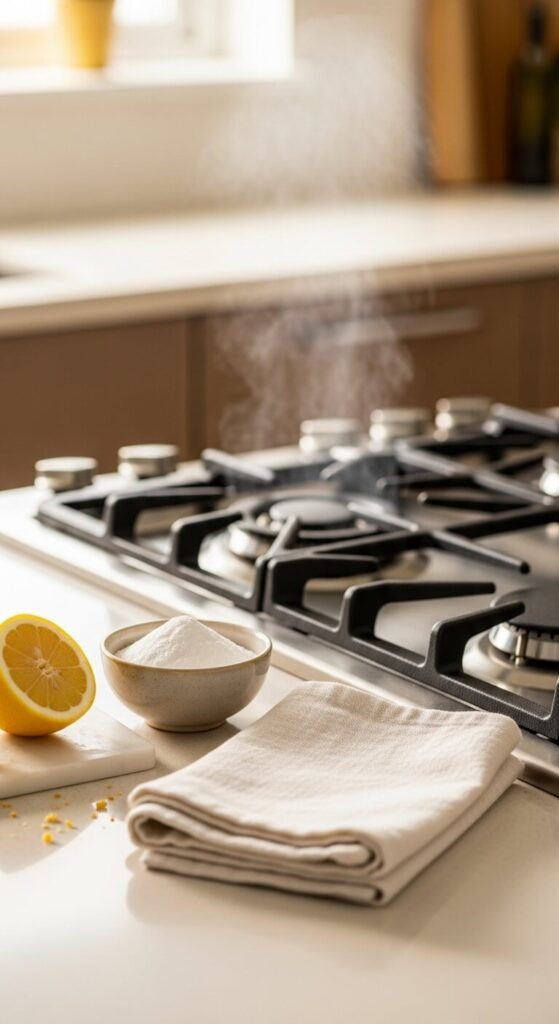
Post-cooking odor checklist:
- Wash the pan immediately after cooking, before residue dries
- Wipe down the stovetop and counters with a vinegar-water solution
- Rinse the sink with baking soda and hot water
- Take the trash out right away — fish scraps are a major source of lingering smell
- Light a soy or beeswax candle to neutralize the air naturally
Your Takeaway
Cooking fish at home doesn’t have to mean airing out your house for three days. With fresh fish, the right cooking method, proper ventilation, a good squeeze of lemon, and a smart cleanup routine, you can enjoy flaky, flavorful fish any night of the week — no complaints from the rest of the household required.
Save this post for your next fish night and share it with someone who’s been avoiding cooking fish at home! 🐟🍋