Imagine pulling a gorgeous, golden dinner straight from the oven — crispy roasted vegetables, perfectly cooked protein, caramelized edges — all made on a single pan. No tower of dirty dishes, no scrubbing pots at 9 PM, no regrets. Sheet pan dinners are the weeknight hero you didn’t know you needed, and once you master the basics, you’ll wonder how you ever cooked any other way.
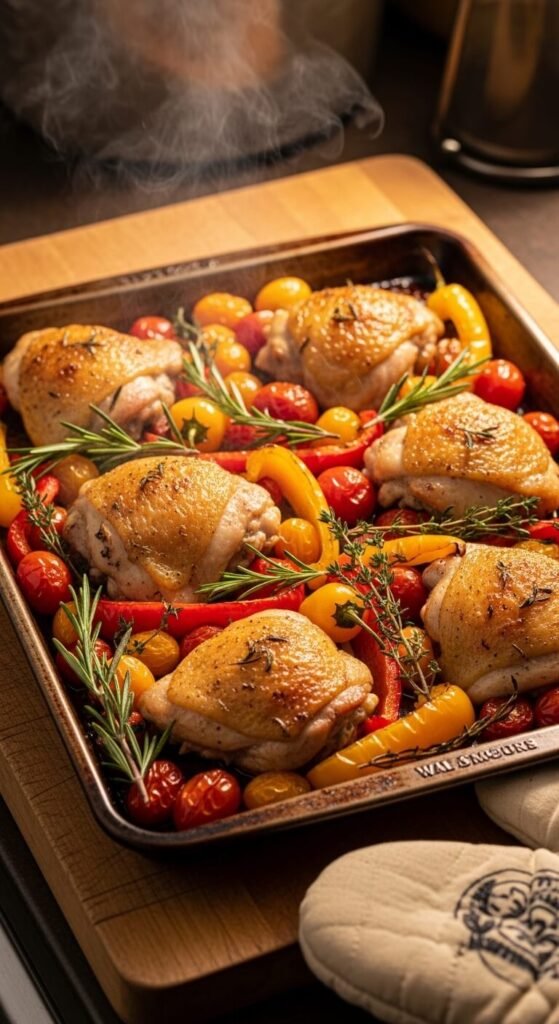
The Secret Starts Before You Even Turn On the Oven
The “zero cleanup” magic is all in the prep. Line your sheet pan before anything else touches it. Your two best friends here are:
- Parchment paper — ideal for fish, delicate vegetables, and anything with a sauce or glaze. Nothing sticks, nothing burns onto the pan.
- Heavy-duty aluminum foil — great for meats and root vegetables. When dinner’s done, just ball it up and toss it.
Avoid using both at the same time — layering them traps steam and prevents that beautiful caramelized crust you’re after. Pick one and commit.
Choose Ingredients That Cook at the Same Rate
This is the step most people skip, and it’s why sheet pan dinners sometimes come out with burnt broccoli and raw potatoes on the same tray.
The rule is simple: cut denser vegetables into smaller pieces so everything finishes cooking together.
- Root vegetables (potatoes, carrots, beets) → cut into 1-inch cubes
- Tender vegetables (zucchini, asparagus, green beans) → leave in larger pieces or add them 15 minutes later
- Proteins like chicken thighs, salmon fillets, or sausage → placed in the center where heat is most even
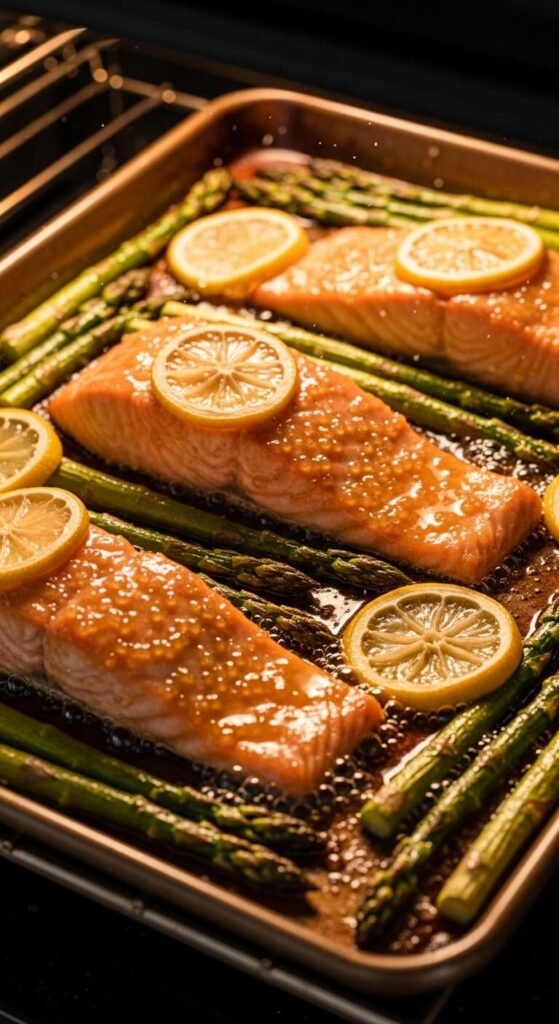
Season Like You Mean It
Sheet pan dinners live and die by their seasoning. A generous drizzle of olive oil is non-negotiable — it’s what helps everything roast (not steam) and turn golden. From there, build your flavor:
- Toss everything in a large bowl with oil and spices before it hits the pan. This ensures even coating without dirtying extra tools — just use your hands and rinse them once.
- Don’t overcrowd the pan. If ingredients are piled on top of each other, they’ll steam instead of roast. Use two pans if needed.
- A pinch of salt right before it goes in the oven draws out moisture and helps with browning.
Some winning flavor combos to try: lemon + garlic + herb, honey + sriracha, smoked paprika + cumin, or simple balsamic + rosemary.
Nail the Temperature and Timing
Most sheet pan dinners cook best at 400–425°F (200–220°C). This high heat is what gives you those irresistible crispy edges and deep roasted flavor.
A general timing guide:
- Chicken thighs (bone-in): 35–40 minutes
- Salmon fillets: 12–15 minutes
- Sausage rounds: 20–25 minutes
- Root vegetables: 30–40 minutes
- Broccoli, asparagus, zucchini: 15–20 minutes
Pro tip: Flip your vegetables halfway through cooking for even browning on both sides.
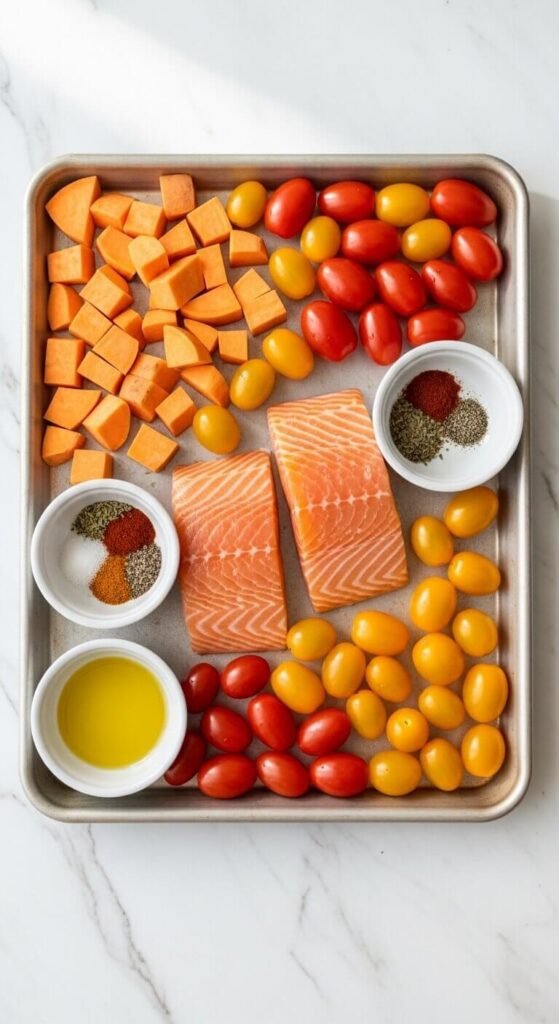
The Finishing Touch That Elevates Everything
Once the pan comes out of the oven, don’t skip the finishing step. A squeeze of fresh lemon, a handful of chopped fresh parsley, a drizzle of tahini, or a sprinkle of feta cheese can completely transform a simple sheet pan dinner into something that looks and tastes restaurant-worthy.
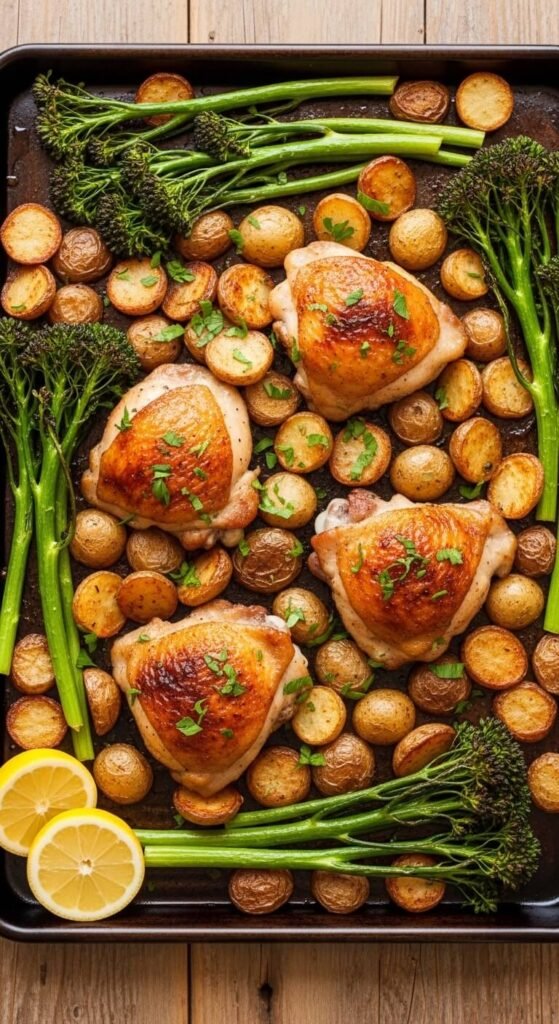
Cleanup? It’s Already Done.
Slide the parchment or foil off the pan, toss it in the trash, and give the pan a quick rinse if needed. That’s genuinely it. No soaking, no scrubbing, no stress.
Sheet pan dinners are endlessly customizable, weeknight-friendly, and — best of all — they make you look like you tried way harder than you actually did.