If you’ve ever cut into a piece of salmon only to find it chalky, rubbery, or dry enough to make you reach for a full glass of water — you’re not alone. Perfectly cooked salmon feels like a restaurant secret, but it’s actually shockingly simple once you know a few key tricks. We’re talking silky, flaky, melt-in-your-mouth fish that comes together in under 20 minutes.
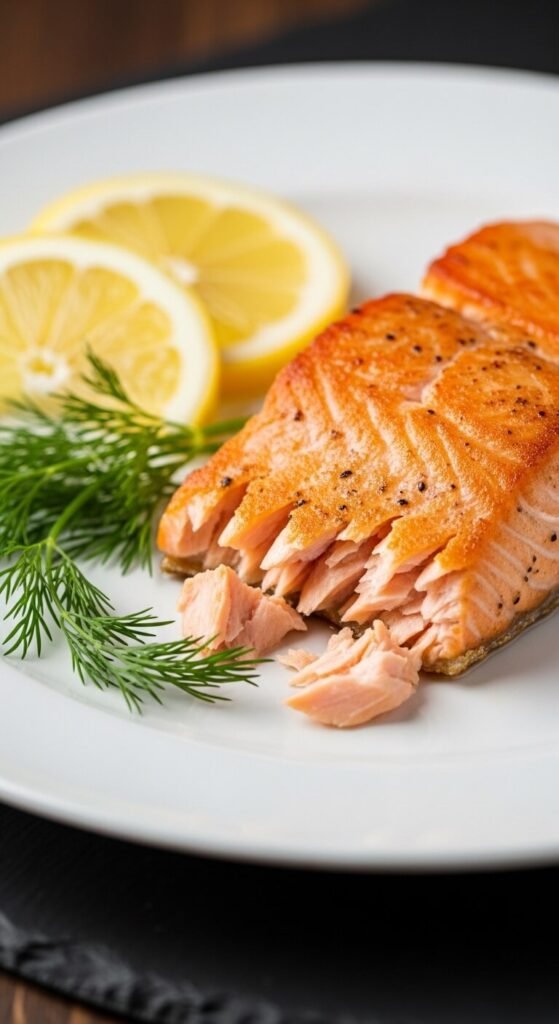
Let’s fix your salmon game for good.
Start With the Right Salmon
Not all salmon is created equal, and your results start at the grocery counter.
- Skin-on fillets are your best friend — the skin acts as a natural barrier against heat, keeping the flesh moist.
- Thickness matters. Look for fillets that are at least 1 inch thick. Thin pieces overcook in seconds.
- Fresh vs. frozen: Frozen salmon is totally fine — just thaw it overnight in the fridge and pat it completely dry before cooking.
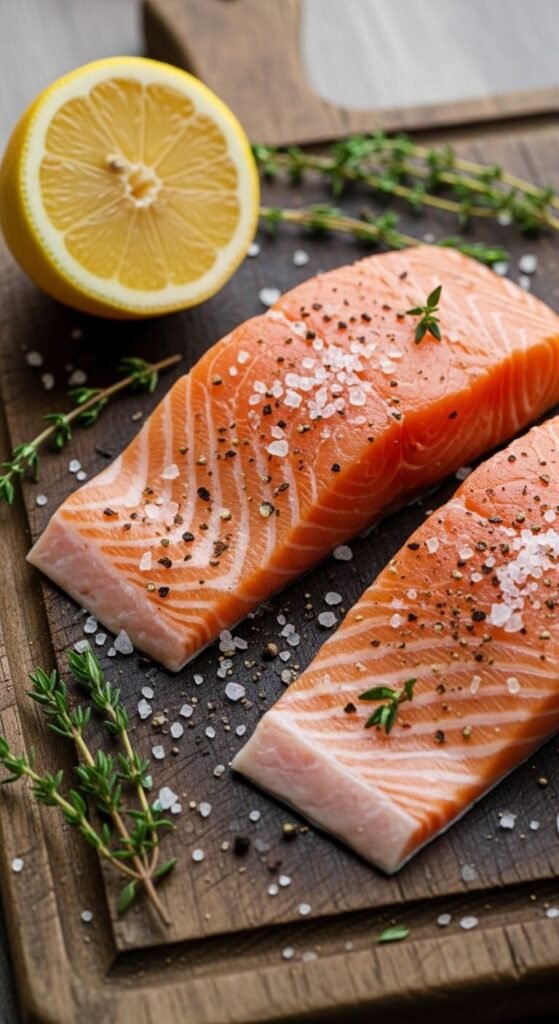
The #1 enemy of good salmon? Moisture on the surface. Before seasoning, press the fillets firmly with paper towels. Dry surface = better sear, better flavor.
Season Simply (But Smartly)
Salmon is rich and flavorful on its own, so you don’t need much.
A classic, foolproof seasoning combo:
- Salt and freshly cracked black pepper
- A drizzle of olive oil or a pat of softened butter
- Garlic powder or fresh minced garlic
- A squeeze of lemon juice after cooking (not before — acid breaks down the fish)
Let the seasoned fillets sit at room temperature for 10–15 minutes before cooking. Cold fish hitting a hot pan is one of the most common reasons salmon cooks unevenly.
The Pan-Sear Method: Your New Go-To
This is the method that gives you that gorgeous, restaurant-worthy crust.
What you need: A cast iron skillet or stainless steel pan (not non-stick — you want serious heat).
Steps:
- Heat the pan over medium-high heat for at least 2 minutes until it’s properly hot.
- Add a high smoke-point oil — avocado or grapeseed oil work great.
- Place salmon skin-side down and press gently for 10 seconds so it doesn’t curl.
- Don’t touch it. Let it cook undisturbed for 4–5 minutes until the skin is crispy and the sides look opaque about halfway up.
- Flip once, cook for just 1–2 more minutes, then remove from heat.
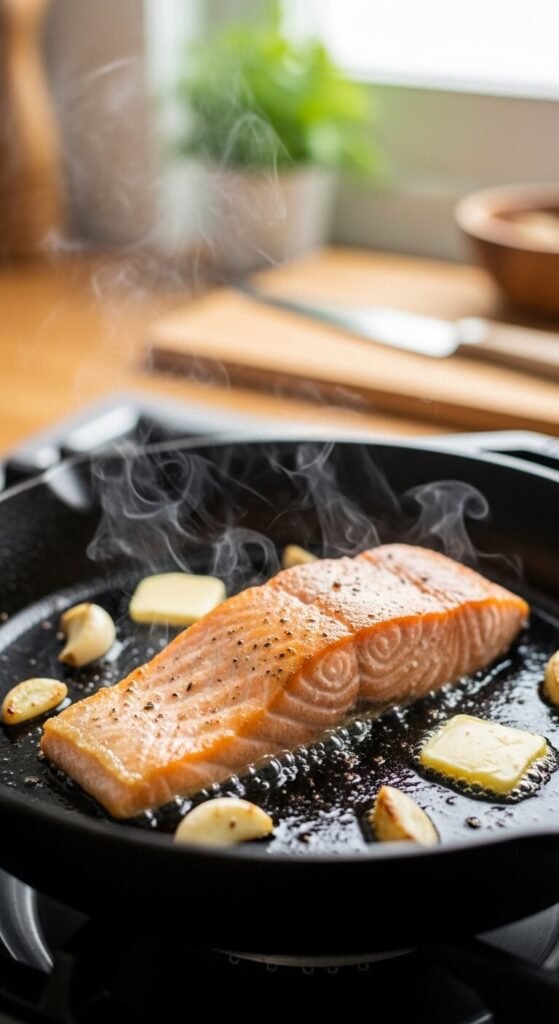
The goal is to cook it about 80% on the skin side — this keeps the top tender and just barely cooked through, which is exactly where you want it.
How to Tell When It’s Done (Without Overcooking It)
Skip the guesswork. Here’s what to look for:
- The flesh changes color from deep translucent pink to a lighter, opaque pink as it cooks upward.
- The 10-second press test: Press the thickest part gently with your finger. It should feel firm but still give slightly — like pressing the base of your thumb.
- Internal temperature: 125–130°F (52–54°C) for medium; 145°F (63°C) for fully cooked. A small instant-read thermometer is worth every penny.
If it flakes apart the moment you touch it, it’s overcooked. Pull it just before you think it’s ready — carryover heat will finish the job.
The Finishing Touch
Right before serving, add a small pat of butter to the pan and spoon it over the top of the fillets. This is called basting, and it’s the move that takes salmon from good to exceptional.
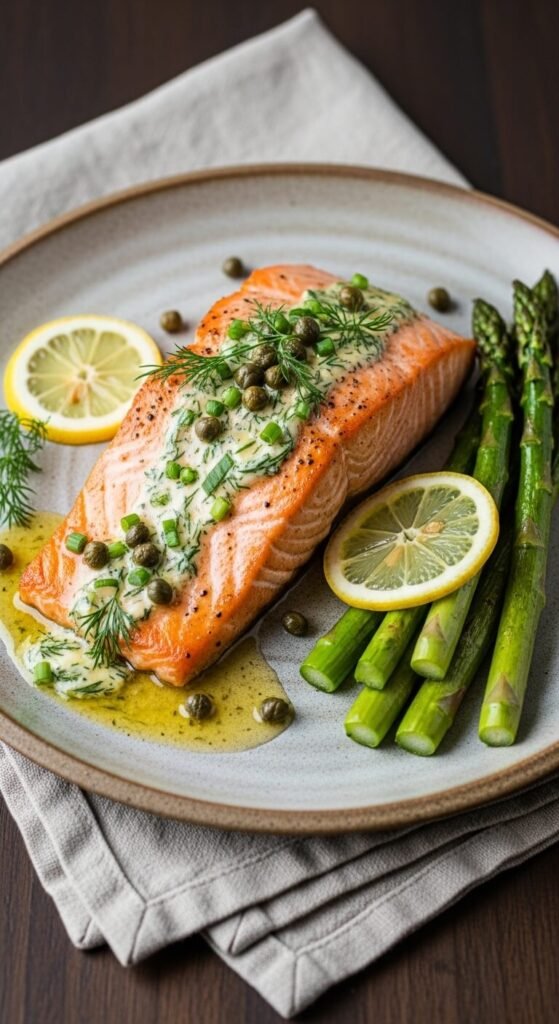
Serve immediately with a fresh squeeze of lemon, some roasted vegetables, or a simple green salad.
You’ve Got This
Perfect salmon isn’t about fancy equipment or professional training — it’s about dry fish, a screaming hot pan, and the patience to not flip it too soon. Follow these steps once and you’ll never go back to dry, sad salmon again.