Turkey gets a bad reputation for being dry — but that’s almost always a cooking issue, not a turkey issue. Turkey tenderloin, in particular, is one of the easiest cuts to get right: it’s lean, fast-cooking, and when handled correctly, unbelievably juicy and tender.
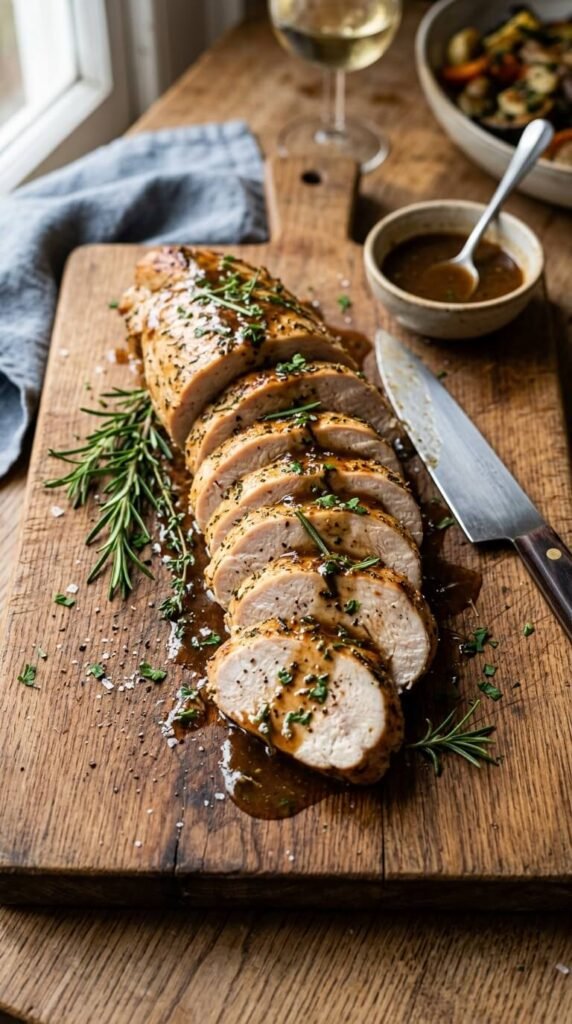
If your turkey memories are mostly about dry, sad Thanksgiving leftovers, it’s time for a redo. Let’s walk through exactly how to cook turkey tenderloin so it comes out moist, flavorful, and totally craveable — any night of the week.
Why Turkey Tenderloin Dries Out So Easily
Understanding the problem makes it much easier to avoid.
- It’s very lean. Turkey tenderloin has little fat to keep it moist, so timing matters a lot.
- It’s often overcooked. Many people cook it well past done out of fear of undercooking poultry.
- It’s cooked at the wrong temperature. Too-high heat dries the outside before the inside finishes.
- It’s not rested before slicing. Cutting too soon lets all the juices spill out instead of redistributing.
Once you address these four things, juicy turkey tenderloin becomes practically guaranteed.
What You’ll Need
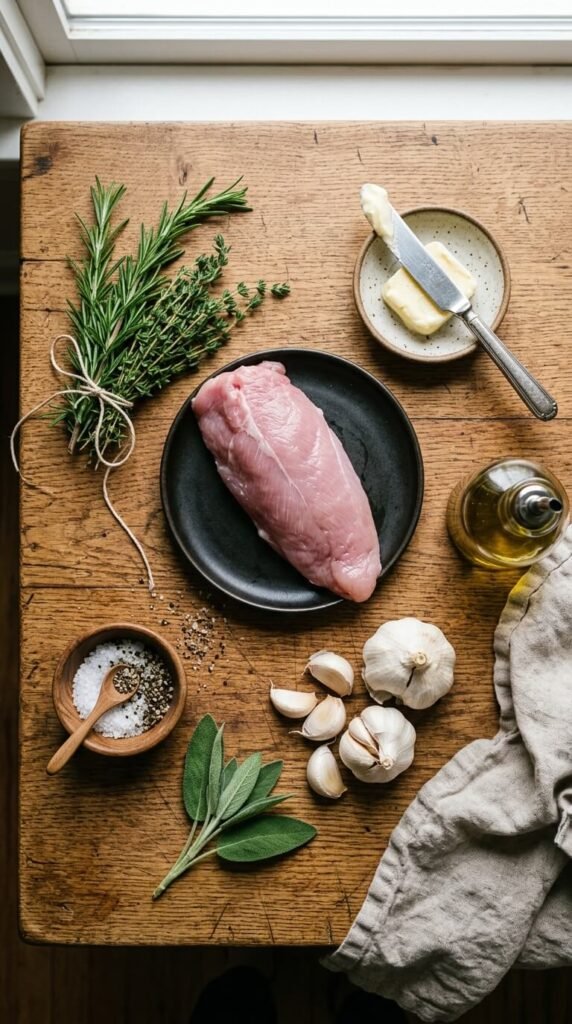
- 1–1.5 lbs turkey tenderloin
- 2 tbsp olive oil
- 2 tbsp butter
- 3 cloves garlic, minced
- 1 tsp dried thyme
- 1 tsp dried rosemary
- ½ cup chicken broth
- Salt and pepper to taste
Step 1: Bring the Turkey to Room Temperature
This small step makes a big difference in even cooking.
- Remove the turkey tenderloin from the fridge about 20–30 minutes before cooking.
- Pat it dry with paper towels — this helps with browning.
- Season generously with salt, pepper, and a bit of the dried herbs.
Tip: Cold meat straight from the fridge cooks unevenly, leading to a dry exterior by the time the center catches up.
Step 2: Sear for a Golden Crust
A good sear locks in flavor and helps create a beautiful exterior.
- Heat olive oil in an oven-safe skillet over medium-high heat.
- Sear the turkey tenderloin for 2–3 minutes per side, until golden brown all over.
- Don’t worry about cooking it through at this stage — you’re just building color and flavor.
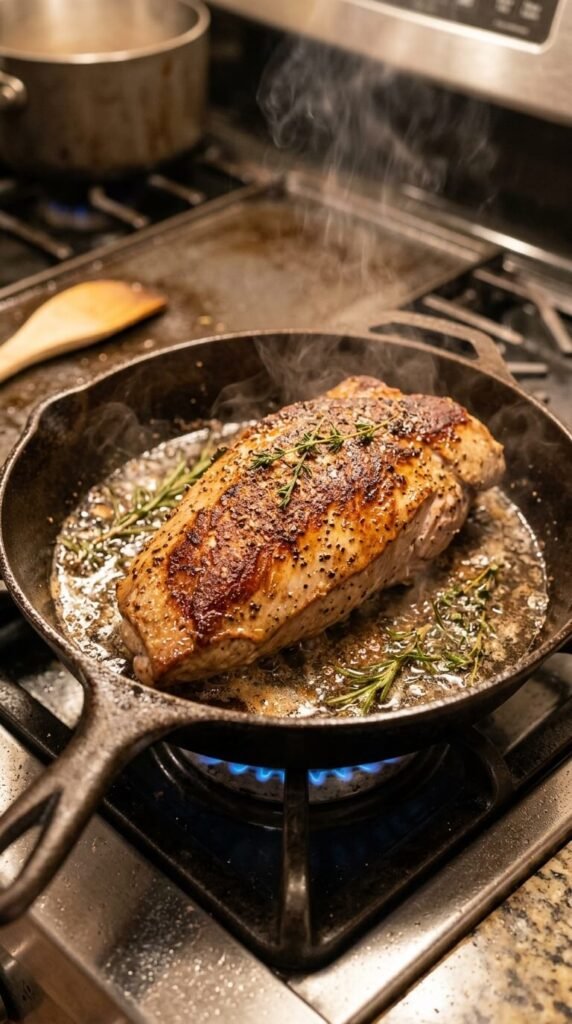
Tip: Let the pan get properly hot before adding the turkey. A weak sear leads to steaming instead of browning.
Step 3: Finish Cooking with Low, Gentle Heat
This is the step that prevents dryness more than any other.
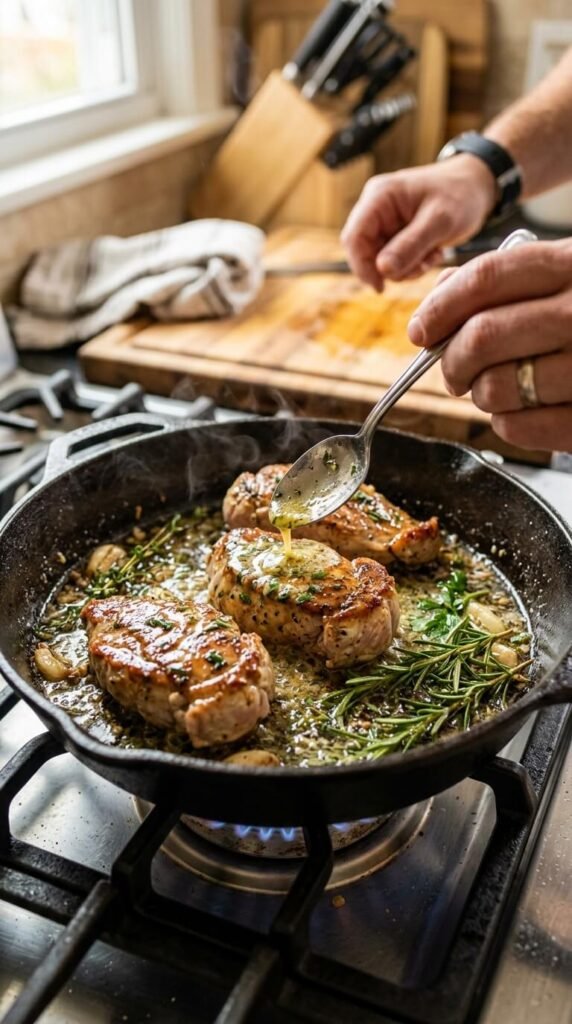
- Lower the heat to medium-low and add butter, garlic, and the remaining herbs to the skillet.
- Spoon the melted garlic butter over the turkey as it continues cooking.
- Cook gently, flipping occasionally, until the internal temperature reaches 165°F — use a meat thermometer for accuracy.
Tip: Pull the turkey from heat at 160–162°F; it will continue rising to 165°F as it rests, without overcooking.
Step 4: Make a Quick Pan Sauce
While the turkey rests, turn those flavorful drippings into a simple sauce.
- Pour chicken broth into the same skillet, scraping up the browned bits from the bottom (this is where all the flavor lives).
- Simmer for 2–3 minutes until slightly reduced.
- Spoon this sauce over the sliced turkey before serving for extra moisture and flavor.
Tip: If the sauce needs more richness, whisk in an extra pat of butter right before serving.
Step 5: Rest Before Slicing (Don’t Skip This!)
This might be the single most important step for juicy turkey.
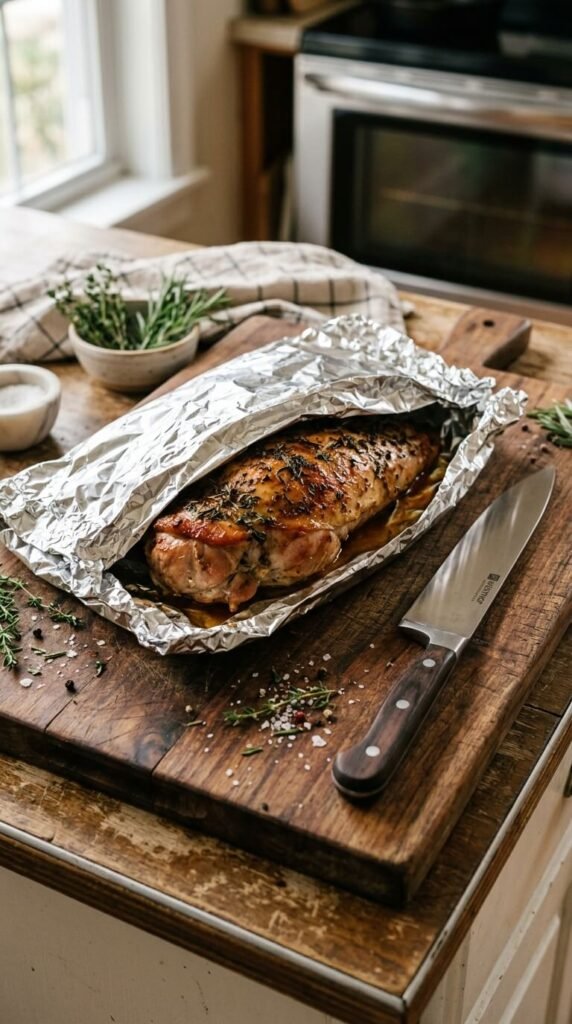
- Transfer the turkey to a cutting board and let it rest for 5–10 minutes before slicing.
- Loosely tent it with foil to keep it warm while resting.
- Resting allows the juices to redistribute throughout the meat instead of running out the moment you cut into it.
Step 6: Slice and Serve
- Slice against the grain into even medallions for the most tender bite.
- Drizzle with the pan sauce and a sprinkle of fresh herbs.
Turkey tenderloin pairs beautifully with:
- Garlic mashed potatoes
- Roasted seasonal vegetables
- A simple green salad
- Buttered egg noodles or rice
Tips for the Juiciest Turkey Tenderloin Every Time
- Always use a meat thermometer. Guessing is the number one cause of overcooked turkey.
- Don’t skip the rest. Even 5 minutes makes a noticeable difference.
- Baste while cooking. Spooning butter or pan juices over the turkey as it cooks adds moisture and flavor.
- Slice against the grain. This makes every bite more tender, regardless of how it was cooked.
Storage and Reheating
- Fridge: Store sliced turkey in an airtight container for up to 3–4 days.
- Reheat: Warm gently in a skillet with a splash of broth to prevent drying out; avoid high heat or long microwave times.
- Freezer: Freeze cooked turkey tenderloin for up to 2 months; thaw in the fridge before reheating.
The Bottom Line
Juicy turkey tenderloin isn’t about luck — it’s about technique. With a proper sear, gentle finishing heat, a quick pan sauce, and a non-negotiable rest period, you’ll get tender, flavorful turkey every single time.
Save this recipe for later so you always have a foolproof method for juicy, flavorful turkey tenderloin!