You write it on Sunday with the best intentions. By Wednesday, it’s buried under a grocery receipt and you’re staring into the fridge wondering what to make for dinner — again. Sound familiar? A weekly menu only works when it’s built around your real life, not the version of yourself that meal preps for three hours every Sunday. Here’s how to create one that actually sticks.
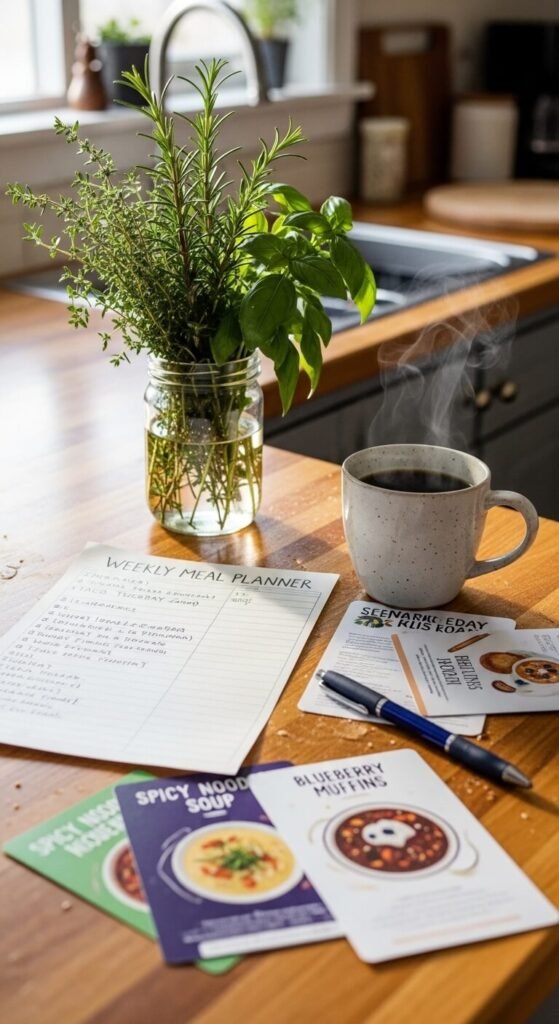
Start With What You Already Know You’ll Eat
The biggest mistake people make when planning a menu? Getting too ambitious. Before you browse Pinterest for new recipes, start by listing 10–15 meals your household already loves. These are your anchor meals — reliable, crowd-pleasing, and low-effort in execution because everyone already knows they like them.
- Think about what you made last month that disappeared fast
- Include one or two “lazy meals” (scrambled eggs, pasta with jarred sauce — no shame!)
- Note which meals use similar ingredients so you can shop smarter
Once you have your anchor list, planning a week becomes a simple matter of picking and arranging, not reinventing the wheel every time.
Map Your Week Before You Map Your Meals
Not every night is equal. A Tuesday after work is completely different from a relaxed Sunday afternoon. Match your meals to your actual energy levels, not your ideal ones.
A simple framework that works:
- Monday–Wednesday → Quick, 30-minute meals (sheet pan dinners, stir-fries, wraps)
- Thursday → Use up fridge leftovers in a creative way (grain bowls, fried rice)
- Friday → Fun or takeout-style meal (homemade pizza, tacos, burgers)
- Weekend → Longer, more enjoyable cooking (slow cooker meals, baked dishes)
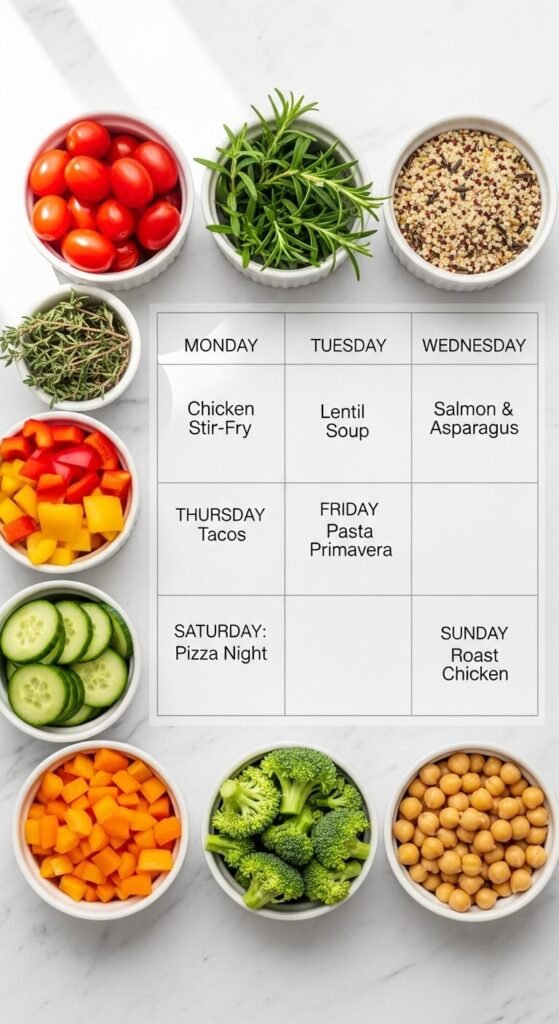
Planning around your week instead of despite it is what makes a menu feel realistic rather than aspirational.
Build Your Grocery List at the Same Time
A menu without a matching grocery list is just a wish list. As soon as your weekly plan is set, immediately write out every ingredient you need — organized by category (produce, proteins, pantry, dairy).
Here’s why this matters:
- You’ll spot ingredient overlaps (buying a big bunch of cilantro? Use it in three different meals)
- It cuts impulse buying and food waste dramatically
- You’ll never hit Tuesday and realize you forgot the one thing you need
Keep the list on your phone so it’s with you whenever you shop. Apps like AnyList or even a simple Notes folder work perfectly.
Keep It Flexible — On Purpose
Rigid menus get abandoned. Life happens: someone works late, the kids don’t want what’s planned, or you’re just not feeling that salmon. Build flexibility into the plan from the start.
- Assign meals to general days, not strict time slots
- Always plan one “swap night” with a pantry backup meal (pasta, canned soup upgraded with fresh toppings)
- If a meal doesn’t happen, move it to the next week — don’t scrap it
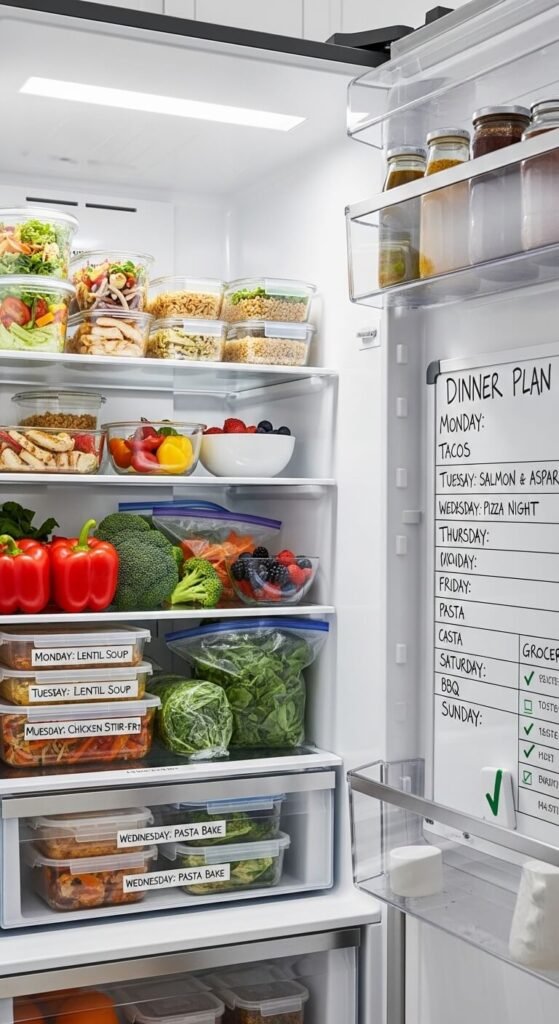
A plan that bends doesn’t break.
Make It Visual and Put It Somewhere You’ll See It
A menu tucked in a notebook will be forgotten. One on the fridge? That gets used. The more visible your plan is, the more likely it is to influence what actually happens at dinnertime.
Try one of these:
- A magnetic whiteboard or chalkboard on the fridge
- A printed weekly template slipped into a clear frame
- A notes widget on your phone’s home screen
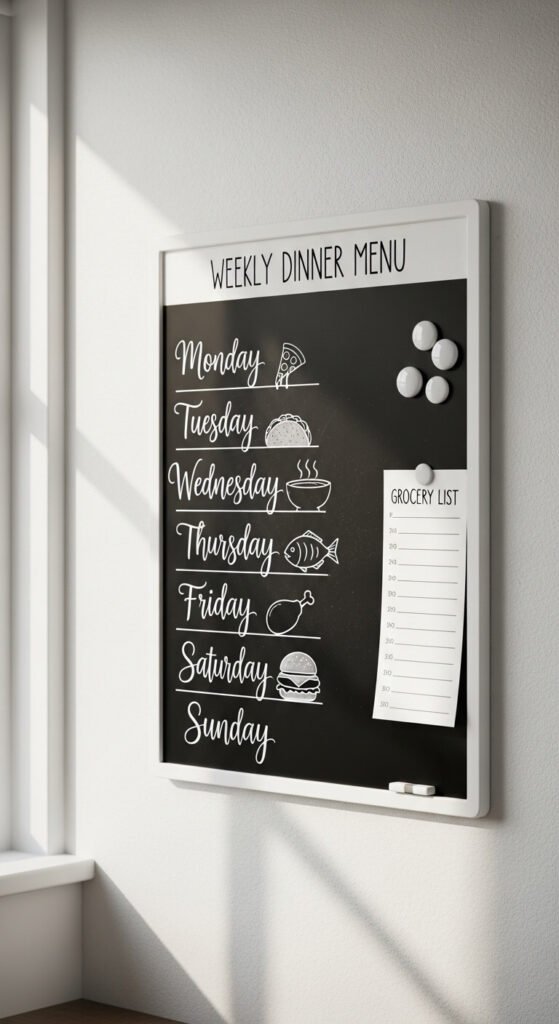
Visibility creates accountability — even if it’s just to yourself.
Review, Repeat, and Refine
At the end of the week, spend five minutes asking: What worked? What didn’t? This tiny habit is what separates people who meal plan once and give up from those who actually make it a lifestyle.
- Circle meals that everyone loved → add them to your anchor list permanently
- Note which nights felt stressful → adjust the meal type for that day going forward
- Track seasonal favorites so you can revisit them at the right time of year

The Takeaway
A great weekly menu isn’t about being perfectly organized — it’s about making dinnertime easier. Start simple, stay flexible, and build on what works. You don’t need a complicated system. You just need one that fits your life.
Save this article for your next Sunday planning session — and finally build a menu that actually gets used!