What if dinner could stop being a daily decision-fatigue nightmare and start being something everyone in the house actually looks forward to? That’s the magic of theme nights. One simple weekly structure, and suddenly “what’s for dinner?” isn’t a dreaded question anymore — it’s just Tuesday, which means tacos.
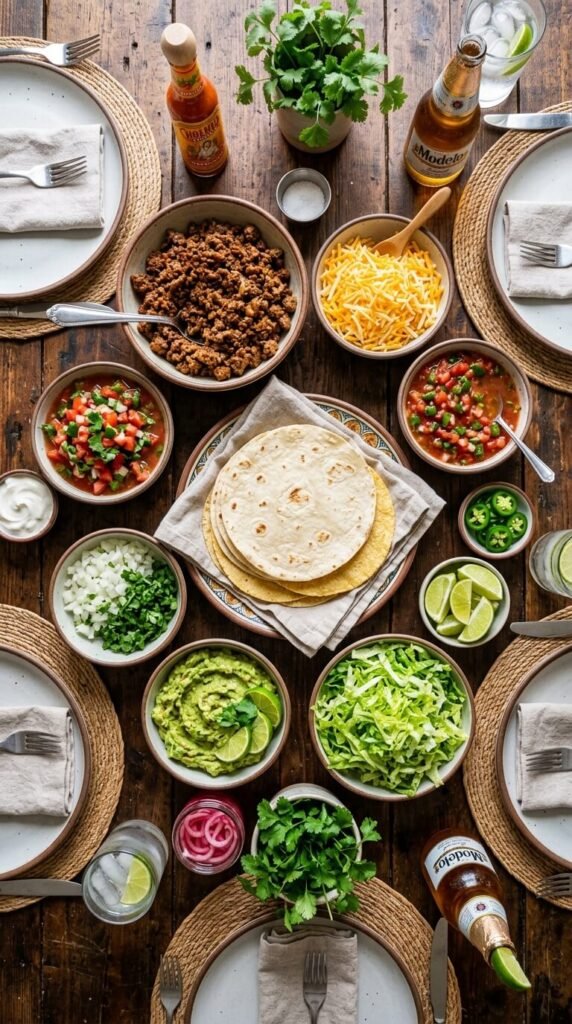
If you’ve ever scrolled your fridge in despair at 5:30 p.m., this one’s for you. Let’s build a theme night system that actually sticks.
Why Theme Nights Work So Well
Theme nights aren’t just cute — they solve real dinner-time problems.
- They eliminate decision fatigue. No more nightly debates about what to cook.
- They make grocery shopping easier. You can plan and shop by theme, not by guesswork.
- They create routine and excitement. Kids (and adults) genuinely look forward to “their” night.
- They reduce food waste. Repeating themes means you reuse ingredients efficiently.
Once the system is in place, dinner basically plans itself.
Step 1: Pick Your Core Themes
Start with 4–6 themes that fit your family’s taste and schedule. Popular options include:
- Taco Tuesday – endlessly customizable and fast
- Pizza Friday – a fun way to kick off the weekend
- Pasta Night – great for using up leftover veggies and proteins
- Stir-Fry Sunday – a flexible, healthy reset before the week starts
- Soup & Sandwich Night – cozy and low-effort
- Breakfast-for-Dinner Night – easy, affordable, and always a hit
Tip: Choose themes that are flexible, not rigid recipes. “Taco Tuesday” can mean beef tacos one week and shrimp tacos the next — same theme, different meal.
Step 2: Map Out a Weekly Rhythm
Once you’ve picked your themes, assign them to specific days. This is what turns “theme nights” into an actual system.
A sample weekly rhythm might look like:
- Monday: Meatless Monday
- Tuesday: Taco Tuesday
- Wednesday: Pasta Night
- Thursday: Slow Cooker Night
- Friday: Pizza Friday
- Saturday: Takeout-Inspired Night (homemade versions of favorite takeout dishes)
- Sunday: Soup & Sandwich Night
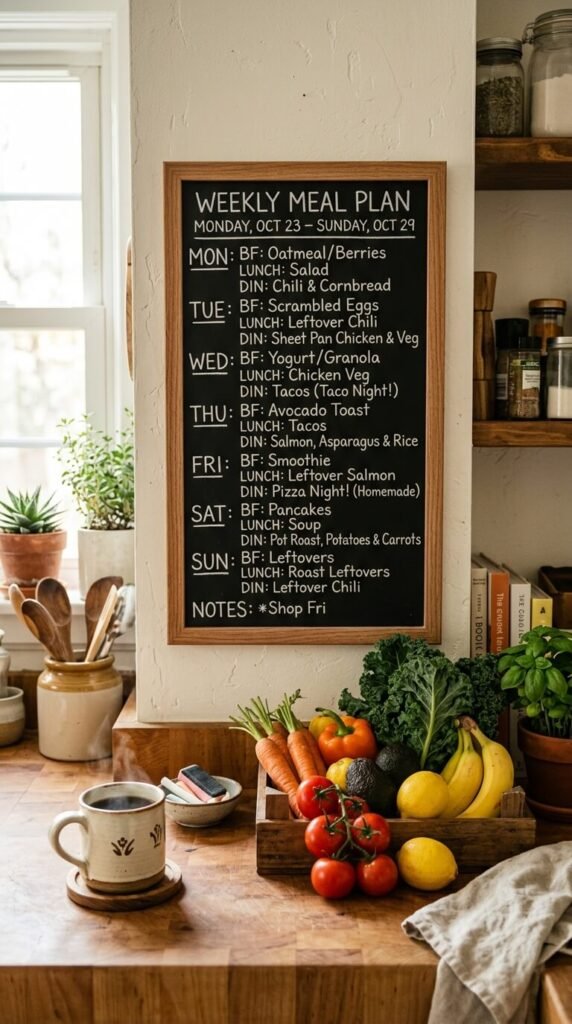
Tip: You don’t need every single day themed. Even 3–4 themed nights a week dramatically cuts down on decision-making.
Step 3: Build a Flexible “Formula” for Each Theme
The secret to making theme nights sustainable long-term is treating each one like a formula, not a fixed recipe.
For example, Pizza Friday could follow this formula:
- Base: store-bought dough, cauliflower crust, or naan
- Sauce: marinara, pesto, or white garlic sauce
- Cheese: mozzarella, feta, or a dairy-free option
- Toppings: whatever’s in the fridge — pepperoni, veggies, leftover chicken
This way, the theme stays the same, but the meal never gets boring.

Step 4: Stock a “Theme Night Pantry”
Make life easier by keeping theme-specific staples on hand at all times.
Taco Tuesday staples:
- Tortillas, taco seasoning, canned beans, salsa, shredded cheese
Pasta Night staples:
- Pasta, jarred or homemade sauce, parmesan, garlic, olive oil
Stir-Fry staples:
- Soy sauce, rice, frozen veggies, sesame oil, garlic and ginger
When these basics are always stocked, putting dinner together takes minutes, not a grocery run.
Step 5: Get the Whole Family Involved
Theme nights work even better when everyone has a role.
- Let kids choose toppings or mix-ins for their theme night.
- Rotate who picks the “Takeout-Inspired” dish each week.
- Make it interactive — taco bars, build-your-own pizza, or DIY stir-fry bowls all add a fun, hands-on element.
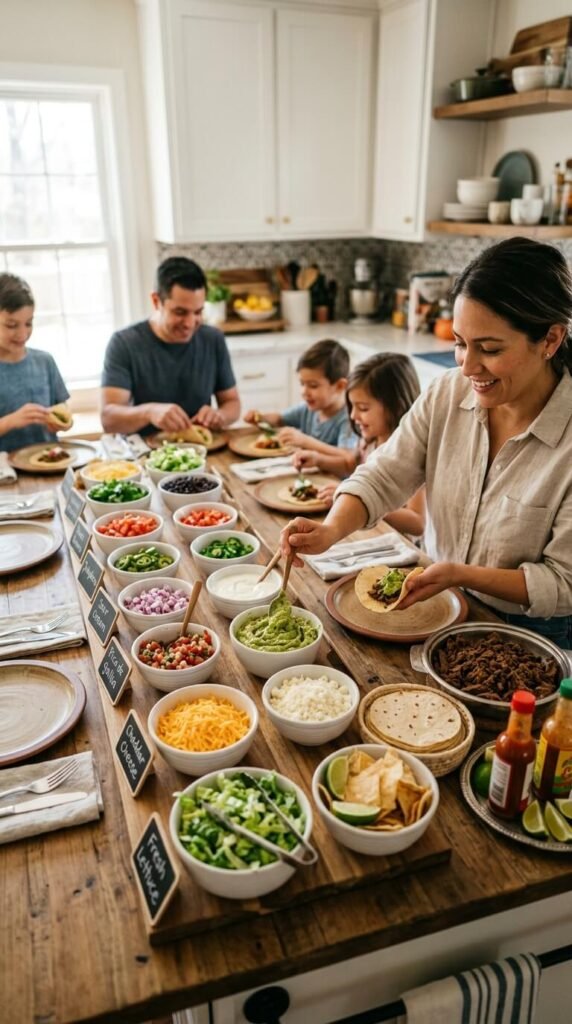
Tip: Involving kids in the process — even just picking toppings — makes them more excited to eat what’s served.
Step 6: Keep It Simple and Adjust as Needed
Theme nights should make your life easier, not add more pressure. A few reminders:
- It’s okay to repeat the same meal within a theme if it’s a hit.
- Swap themes seasonally (soup nights in winter, grilling nights in summer).
- Use theme nights as a flexible guide, not a strict rule — life happens, and that’s fine.
The Bottom Line
Theme nights take the guesswork out of dinner and turn mealtime into something the whole family can predict, prep for, and actually enjoy. Once you build your rhythm and stock your pantry accordingly, dinner planning becomes almost automatic.
Save this recipe for later so you always have a go-to system for stress-free, delicious dinners — every night of the week!