You did everything right. You spent your Sunday afternoon prepping chicken, rice, and roasted veggies for the week. But by Wednesday, that microwave reheat turns your once-juicy chicken into a rubbery, dry disappointment. Sound familiar? The problem isn’t your meal prep — it’s how you’re reheating it.
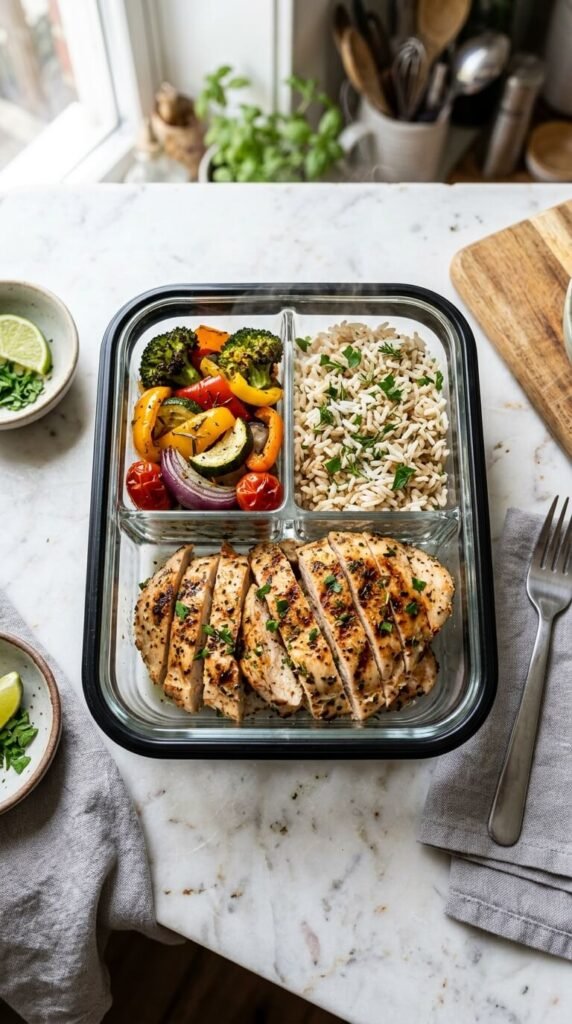
The good news is that with a few small adjustments, you can reheat your meal prep so it tastes just as fresh and moist as the day you made it. Let’s fix this once and for all.
Why Reheated Food Dries Out in the First Place
Understanding the “why” makes the fixes much easier to remember.
- Microwaves cook unevenly. They heat water molecules fast, which can overcook the edges while the center stays cold.
- Moisture evaporates quickly. Without a lid or cover, steam escapes and food dries out.
- High heat for too long. Blasting food on full power for several minutes pulls out moisture fast.
- Reheating without any added liquid. Proteins especially need a little extra moisture to bounce back.
Once you address these factors, reheated meals can taste nearly as good as fresh.
Step 1: Add Moisture Before Reheating
This is the single most effective trick for keeping food from drying out.
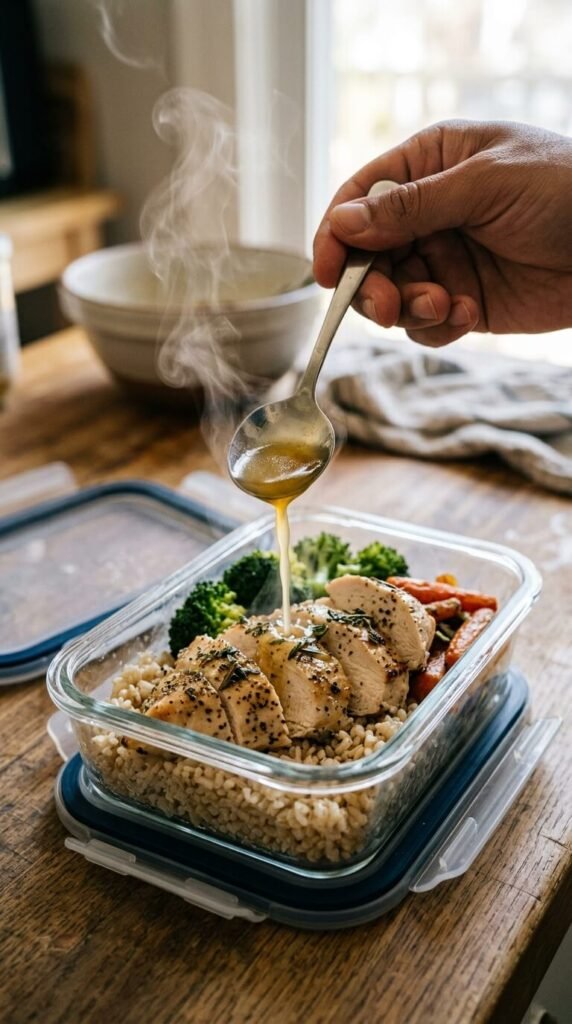
- Add a splash of water, broth, or sauce to proteins and grains before reheating.
- For rice, sprinkle a tablespoon or two of water over the top before covering.
- For meats, a small drizzle of broth or pan sauce works wonders.
Tip: Think of added moisture as “insurance” against the drying effects of reheating — it gives the food something to hold onto.
Step 2: Cover Everything While Reheating
Trapping steam is key to keeping food moist.
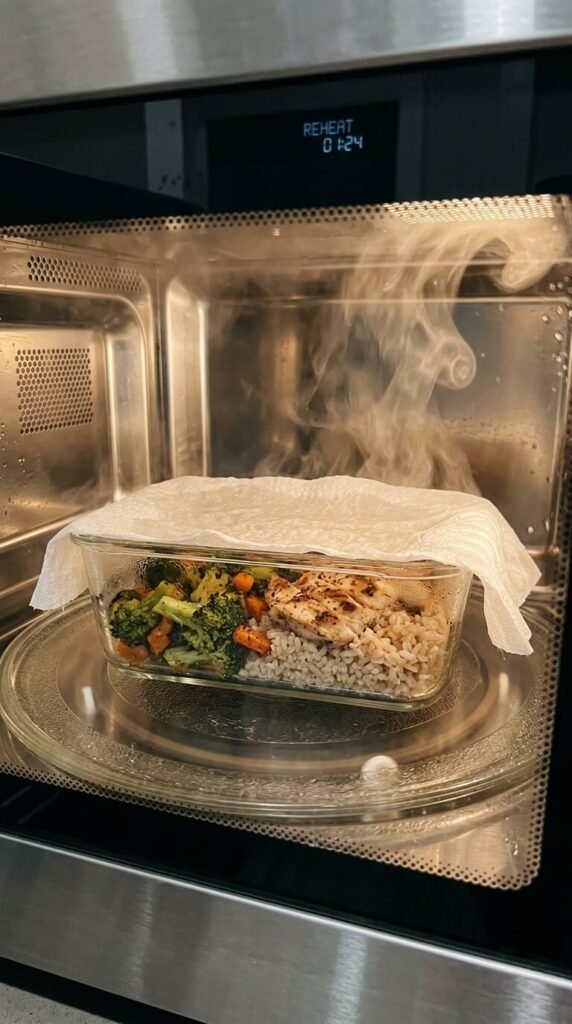
- Use a microwave-safe lid, damp paper towel, or plate to cover your container.
- If using the oven, cover dishes with foil to lock in moisture.
- Avoid reheating uncovered unless you’re specifically trying to crisp something up.
Tip: A damp paper towel draped over food in the microwave creates extra steam, which helps rice and proteins stay tender.
Step 3: Use Lower Power, Longer Time (Microwave Method)
Blasting food on high for two minutes straight is a recipe for dry, rubbery edges.
- Set your microwave to 50–70% power instead of full blast.
- Heat in shorter intervals (60–90 seconds at a time), stirring or rotating in between.
- This allows heat to distribute more evenly without overcooking the outer edges.
Tip: Stirring grains and vegetables halfway through reheating helps distribute heat evenly and prevents cold spots.
Step 4: Reheat Proteins in a Skillet When Possible
For the best texture, skip the microwave for meats whenever you have a few extra minutes.
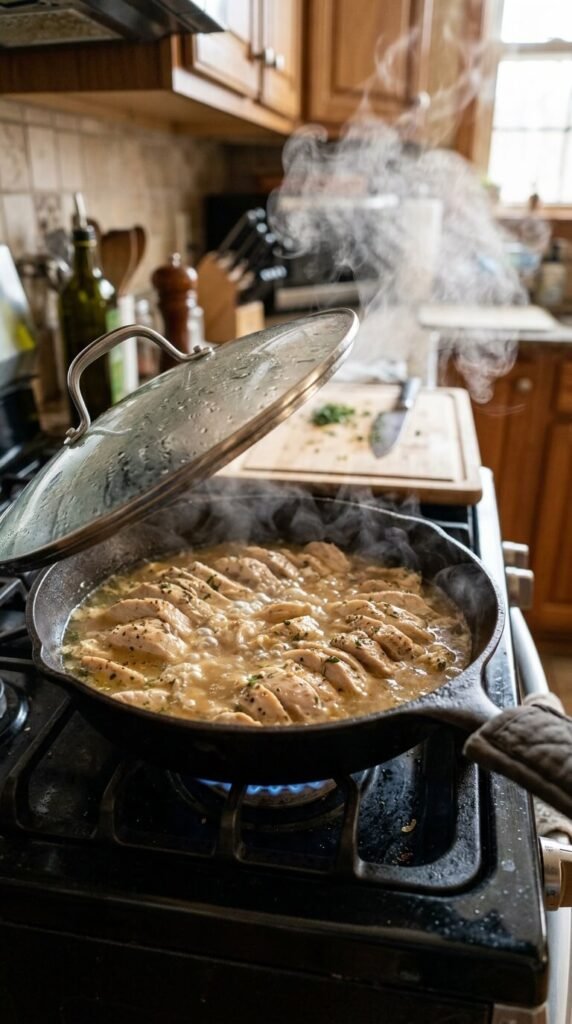
- Heat a skillet over medium-low heat with a small splash of broth, water, or oil.
- Add the protein and cover with a lid to trap steam.
- Heat gently, flipping occasionally, until warmed through — this usually takes 3–5 minutes.
Tip: Low and slow is the key here. High heat will dry out reheated meat just as fast as the microwave will.
Step 5: Use the Oven for Larger Batches
If you’re reheating a full meal prep container or a bigger batch, the oven is often your best bet.
- Preheat the oven to 300–325°F (a gentle, low heat).
- Place food in an oven-safe dish and cover tightly with foil.
- Heat for 10–15 minutes, or until warmed through.
Tip: This method works especially well for casseroles, roasted vegetables, and grain bowls that have multiple components.
Step 6: Separate Components When Possible
Different foods reheat differently, so reheating everything together at once isn’t always ideal.
- Proteins often need gentler reheating than vegetables.
- Crispy elements (like roasted potatoes) benefit from higher, drier heat — a quick air fryer reheat works great here.
- Sauces and dressings should usually be added after reheating to avoid breaking or overcooking.
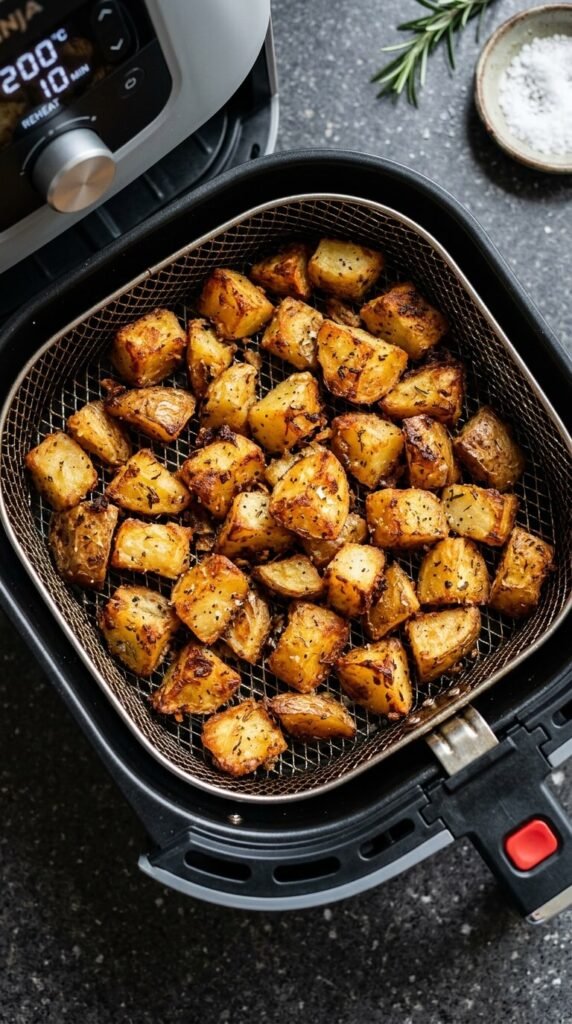
Tip: If your meal prep includes a crispy element, the air fryer at 350°F for 3–5 minutes is one of the best ways to bring back that crunch.
Bonus Tips for Better Reheating Every Time
- Let food sit for a minute after reheating. This allows heat to distribute evenly before you dig in.
- Don’t reheat more than once. Repeated reheating dries food out further and isn’t great for food safety.
- Keep a small jar of broth in the fridge. It’s the easiest way to add moisture to proteins and grains throughout the week.
- Match the method to the food. Skillets for proteins, microwave for grains and veggies, air fryer for crispy items.
The Bottom Line
Dry, sad reheated meal prep isn’t inevitable — it’s almost always a moisture and method issue. With a splash of liquid, the right cover, and a little patience with heat levels, your meals can taste nearly as good on day four as they did on day one.
Save this recipe for later so you always know exactly how to reheat your meal prep without sacrificing flavor or texture!