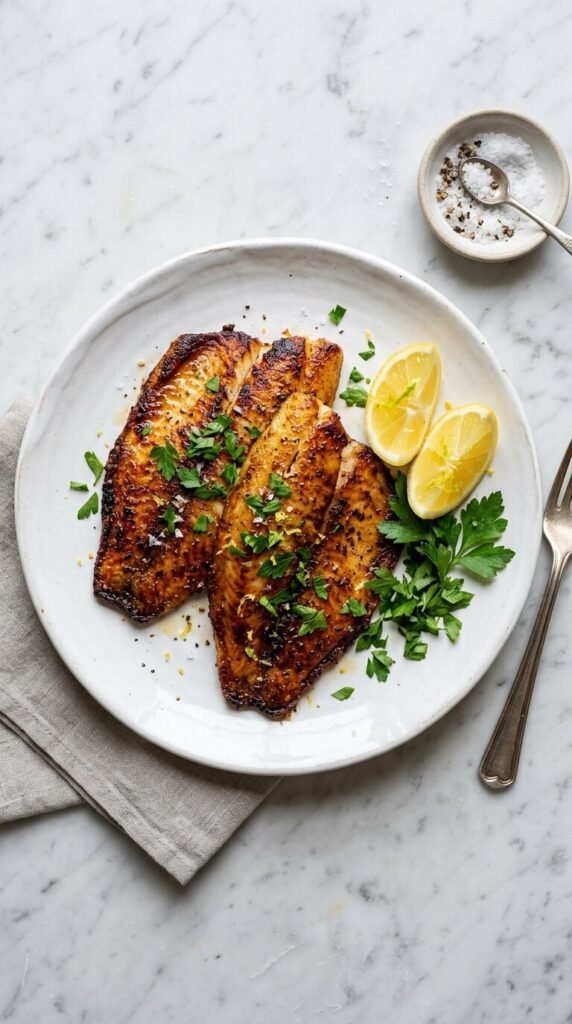
Tilapia gets a bad reputation, and most of it is completely undeserved. When people say they don’t like tilapia, what they almost always mean is they’ve had tilapia that was cooked wrong — overcooked into rubbery dryness, underseasoned into blandness, or poorly stored until that unmistakable “fishy” smell took over. Done right, tilapia is mild, delicate, and genuinely delicious. It cooks in under 10 minutes, takes on any flavor you give it, and flakes apart in the most satisfying way. Here’s everything you need to know to cook it perfectly every time.
Buy and Store It the Right Way
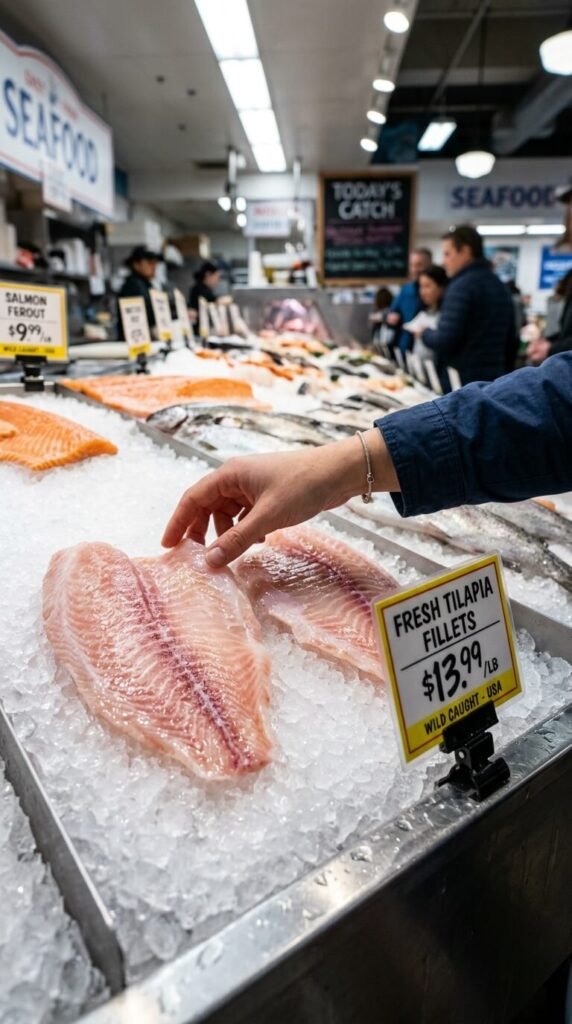
The fishy smell that puts people off tilapia almost always starts before the fish ever hits the pan. It’s a freshness and storage problem, not a tilapia problem.
When buying tilapia:
- Fresh fillets should smell like clean water — not “fishy,” not sour, not sharp
- Avoid fillets with browning edges or a dull gray color — fresh tilapia should be pinkish-white and slightly translucent
- Frozen tilapia is often a better choice than “fresh” fish that’s been sitting in a display case — it’s typically frozen within hours of being caught, which locks in freshness
- Look for individually frozen fillets so you can thaw only what you need
Storing it at home:
- Cook fresh tilapia within 1–2 days of buying it
- Thaw frozen tilapia overnight in the refrigerator — never on the counter at room temperature, which encourages bacterial growth
- For a quick thaw, seal fillets in a zip-lock bag and submerge in cold water for 30–45 minutes
The Prep Step That Eliminates Fishiness
There’s a simple trick that makes a noticeable difference in how tilapia tastes — and almost nobody talks about it.
Soak the fillets in milk for 20 minutes before cooking.
Milk contains casein, a protein that binds to trimethylamine — the compound responsible for that fishy odor — and pulls it right out of the fish. After soaking, rinse the fillets under cold water, pat completely dry, and season. The result is noticeably cleaner, milder flavor even in fish that’s on the edge of its freshness window.
No milk? A squeeze of lemon juice or a light salt brine (1 tablespoon salt dissolved in 2 cups of cold water) for 15 minutes achieves a similar effect.
Season Generously — Tilapia Wants Bold Flavors
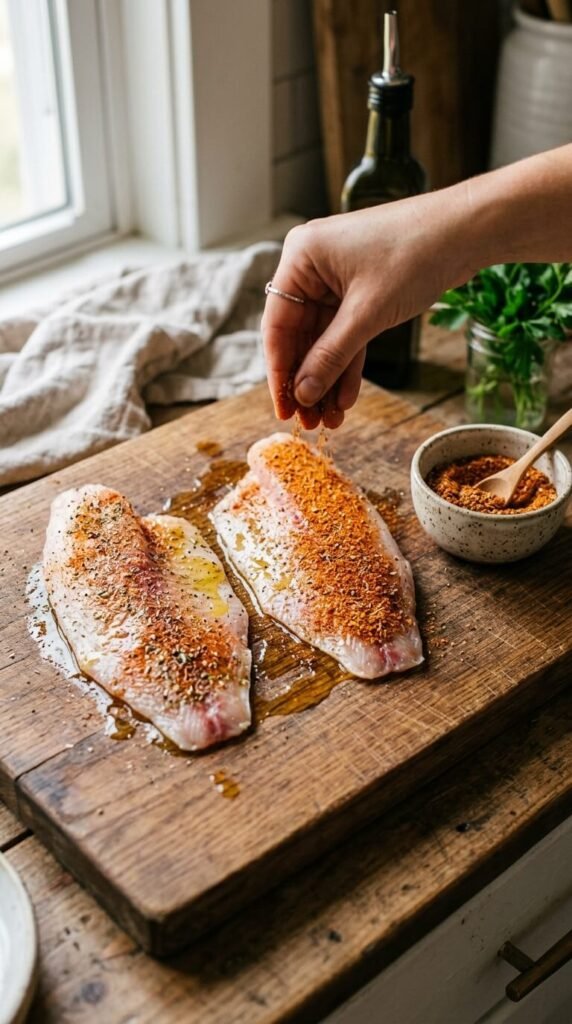
Tilapia’s mild flavor is a strength, not a weakness. It’s essentially a blank canvas that absorbs and showcases whatever you put on it. This is not the time to be shy with seasoning.
Flavor combinations that work beautifully:
- Lemon-garlic butter — classic, simple, never fails
- Cajun spice blend — paprika, cayenne, garlic powder, onion powder, dried thyme
- Mediterranean — olive oil, dried oregano, lemon zest, and a pinch of red pepper flakes
- Honey-soy glaze — a tablespoon each of honey, soy sauce, and rice vinegar brushed on before cooking
- Simple salt and pepper with fresh herbs — let the fish flavor shine with parsley, dill, or cilantro
Whatever you choose, season both sides and let it sit for 5 minutes before cooking so the seasoning has a chance to adhere.
Pan-Searing: The Fastest Path to Perfect Tilapia
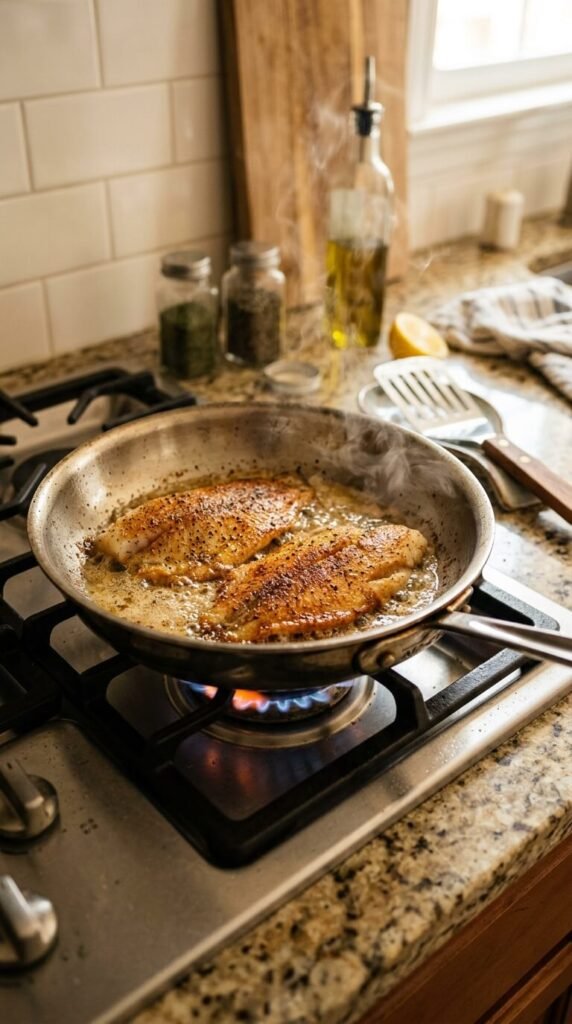
Pan-searing is the best everyday method for tilapia — it creates a golden, slightly crispy exterior while keeping the inside moist and flaky. The whole process takes about 8 minutes.
Here’s how to do it:
- Heat a skillet over medium-high heat — stainless steel or cast iron both work well
- Add a tablespoon of butter and a tablespoon of oil — the butter adds flavor, the oil raises the smoke point
- Make sure the pan is hot before the fish goes in — it should sizzle immediately on contact
- Place fillets presentation-side down and don’t move them for 3–4 minutes
- Flip once and cook another 2–3 minutes on the second side
- The fish is done when it flakes easily with a fork and the center is opaque all the way through
The biggest mistake people make: flipping too early. Let the fish release naturally from the pan — if it sticks when you try to flip, it’s not ready yet.
Other Cooking Methods Worth Knowing
Pan-searing is the go-to, but tilapia adapts beautifully to other methods:
- Baked: 400°F for 12–14 minutes on a parchment-lined sheet pan — great for batch cooking
- Air fryer: 400°F for 8–10 minutes — surprisingly crispy with almost no oil
- Broiled: 3–4 minutes under high broil — fast, charred edges, excellent with a glaze
All three methods follow the same principle: high heat, short time. Tilapia is thin and cooks fast — the number one way to ruin it is overcooking.
Flaky, Flavorful, and Never Fishy
Tilapia done right is genuinely one of the most convenient, delicious proteins you can cook on a weeknight. Buy it fresh or frozen, prep it properly, season it boldly, and cook it hot and fast — that’s the whole formula.
Save this guide and give tilapia a second chance — you might just make it a weekly staple. 🐟✨