Soggy vegetables are the ultimate kitchen disappointment. You start with beautiful, fresh produce, toss it in a pan — and somehow end up with a limp, watery pile that nobody wants to eat. Sound familiar? The good news is that crispy, vibrant, perfectly cooked vegetables aren’t some restaurant secret. They come down to a few simple techniques that take almost no extra time once you know them.
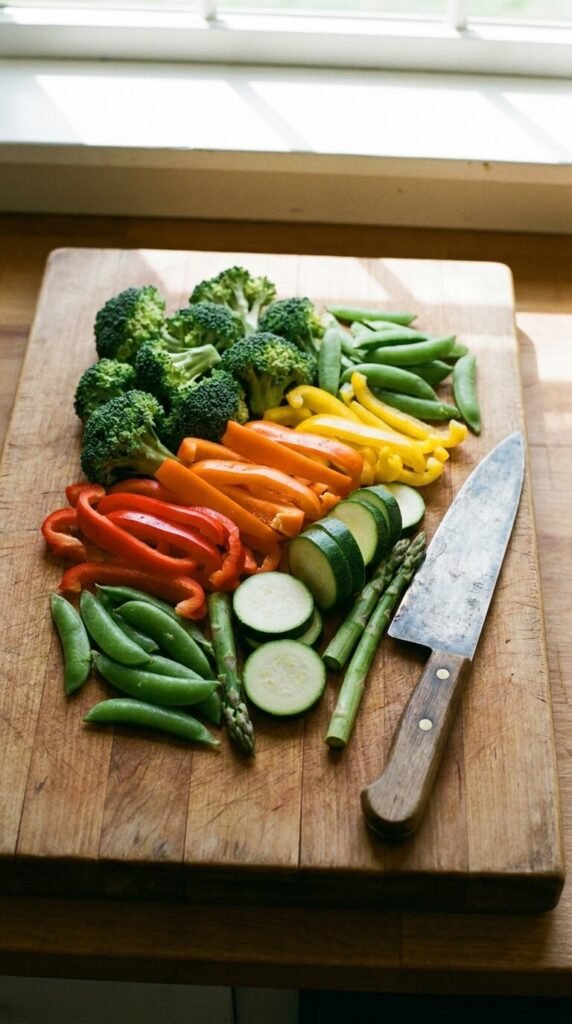
Why Vegetables Turn Soggy in the First Place
Before fixing the problem, it helps to understand it. Vegetables release moisture when they cook. If that steam has nowhere to go — because the pan is too crowded or the heat is too low — it just pools around your vegetables and essentially steams them into mushiness.
The crispy vegetable formula is really just about one thing: getting rid of moisture fast, before it takes over.
Everything else — the oil, the heat, the timing — is in service of that one goal.
Start With Dry Vegetables
This step gets skipped constantly, and it quietly ruins everything.
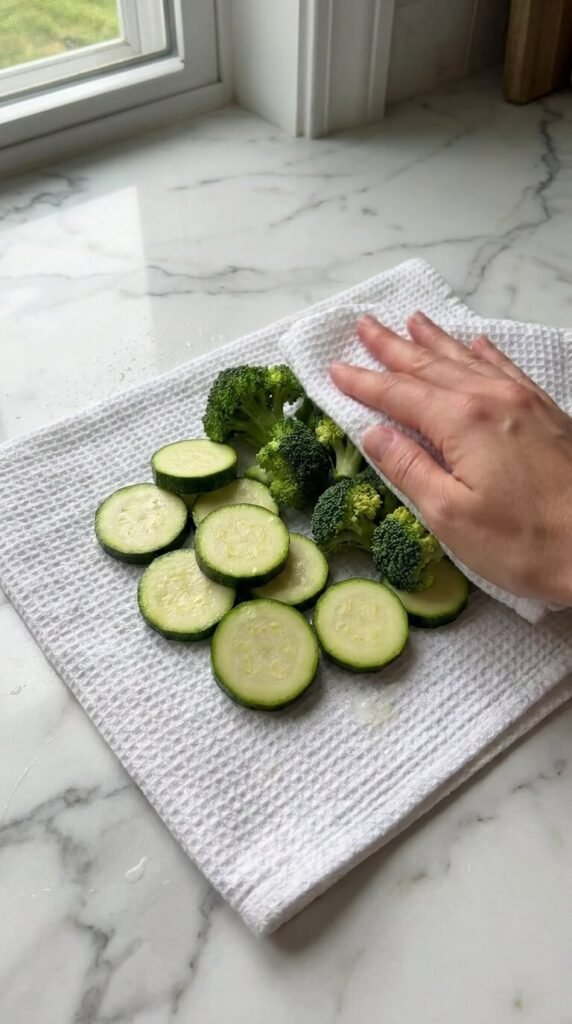
After washing your vegetables, dry them thoroughly before they touch the pan. Pat them down with a clean kitchen towel or paper towels. Even a thin layer of surface water will cause your oil to spatter and your vegetables to steam instead of sear.
A few more prep tips that make a real difference:
- Cut pieces to a similar size so everything cooks at the same rate
- Don’t cut them too small — tiny pieces overcook and go soft before they can develop any color
- Room temperature vegetables hit a hot pan better than cold ones straight from the fridge
Use High Heat and the Right Pan
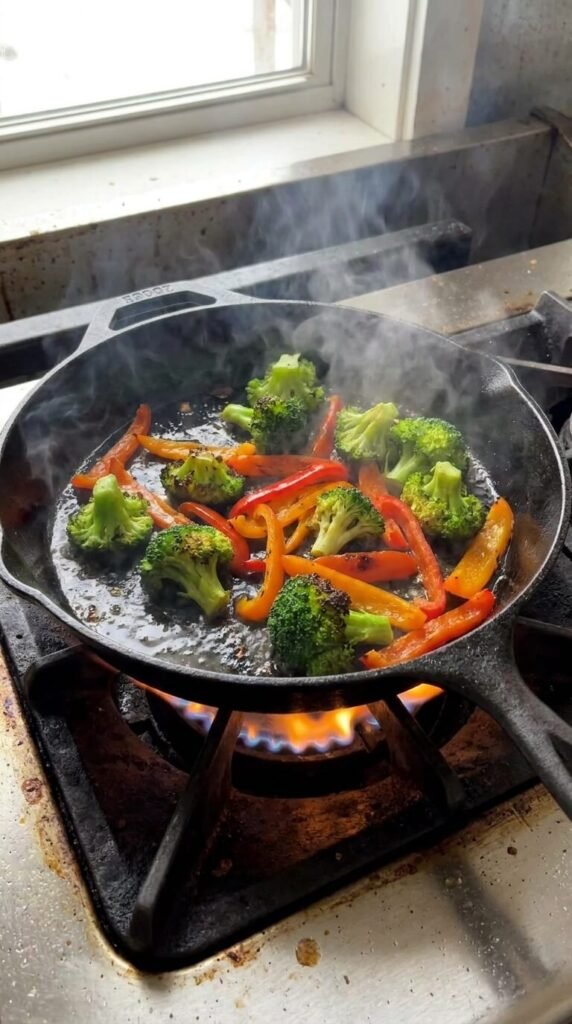
This is the single biggest game-changer for crispy vegetables: cook them hot and fast.
Medium heat might feel safer, but it’s actually what causes the soggy texture. Low heat gives vegetables time to sweat out their moisture slowly rather than searing it away quickly.
Here’s what to use:
- A wide, heavy pan — cast iron or stainless steel hold heat best; avoid nonstick for high-heat cooking
- Preheat the pan before adding oil — the pan should be hot enough that a drop of water evaporates immediately on contact
- Use an oil with a high smoke point — avocado oil, vegetable oil, or regular olive oil all work well
Once the oil shimmers and moves like water in the pan, you’re ready to add your vegetables.
Don’t Crowd the Pan — Ever
This is the rule that home cooks break most often, and it’s the fastest path to soggy vegetables.
When you pile too many vegetables into one pan, the temperature drops and steam builds up. Instead of getting a nice sear, everything stews in its own moisture.
The fix is simple: cook in batches if you need to. A single layer of vegetables with a little breathing room between pieces will give you that golden, slightly charred edge that makes vegetables genuinely crave-worthy.
The Right Order and Timing for Mixed Vegetables
Not all vegetables cook at the same speed, and throwing everything in at once is a common mistake. A quick rule of thumb:
- Start with denser vegetables first: carrots, broccoli stems, cauliflower (about 4–5 minutes)
- Add medium vegetables next: zucchini, bell peppers, snap peas (about 2–3 minutes)
- Finish with quick-cooking vegetables: spinach, cherry tomatoes, corn (about 1 minute)
Toss the pan or stir every minute or so — but not constantly. Letting vegetables sit undisturbed for a minute at a time is what builds that golden crust.
Season with salt at the very end of cooking. Salt draws out moisture, so adding it early will make your vegetables release liquid mid-cook.
Finish Strong With Flavor
Once your vegetables are off the heat, that’s when the fun begins:
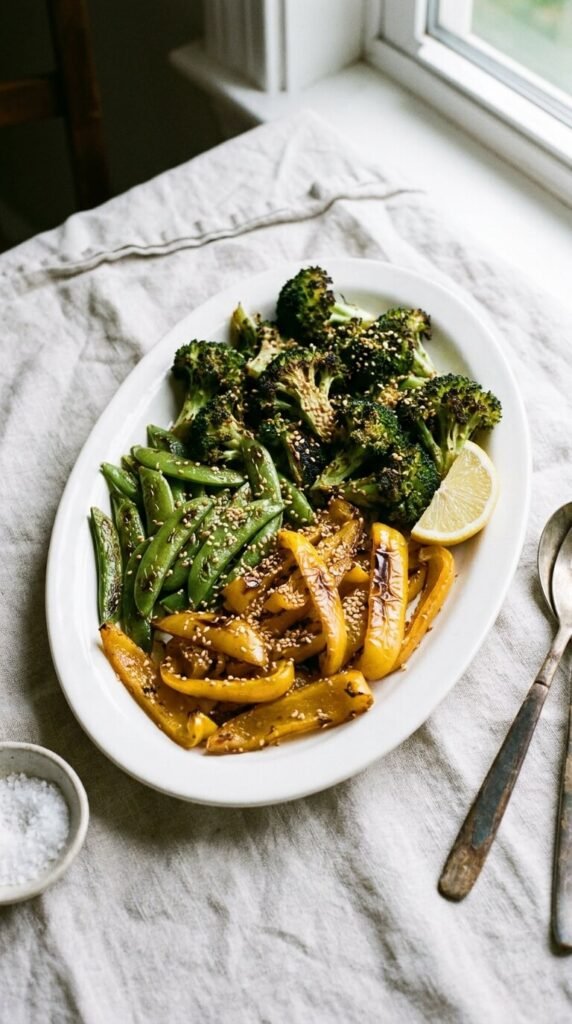
- A squeeze of fresh lemon juice to brighten everything up
- A drizzle of sesame oil or chili oil for an Asian-inspired finish
- A handful of toasted nuts or seeds for crunch
- Fresh herbs like parsley, cilantro, or basil tossed in at the last second
Crispy Vegetables Are Always Within Reach
Once you nail these techniques — dry produce, hot pan, single layer, right timing — you’ll never dread cooking vegetables again. In fact, you might find yourself looking forward to it.
Pin this guide and pull it up the next time you’re staring at a fridge full of vegetables wondering what to do with them. Crispy, colorful, and done in minutes — that’s the goal every time. 🥦