Here’s the part of meal prep nobody really talks about: it’s not just about saving time. It’s one of the most effective ways to save real money on groceries, too — if you shop the right way. Wander in without a plan, and you’ll come home with random ingredients that don’t quite go together and a receipt that’s higher than you expected. Shop with a system, and meal prep practically pays for itself. Here’s how to do it right.
Plan Your Meals Before You Shop, Not After
This sounds obvious, but it’s the single biggest money-saving step — and the one most people skip.
Shopping without a plan leads to duplicate ingredients, impulse buys, and food that sits forgotten in the back of the fridge until it spoils. A quick planning session before you shop changes everything.
Before heading to the store:
- Decide on 3–4 meals for the week, not seven — this keeps the list manageable and realistic
- Check what you already have in the fridge, freezer, and pantry first
- Build meals around what’s already on sale if you check the weekly ad ahead of time
- Write an actual list organized by store section, so you’re not backtracking through aisles
A 10-minute planning session at home saves both money and a wasted trip back to the store for the one thing you forgot.
Shop With the “Overlap Ingredients” Strategy
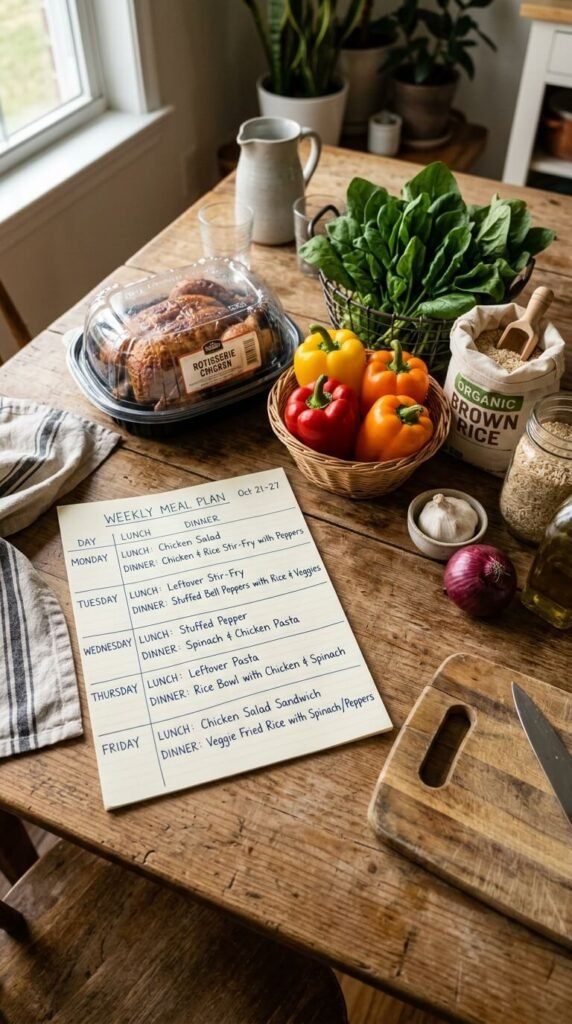
The fastest way to save money on a meal prep grocery run is choosing meals that share ingredients. This single strategy can cut your grocery bill noticeably just by reducing how many different items you need to buy.
How this works in practice:
- If you’re buying bell peppers for one meal, plan a second meal that also uses bell peppers
- A rotisserie chicken can become chicken salad, chicken tacos, and chicken soup across the week
- A big bag of spinach can go into eggs, salads, and a pasta dish before it has a chance to wilt
- Buy one type of grain (rice, quinoa, or pasta) and build multiple meals around it instead of buying several different starches
Buy Smart: Where to Splurge and Where to Save
Not every ingredient deserves the same amount of your grocery budget. Knowing where to spend a little more and where to cut costs makes a real difference over time.
Worth buying in bulk or larger sizes:
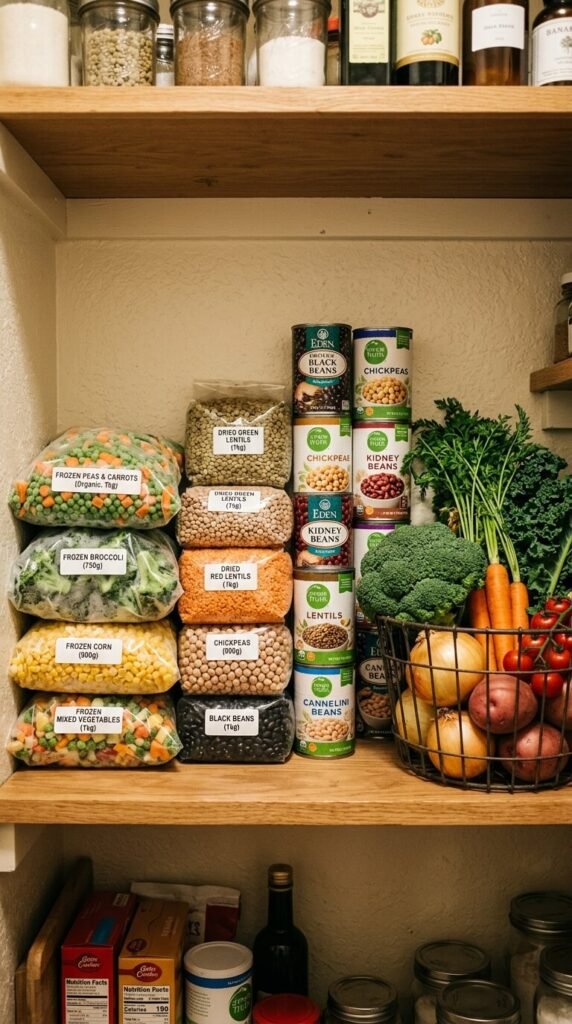
- Rice, oats, and dried beans — they’re shelf-stable and always useful
- Frozen vegetables — just as nutritious as fresh and far less likely to go to waste
- Canned tomatoes and beans — pantry staples that never really expire on your timeline
- Chicken thighs bought in bulk packs, then portioned and frozen
Worth buying smaller or being selective about:
- Fresh herbs — they spoil fast, so only buy what a specific recipe calls for
- Specialty items used in just one recipe — these often go to waste
- Pre-cut produce — convenient, but it costs significantly more per pound
The frozen vegetable swap alone can meaningfully lower your weekly grocery bill while barely changing how your meals taste, especially in soups, stir-fries, and roasted side dishes.
Time Your Shopping Trip Strategically
When you shop can be just as important as what you buy.
- Shop after eating, not on an empty stomach — hunger leads to impulse purchases
- Avoid weekend mornings if your store tends to be busy then — rushed shopping leads to forgotten list items and grabbing convenience foods instead
- Check the weekly sales flyer before building your meal plan, not after you’ve already committed to a list
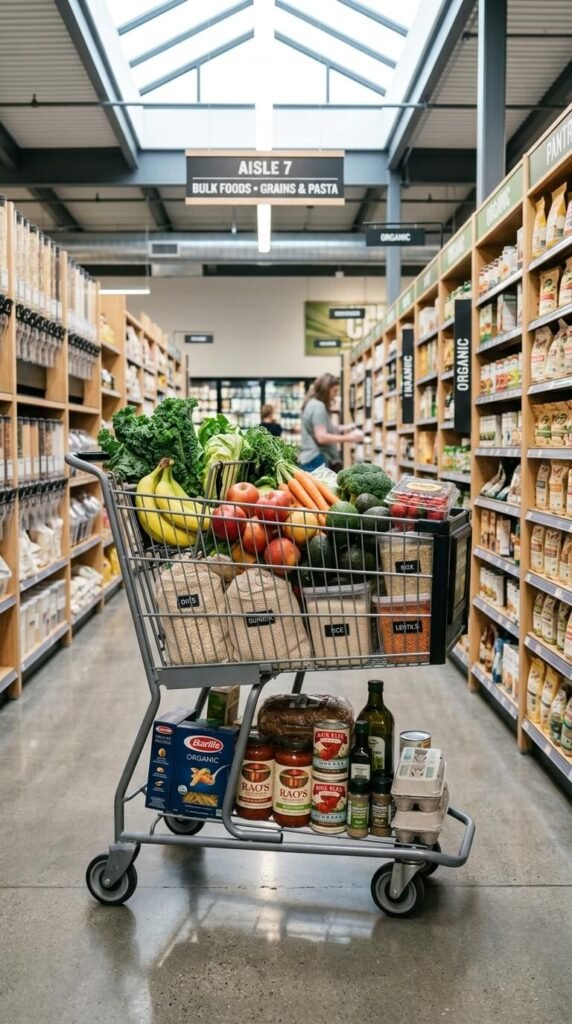
- Shop the perimeter first — produce, meat, and dairy are usually here, and this is where the bulk of your healthy meal prep ingredients live
- Save the center aisles for specific list items only — this is where most unplanned spending happens
Stock a “Meal Prep Starter Kit” in Your Pantry
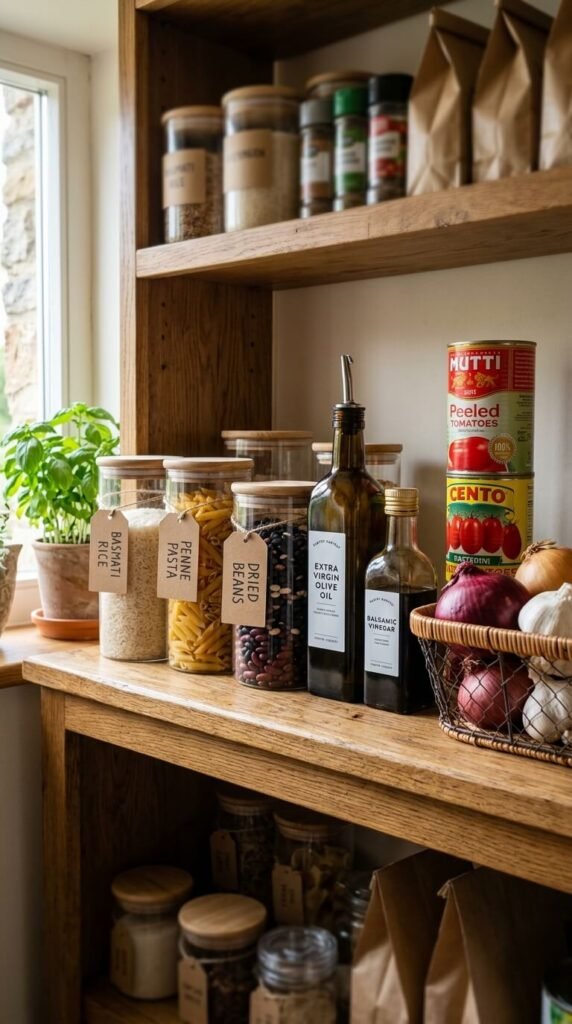
Keeping a small set of staples always on hand means you’re never starting from zero, which reduces both stress and unnecessary spending on “just this once” trips.
Keep these stocked at all times:
- Olive oil, salt, pepper, and a few core spices
- Rice, pasta, or another shelf-stable grain
- Canned beans and canned tomatoes
- Onions and garlic — they last weeks and form the base of countless meals
- Frozen chicken or another protein as a backup
When these basics are always available, every grocery trip becomes about filling in the fresh ingredients around them, rather than rebuilding your entire kitchen from scratch.
Smart Shopping Is the Real Meal Prep Secret
Meal prep isn’t just a time-saver — done right, it’s one of the most effective grocery budgeting tools available. Plan ahead, shop with overlap in mind, know where to splurge and where to save, and keep your pantry stocked with the basics. The savings add up fast, and so does the peace of mind.
Save this guide before your next shopping trip — your wallet and your weeknight self will both thank you. 🛒💰