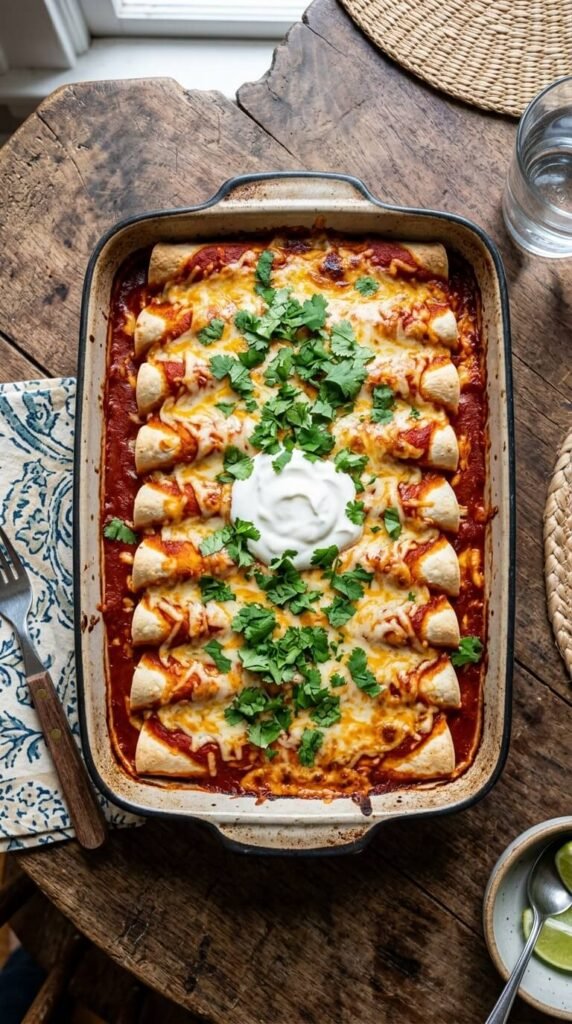
There’s a special kind of frustration that comes with pulling a pan of enchiladas out of the oven, only to watch them collapse the second your spatula touches them. Torn tortillas, filling spilling everywhere, sauce pooling into a soupy mess — it’s enough to make anyone swear off homemade enchiladas for good. The good news is that falling-apart enchiladas aren’t a skill issue. They’re almost always a technique issue, and a few small adjustments fix the problem completely.
The Tortilla Problem Starts Before You Roll
Most fall-apart enchiladas trace back to one root cause: cold, stiff tortillas that crack the moment you try to fold them.
Corn tortillas straight from the fridge or package are dry and brittle. Roll a filling into one without prepping it first, and it will split right down the middle.
The fix is simple — warm and soften your tortillas before filling them:
- Wrap a stack in a damp paper towel and microwave for 30–45 seconds
- Or warm them directly on a dry skillet for about 15 seconds per side until pliable
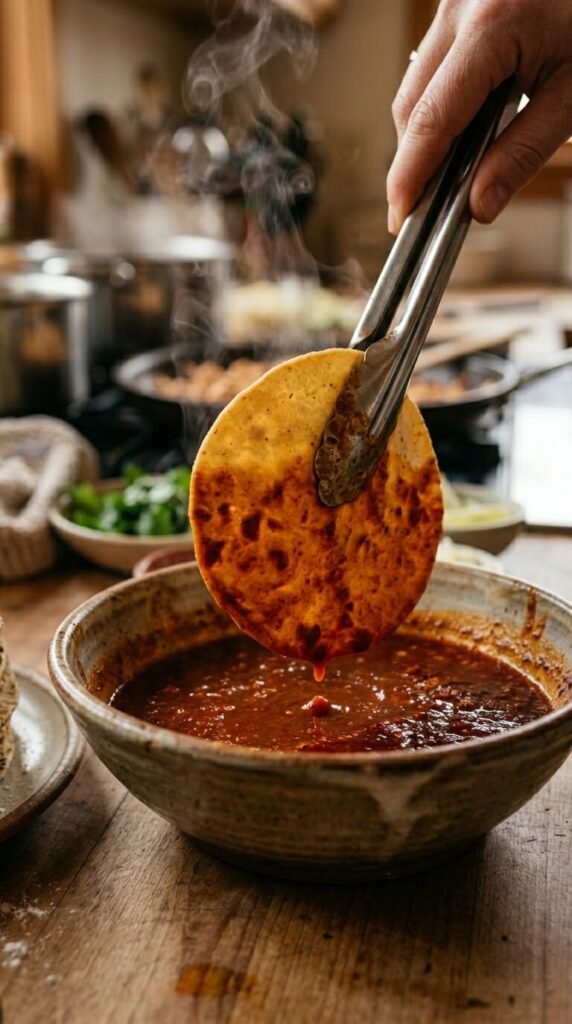
- Or briefly dip each tortilla in warm enchilada sauce for a few seconds — this softens them AND adds flavor at the same time
That last method is the secret most restaurants use, and it’s genuinely the single best trick for sturdy, never-cracking enchiladas.
Choose the Right Tortilla for the Job
Not all tortillas are created equal when it comes to enchiladas, and the type you choose matters almost as much as how you prep it.
- Corn tortillas — the traditional choice; sturdier than they look once warmed properly, and they hold up well to sauce
- Flour tortillas — softer and more pliable, but they can turn gummy if overloaded with sauce; best for smaller, thinner enchiladas
- Avoid extra-thin or low-quality tortillas — they’re more likely to tear no matter how well you prep them
If you’re using corn tortillas, look for ones labeled specifically for enchiladas or street tacos — they tend to be slightly thicker and more forgiving than ultra-thin varieties.
Don’t Overfill — This Is the Other Big Culprit
It’s tempting to pile in as much chicken, cheese, and beans as a tortilla can physically hold. Resist that urge. Overfilled enchiladas are nearly impossible to roll tightly, and they’re far more likely to burst open in the oven.
A good filling ratio per tortilla:
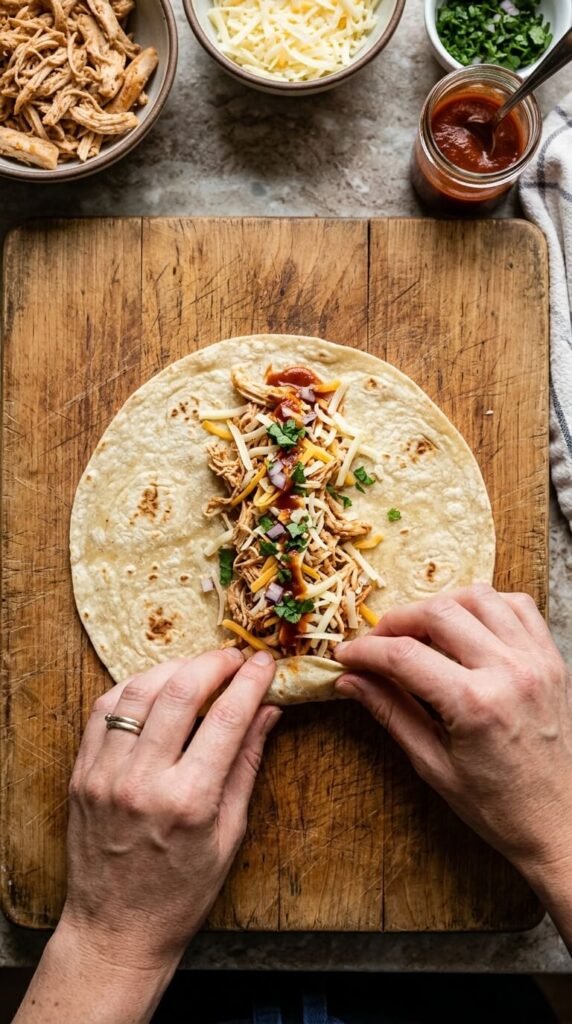
- About 3 tablespoons of filling (meat, beans, or a vegetable mix)
- A light sprinkle of cheese inside — save the rest for topping
- Filling should sit in a thin line down the center, not a heaping pile
Rolling technique that actually works:
- Place filling in a line just off-center on the tortilla
- Fold the shorter side over the filling first
- Tuck and roll tightly, like a burrito, keeping the filling compact
- Place seam-side down in the baking dish so the weight of the tortilla helps hold it shut
Layer the Pan the Right Way
How you arrange enchiladas in the baking dish has a real impact on whether they hold together once they come out of the oven.
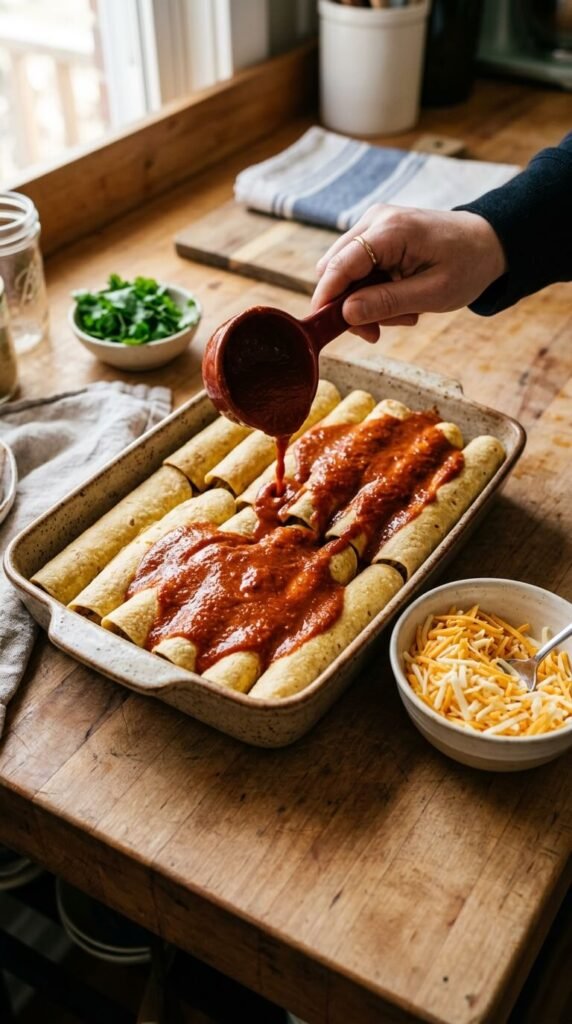
- Spread a thin layer of sauce on the bottom of the dish first — this prevents sticking and adds moisture from below
- Pack the rolled enchiladas snugly side by side — this isn’t the time for spacing; tight rows actually help everything hold its shape
- Pour sauce over the top evenly, covering every tortilla completely — exposed edges dry out and crack in the oven
- Add cheese on top, not inside as the primary layer — it melts down and helps seal everything together as it bakes
Bake at the Right Temperature and Don’t Rush the Rest
- Bake at 375°F for 20–25 minutes, until the cheese is melted and bubbling and the edges are just beginning to turn golden
- Cover with foil for the first 15 minutes to keep the tortillas from drying out, then uncover to let the cheese brown
- Let the dish rest for 5–10 minutes after baking before serving — this is the step almost everyone skips, and it matters enormously
Cutting into enchiladas the moment they leave the oven means the sauce is still thin and the filling hasn’t had a chance to set. A short rest lets everything firm up just enough to hold its shape when you serve it.
Sturdy, Saucy, and Still Holding Together
Enchiladas that don’t fall apart come down to a few small habits: warm your tortillas, don’t overfill, roll tightly, pack the pan snugly, and let them rest before serving. None of it is complicated — it just takes knowing where the usual mistakes happen.
Save this guide for your next enchilada night — your dinner table (and your spatula) will thank you. 🌮🧀