Nobody wants to reach for a nacho chip and pull up a limp, cheese-soaked flap that falls apart before it reaches their mouth. Soggy nachos are a party crime — and yet somehow they happen to even the most well-meaning cooks. The difference between a tragic pile of mush and a glorious sheet pan of crispy, loaded nachos comes down to a handful of easy techniques. Get these right, and you’ll be the nacho hero at every gathering from here on out.
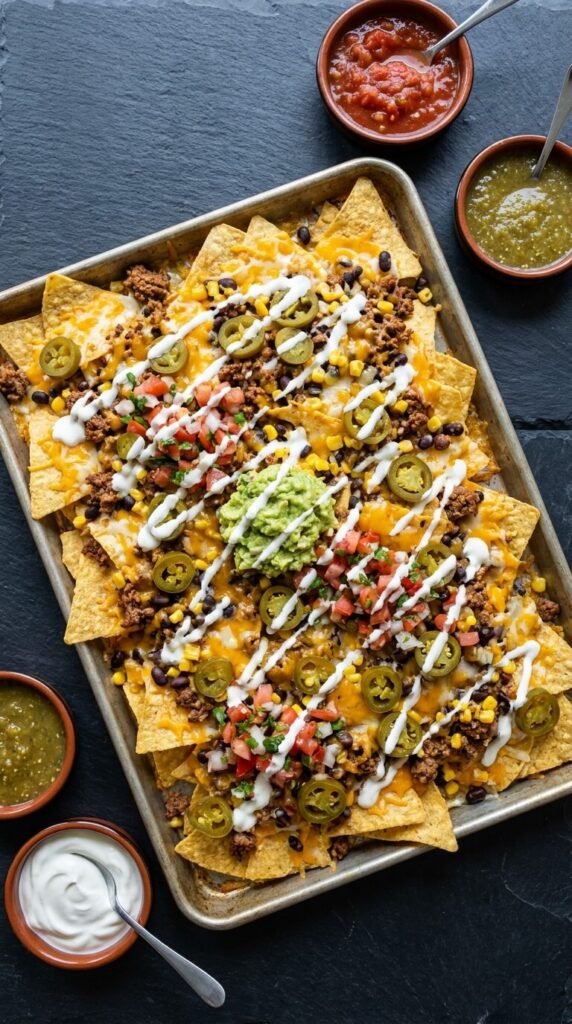
Choose the Right Chips (This Matters More Than You Think)
Not all tortilla chips are built for nachos. Thin, delicate chips might taste great straight from the bag, but they buckle the second cheese and toppings get involved.
What you want:
- Thick, restaurant-style tortilla chips — the sturdier the chip, the longer it holds up under heat and toppings
- Avoid flavored chips — sour cream and onion or lime-seasoned chips will clash with your toppings
- Freshness counts — stale chips go soft even faster once they hit the oven, so use a fresh bag
If you want to go the extra mile, lightly toast your chips in the oven at 350°F for about 5 minutes before building your nachos. This dries them out slightly and creates a moisture barrier that buys you precious time before sogginess sets in.
Layer Strategically — Not Just Randomly
Here’s where most homemade nachos go wrong. People dump everything on at once and hope for the best. The result is chips on the bottom drowning in liquid while chips on top stay naked and sad.
The key is intentional layering:
- First layer: Spread chips in a single, mostly even layer across the sheet pan — overlapping slightly is fine, but avoid thick piles
- Cheese goes directly on the chips first — it acts as a protective seal between the chip and any wet toppings above
- Add your proteins and cooked toppings — seasoned beef, chicken, or black beans (more on this below)
- Second layer of chips for bigger batches, then repeat the cheese layer
- Bake first, then add fresh toppings after it comes out of the oven
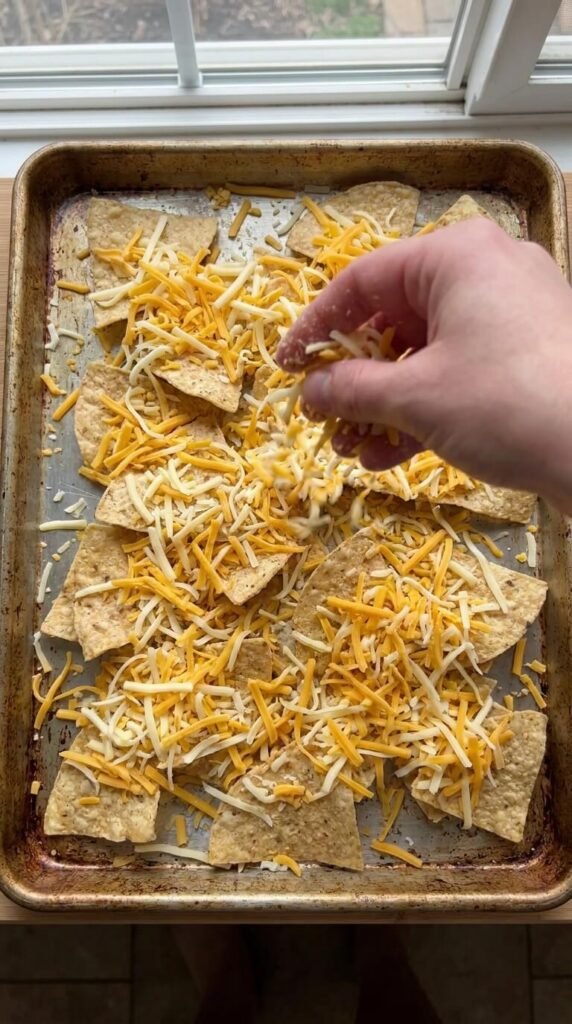
Treat Your Wet Ingredients With Care
Wet toppings are the number one enemy of crispy nachos. Sour cream, fresh salsa, guacamole, and pico de gallo all release liquid — and that liquid goes straight into your chips.
The solution isn’t to skip them. It’s to time them correctly:
- Cook proteins until dry: When browning beef or chicken, cook off as much liquid as possible. If your meat is swimming in juices, drain it before it goes on the chips.
- Drain canned beans and rinse them well — that canning liquid is surprisingly watery and will soak through chips fast
- Never bake with sour cream, guacamole, or fresh salsa on top — these go on after the pan comes out of the oven, right before serving
Room temperature toppings hit the warm chips more gently than cold ones straight from the fridge, which also helps slow down the sogginess clock.
Bake at the Right Temperature
Nachos need high, direct heat to melt the cheese fast without giving moisture time to seep in.
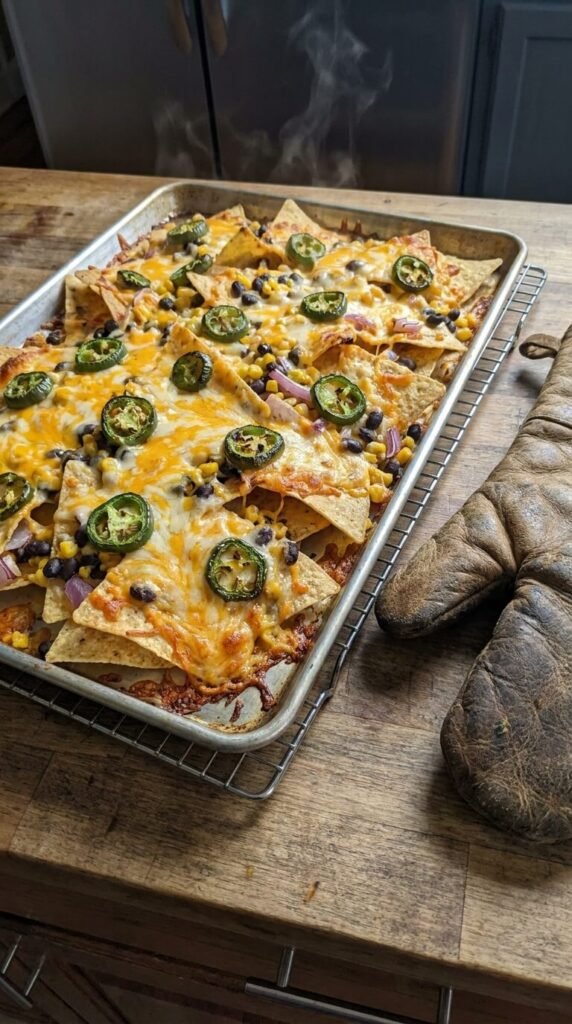
- Preheat your oven to 400°F (200°C)
- Bake on the upper-middle rack for 8–10 minutes
- Watch closely — you want the cheese fully melted and just beginning to bubble at the edges, but not browning into a rubbery sheet
- For extra crispy results, finish under the broiler for 1–2 minutes — just don’t walk away
Add Fresh Toppings Like a Pro
The moment the pan comes out of the oven is when the real fun starts. Now you can pile on everything that couldn’t survive the heat:
- Dollops of sour cream and guacamole
- Fresh pico de gallo or chunky salsa spooned on just before serving
- Shredded lettuce for a cool crunch contrast
- Sliced green onions, cilantro, and pickled jalapeños
- A squeeze of fresh lime over everything to tie it all together
Serve immediately. Nachos are a right-now food — every minute they sit, the chips absorb more moisture. Have everyone gathered and ready before that pan hits the table.
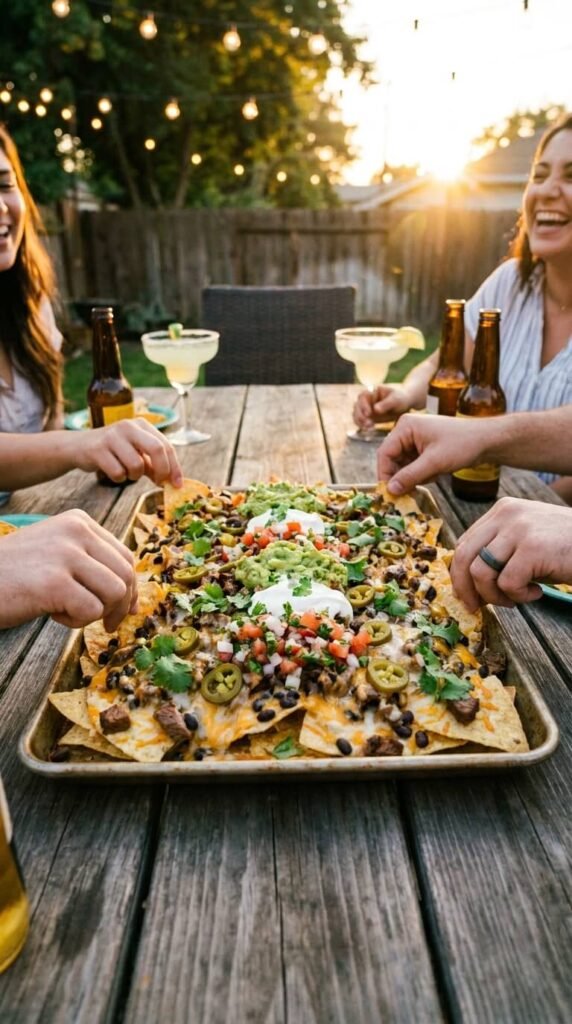
Crispy Nachos Are All About the Details
Great nachos aren’t complicated — they just require a little more intention than throwing everything on a pan and hoping. Thick chips, smart layering, dry proteins, high heat, and fresh toppings added at the end. That’s genuinely the whole formula.
Save this guide before your next game night, movie marathon, or last-minute get-together — because once you make nachos this good, everyone’s going to ask you to bring them every single time. 🧀🌶️