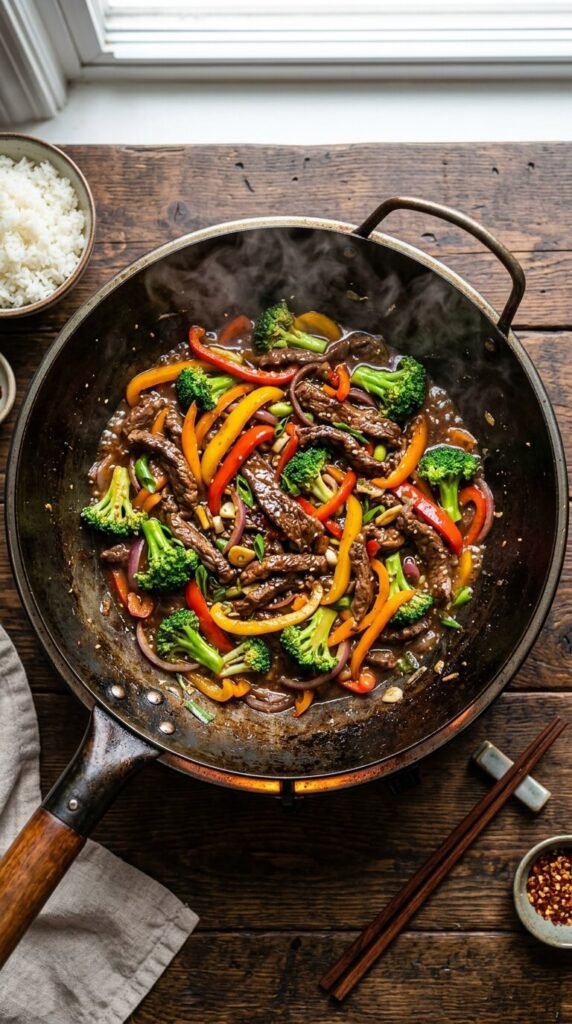
There’s a frustrating gap between restaurant beef stir fry — tender, almost silky strips of beef in a glossy sauce — and the homemade version, which too often comes out chewy, tough, and a little disappointing. The difference isn’t the cut of beef you can afford or some secret restaurant equipment. It’s technique. A few specific tricks, used consistently, get you that same melt-in-your-mouth tenderness at home, every single time.
Slice the Beef the Right Way
This is the single most important step, and it happens before any heat is involved at all.
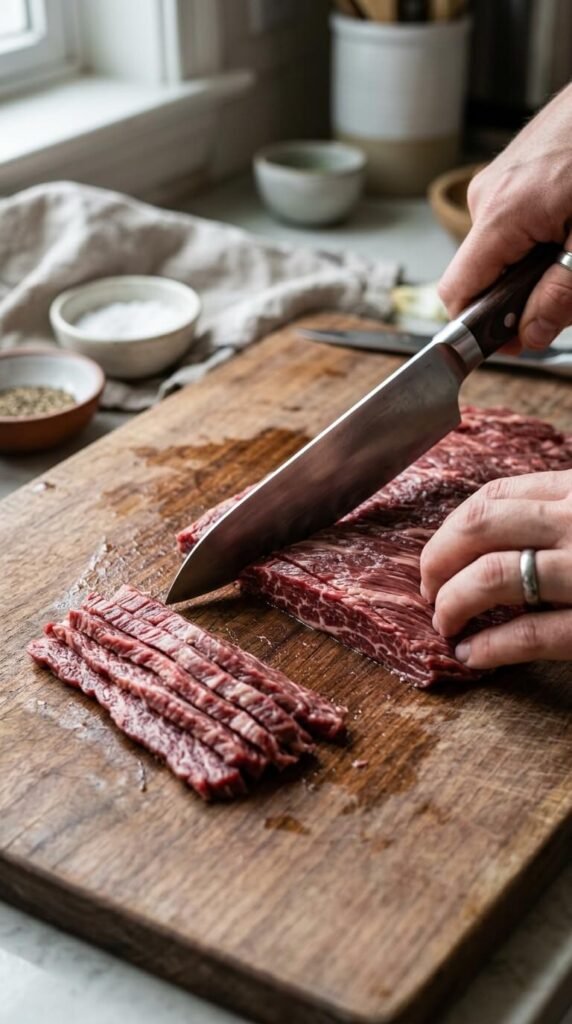
Cut against the grain. Look closely at your piece of beef and identify the direction the muscle fibers run. Slicing across those fibers — not parallel to them — shortens each strand of muscle, which is what makes the meat tender to chew rather than stringy.
Other slicing tips that matter:
- Slice thin — about ¼ inch thick, which cooks quickly and stays tender
- Slice on a slight diagonal — this increases the surface area, helping the meat cook faster and absorb more marinade
- Partially freeze the beef for 15–20 minutes before slicing if it’s slippery or hard to cut thin — firm, partially frozen meat is much easier to slice evenly
Choose a Cut That’s Actually Built for Stir Fry
Not every cut of beef is suited for the fast, high-heat nature of stir-frying. Some cuts simply need longer, slower cooking to become tender, and no amount of clever slicing will fix that.
Best cuts for stir fry:
- Flank steak — lean, flavorful, and widely available
- Sirloin — tender with good flavor at a reasonable price
- Skirt steak — rich flavor, slightly more marbled
- Flat iron steak — naturally tender, one of the best options if you can find it
Avoid: chuck roast, brisket, or other cuts meant for slow cooking — they’ll stay tough no matter how thin you slice them or how hot your pan gets.
Velvet the Beef for Restaurant-Level Tenderness
This is the real secret behind why restaurant stir fry beef feels almost silky, and it’s a technique borrowed directly from Chinese cooking called velveting.
The basic velveting method:
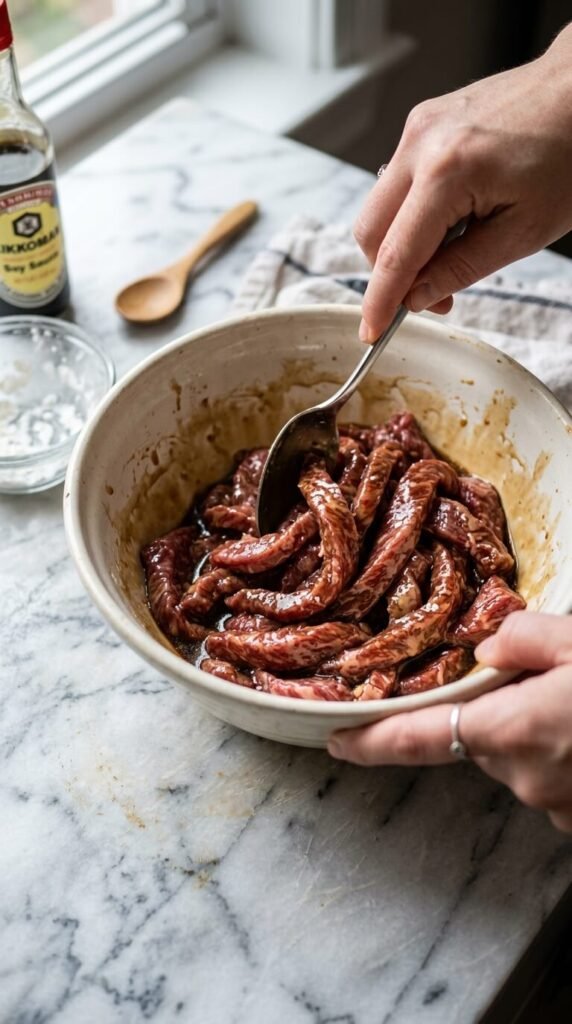
- 1 pound thinly sliced beef
- 1 tablespoon cornstarch
- 1 tablespoon soy sauce
- 1 teaspoon oil
- ½ teaspoon baking soda (optional, but it noticeably increases tenderness for tougher cuts)
Toss the sliced beef in this mixture and let it sit for 15–20 minutes at room temperature, or up to a few hours in the fridge. The cornstarch creates a thin protective coating that seals in moisture during the intense heat of stir-frying, while the baking soda gently breaks down tough muscle fibers.
This single step is responsible for more tenderness improvement than almost anything else on this list.
Cook in Small Batches Over High Heat
This is where a lot of home stir fry goes wrong, and it has nothing to do with the meat itself — it’s about how much goes into the pan at once.
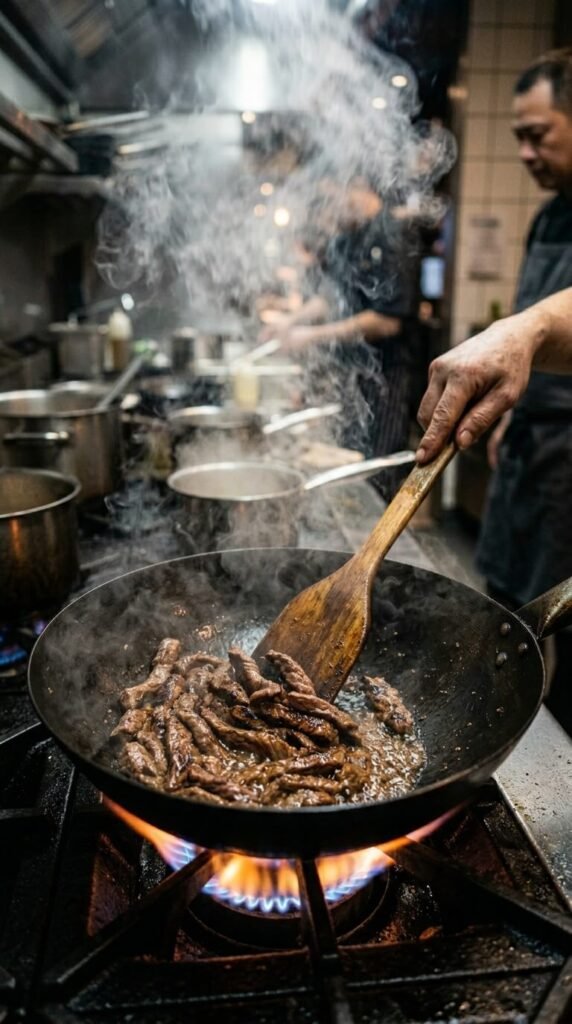
The crowding problem: Adding too much beef to the pan at one time drops the temperature significantly. Instead of a fast sear, the meat ends up steaming in its own released juices, which leads to tough, gray, overcooked beef.
The fix:
- Cook beef in small batches — no more than a single layer at a time
- Use a wok or wide skillet over high heat, with the oil visibly shimmering before the beef goes in
- Sear for just 1–2 minutes per batch, stirring only occasionally to let real contact and browning happen
- Remove each batch to a plate as it finishes, then continue with the next batch
It feels slower to cook in batches, but the actual time difference is minimal — and the tenderness payoff is enormous.
Build the Sauce Separately, Then Bring It Together Fast
Once your beef is cooked in batches and set aside, the vegetables and sauce come together quickly in the same pan.
A simple, reliable stir fry sauce:
- ¼ cup beef broth or water
- 2 tablespoons soy sauce
- 1 tablespoon oyster sauce
- 1 tablespoon brown sugar
- 1 teaspoon sesame oil
- 1 teaspoon cornstarch mixed with 1 tablespoon water
Final assembly:
- Stir-fry your vegetables in the same pan until just crisp-tender
- Pour the sauce mixture into the pan and let it bubble and thicken for about 1 minute
- Return the cooked beef to the pan and toss everything together for 30–60 seconds, just until coated and heated through
Adding the beef back in at the very end — rather than letting it simmer in the sauce — is what keeps it tender instead of overcooking it a second time.
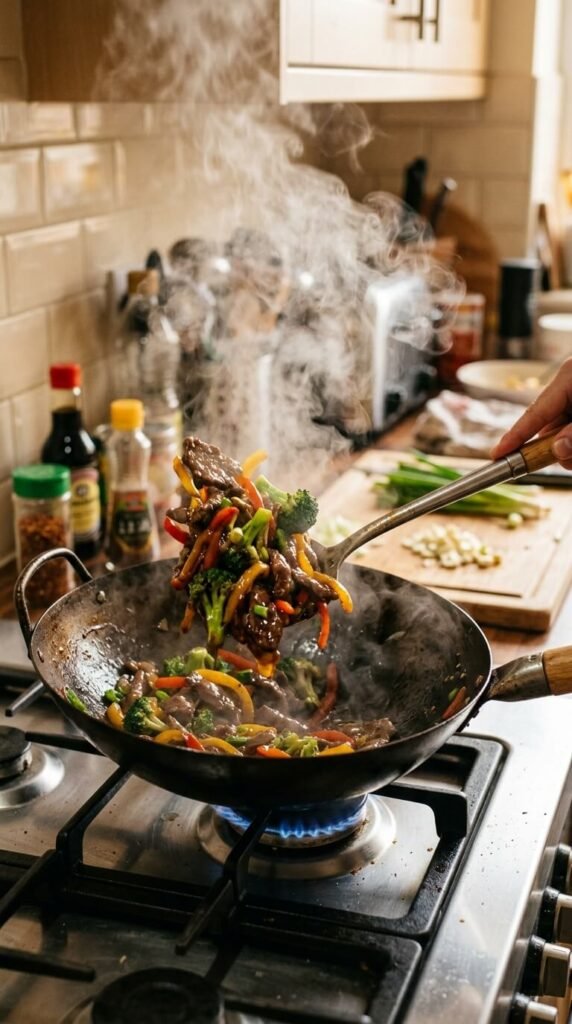
Tender Beef, Every Single Time
The formula is simple once you know it: slice against the grain, choose the right cut, velvet the beef, cook in small hot batches, and bring everything together quickly at the end. None of these steps take much extra time, but together they’re the difference between chewy and genuinely tender.
Save this guide for your next stir fry night — your beef is about to taste like it came from your favorite takeout spot. 🥩🥢