Not having a grill — or having one buried under snow for six months of the year — shouldn’t mean giving up on kabobs. That charred, smoky, skewered goodness people associate with backyard barbecues is completely achievable in a regular kitchen, with regular kitchen equipment. No special tools required, no grill necessary. Just the right technique and a little bit of know-how.
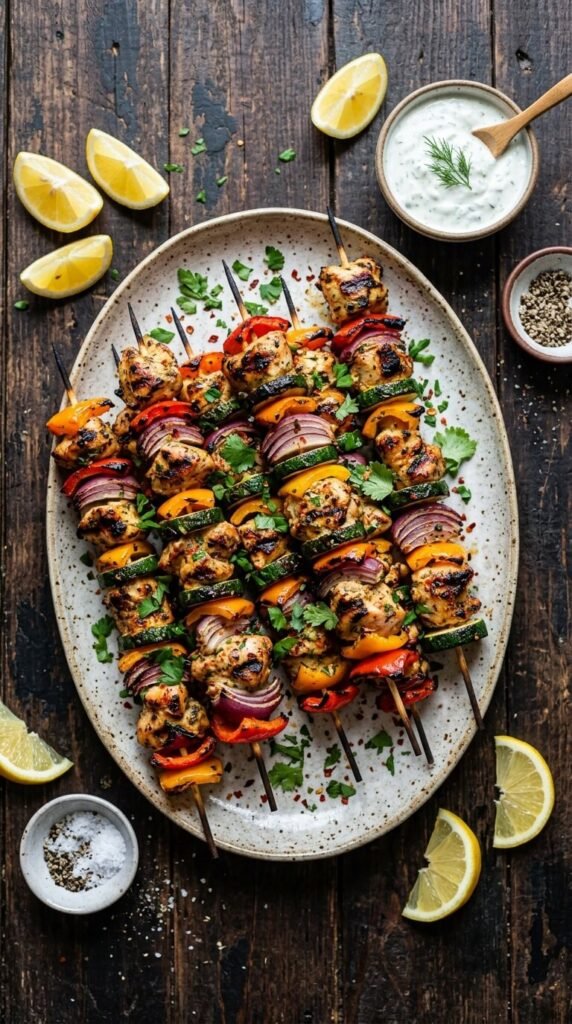
Choose the Right Indoor Cooking Method
Several kitchen tools can mimic the high, direct heat that makes grilled kabobs so good. Pick based on what you have and how much char you’re after.
Broiler:
- Closest thing to actual grilling — direct, intense top-down heat
- Best for getting genuine char and color
- Requires close attention since it cooks fast
Cast iron grill pan:
- Those raised ridges create grill marks and allow fat to drip away
- Great stovetop option that doesn’t require turning on the oven
- Works well for smaller batches
Regular cast iron or stainless steel skillet:
- Won’t give grill marks, but delivers excellent searing and caramelization
- The most forgiving and widely available option
Air fryer:
- Surprisingly effective for kabobs, especially smaller skewers
- Circulates hot air for even cooking with minimal hands-on effort
Any of these will get you genuinely satisfying results — the technique matters more than the specific tool.
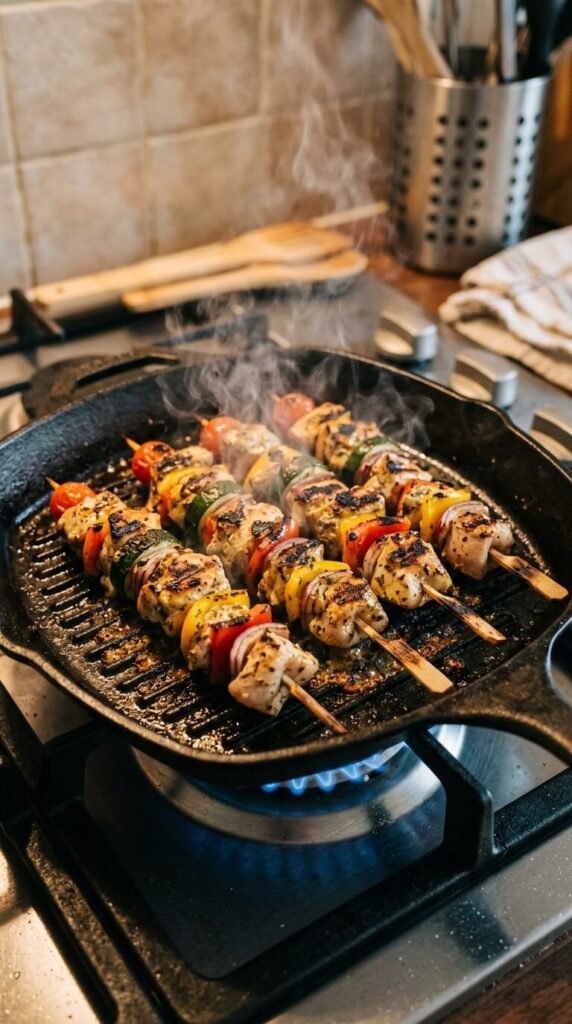
Marinate for Real Flavor (and Tenderness)
Since you’re skipping the smoky flavor a real grill provides, a good marinade does extra work to make up for it.
A reliable all-purpose marinade:
- 3 tablespoons olive oil
- 2 tablespoons soy sauce
- 1 tablespoon lemon juice
- 2 garlic cloves, minced
- 1 teaspoon smoked paprika
- ½ teaspoon cumin
- Salt and pepper to taste
The smoked paprika is doing important work here — it adds a subtle smokiness that helps bridge the gap between indoor and outdoor cooking.
Marinating times:
- Chicken: 30 minutes to 4 hours
- Beef or lamb: 1–4 hours for best tenderness
- Shrimp: just 15–20 minutes — any longer and the texture can turn mushy
- Vegetables: 15–30 minutes is plenty; they don’t need long to absorb flavor
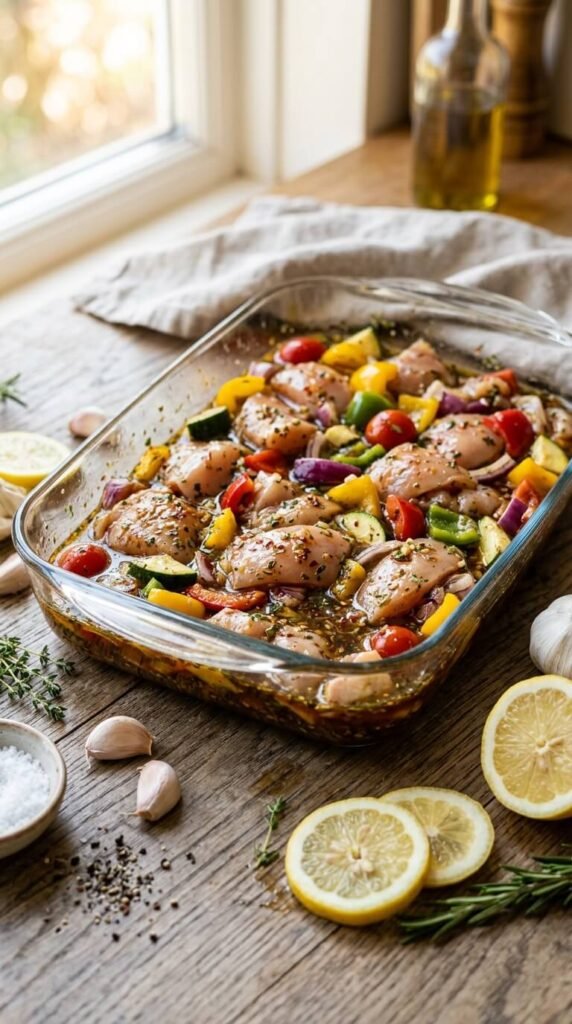
Thread Skewers the Smart Way
How you assemble your kabobs actually affects how evenly they cook, especially without a grill’s intense, all-around heat.
- Group similar-cooking-time ingredients together rather than alternating randomly — a piece of zucchini between two chunks of raw chicken often finishes way before the chicken does
- Leave a little space between pieces rather than packing them tightly — this allows heat to reach all sides
- Cut ingredients to a similar size so everything cooks at roughly the same rate
- Use metal skewers if you have them — they conduct heat from the inside out, helping things cook a bit more evenly indoors
- If using wooden skewers, soak them in water for 20–30 minutes first to prevent burning under direct broiler heat
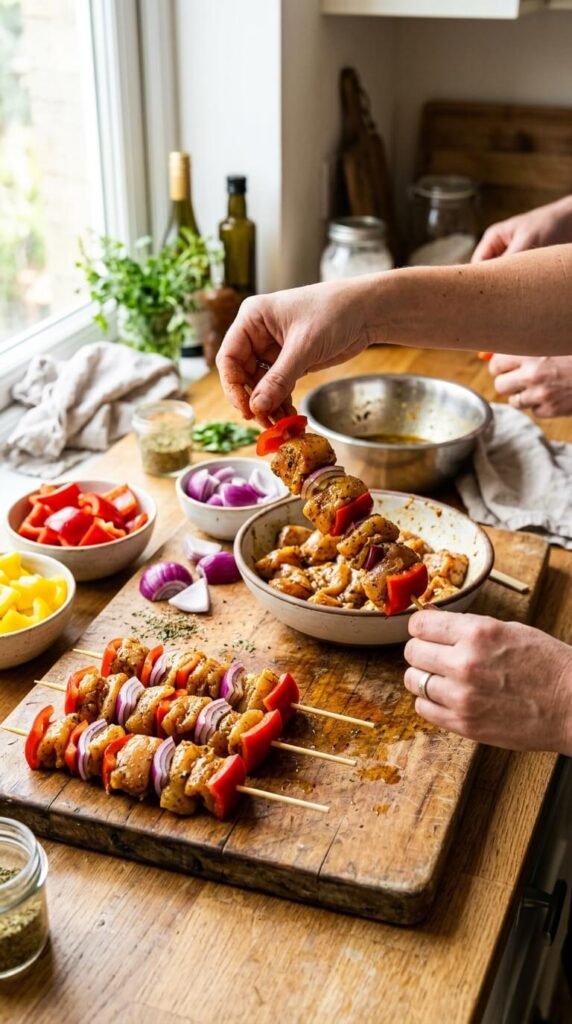
Cook With High, Direct Heat
Whichever method you choose, the goal is the same: hot, direct heat that creates color and char quickly, without overcooking the inside.
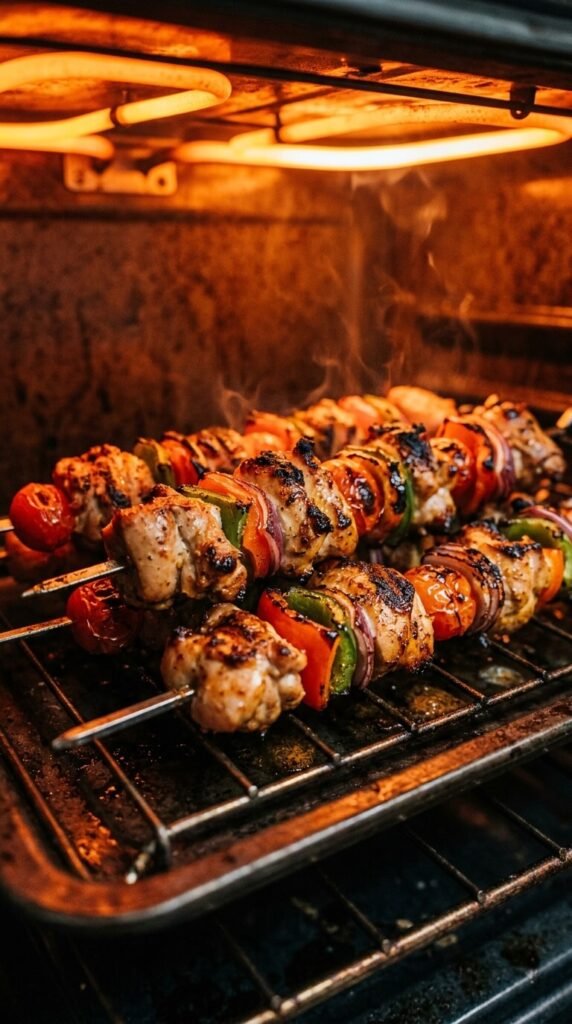
Broiler method:
- Position the oven rack about 6 inches from the broiler element
- Preheat broiler to high
- Place skewers on a foil-lined baking sheet
- Broil for 4–5 minutes per side, watching closely, until charred and cooked through
Grill pan or skillet method:
- Heat the pan over medium-high heat until very hot
- Add a thin layer of oil
- Place skewers in the pan, turning every 2–3 minutes to char all sides
- Total cooking time is usually 8–10 minutes depending on protein
Air fryer method:
- Preheat to 400°F
- Arrange skewers in a single layer, trimming handles if needed to fit
- Cook for 8–10 minutes, flipping halfway through
Check for Doneness the Right Way
Indoor methods can cook a little differently than an open grill, so don’t rely on time alone.
- Chicken: internal temperature of 165°F
- Beef or lamb: 130–135°F for medium-rare, 140–145°F for medium
- Shrimp: opaque and curled into a “C” shape, not a tight “O” (which signals overcooking)
- Use an instant-read thermometer inserted into the thickest piece of protein on the skewer for an accurate read
Serve Them Up
- Squeeze fresh lemon juice over the skewers right before serving
- Serve over rice, with warm pita, or alongside a simple yogurt sauce
- Sprinkle with fresh herbs like parsley or mint for brightness
Grill-Worthy Flavor, No Grill Required
Kabobs don’t need a backyard or a grill grate to taste incredible. With the right marinade, smart skewer assembly, and high direct heat from your broiler, grill pan, or air fryer, you can get genuinely satisfying char and flavor right from your kitchen — any season, any weather.
Save this guide for the next time you’re craving kabobs but the grill isn’t an option — your indoor setup has got this. 🍢🔥