There’s nothing more disappointing than lifting a meatball out of the pan only to watch it crumble apart into a sad pile of loose meat. You did everything right, or so it seemed — and yet here you are, eating meat sauce instead of meatballs. The good news is that falling-apart meatballs almost always come down to one of a few fixable issues, and once you know them, you’ll get perfectly round, sturdy meatballs every single time.
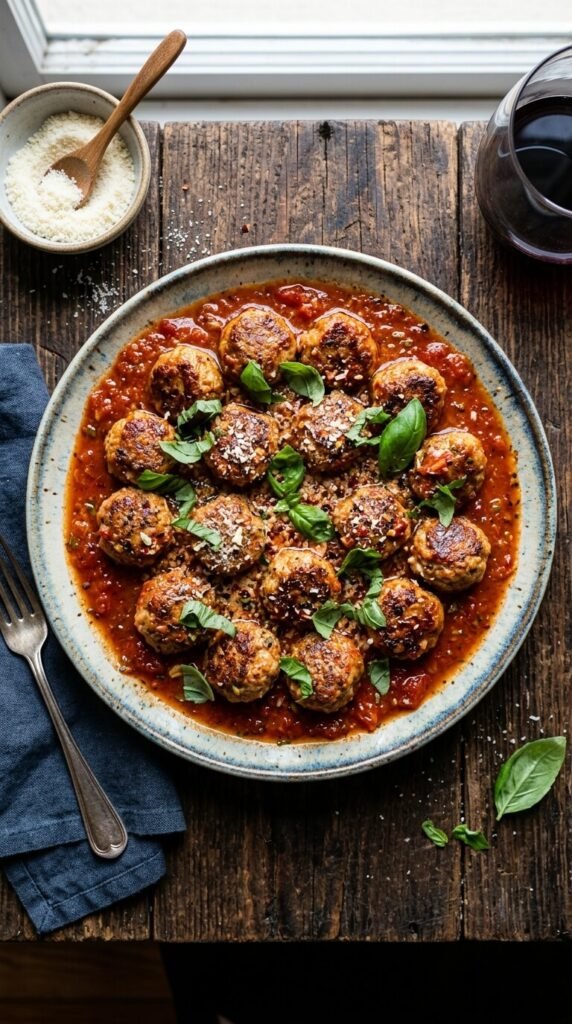
The Binder Is Everything — Don’t Skip It
This is the single most important factor in whether your meatballs hold together. Ground meat alone has nothing to bind it once it heats up and the proteins start to separate. You need a binder system that holds everything in place.
The classic binder formula:
- An egg — acts as glue, helping bind the meat, breadcrumbs, and seasonings into one cohesive mixture
- Breadcrumbs soaked in milk (called a panade) — this is the real secret professional kitchens use; dry breadcrumbs alone will actually pull moisture out of the meat, but a milk-soaked panade adds moisture back in while still providing structure
The basic ratio for 1 pound of ground meat:
- 1 egg
- ½ cup breadcrumbs
- ¼ cup milk
Mix the breadcrumbs and milk first, let them sit for 5 minutes until the breadcrumbs soften completely, then mix this paste into your meat along with the egg.
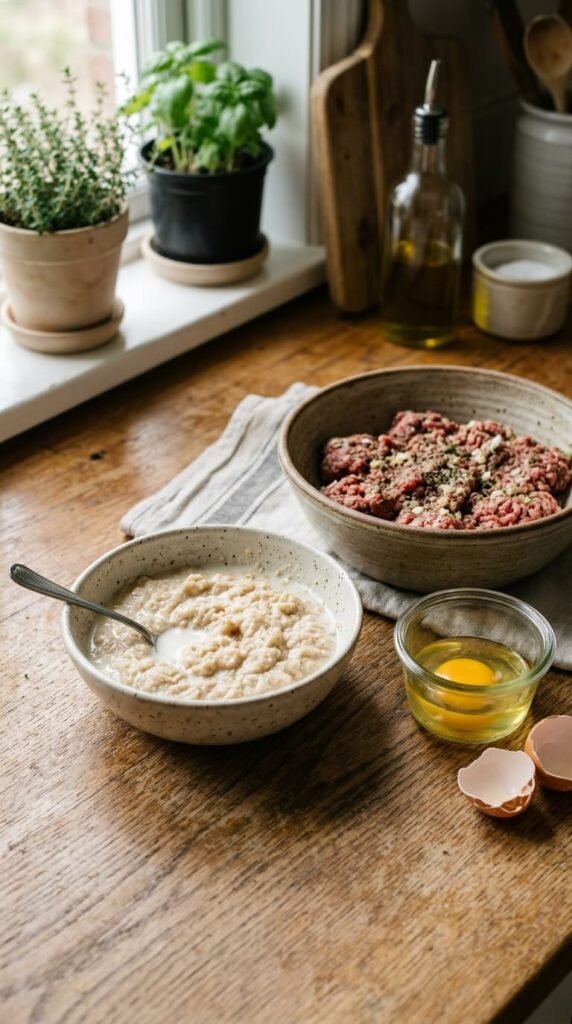
Don’t Overmix — This Ruins Texture and Structure
It feels productive to really work the meat mixture until it’s completely uniform, but overmixing is actually one of the top reasons meatballs turn out dense, tough, or prone to falling apart once cooked.
Why this happens: Overmixing activates the proteins in the meat too much, creating a tight, rubbery texture that doesn’t hold together well under heat — it can actually crack and separate instead.
The fix:
- Mix with your hands, not a stand mixer — you have more control over how much you’re working the meat
- Combine just until ingredients are evenly distributed — you should still be able to see slight texture variation, not a completely smooth paste
- Handle the mixture as little as possible once it’s combined
A gentle touch here pays off enormously in the final texture.
Roll Them With a Light, Consistent Hand
How you actually shape the meatballs matters more than people expect.
- Use a light touch when rolling — packing the mixture too tightly squeezes out moisture and creates a dense ball that’s more likely to crack
- Keep your hands slightly damp — this prevents the mixture from sticking to your palms and helps create a smoother, more cohesive surface
- Make them a consistent size — uneven meatballs cook at different rates, and smaller ones can dry out and crumble while larger ones are still soft in the middle
- A cookie scoop helps with consistency if you’re making a large batch
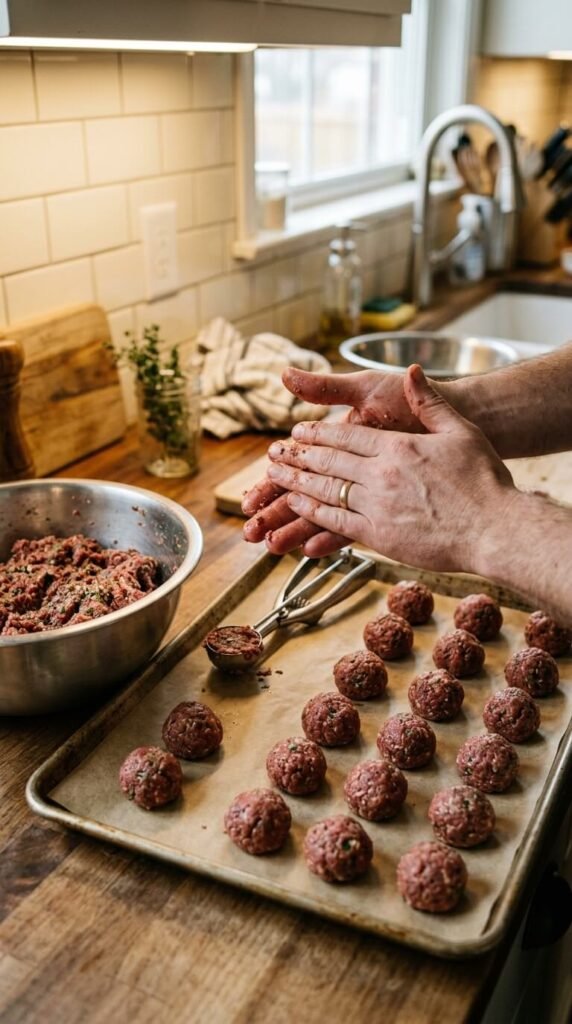
Chill Before Cooking — This Step Is Often Skipped
Here’s a trick that makes a real difference and takes almost no effort: refrigerate your shaped meatballs for at least 20–30 minutes before cooking.
Chilling does two important things:
- Firms up the fat, which helps the meatballs hold their shape as they cook instead of slumping or spreading
- Gives the binder time to set, creating a more cohesive structure before any heat is introduced
If you’re short on time, even 15 minutes in the freezer can make a noticeable difference.
Cook Them the Right Way for Maximum Structure
How you cook meatballs affects their structural integrity just as much as how you make them.
Best methods for sturdy meatballs:
- Bake first, then simmer in sauce — bake at 400°F for 15–18 minutes until they’ve developed a firm crust, then transfer to simmering sauce to finish. This method gives meatballs the best chance of holding their shape, since they’re already mostly set before hitting liquid.
- Sear in a skillet before saucing — browning all sides in a hot pan for 1–2 minutes each creates a structural crust before the meatballs ever touch sauce
- Avoid dropping raw meatballs directly into simmering sauce — without a crust formed first, this is the most common way meatballs fall apart, since the liquid softens the exterior before it has a chance to set
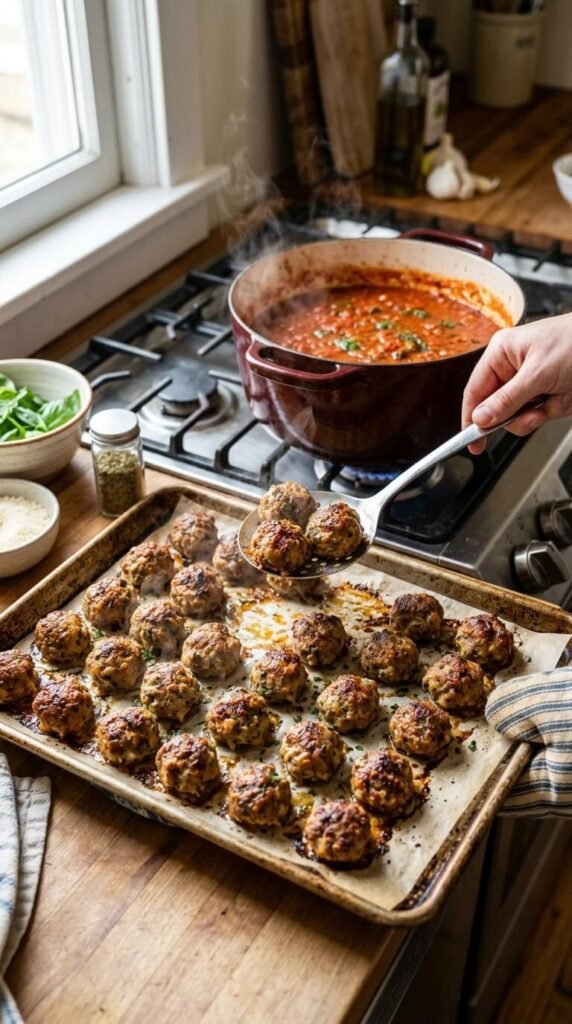
Let Them Finish Gently in Sauce
Once your meatballs have a set crust, simmering them in sauce is safe and actually beneficial — it adds flavor and keeps them moist on the inside.
- Simmer gently, not at a hard boil — aggressive bubbling can knock meatballs around and cause them to break apart against the pot
- Avoid stirring too much — let them simmer mostly undisturbed, giving an occasional gentle stir rather than vigorous mixing
- 15–20 minutes in simmering sauce is usually enough to finish cooking through and absorb flavor
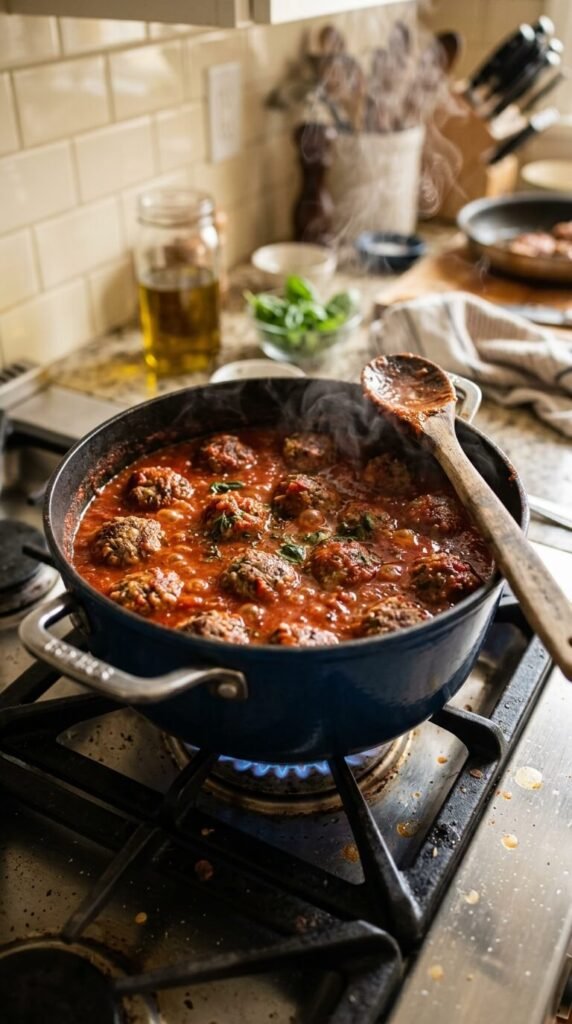
Sturdy, Round, and Holding Their Shape
Meatballs that hold together perfectly come down to a few key habits: the right binder, gentle mixing, a light hand while rolling, a chill before cooking, and a proper sear or bake before they ever touch sauce. None of it is complicated — it’s just knowing where the common mistakes happen.
Save this guide for your next pasta night — your meatballs are about to hold their shape like never before. 🍝🧆