There’s a reason noodle bowls have taken over every corner of the internet — they’re endlessly customizable, deeply satisfying, and somehow manage to feel both comforting and exciting at the same time. But there’s a real difference between a noodle bowl that’s bland and one-note and a noodle bowl that hits every flavor note at once: salty, sweet, spicy, tangy, and rich. Here’s exactly how to build that second kind, every time.
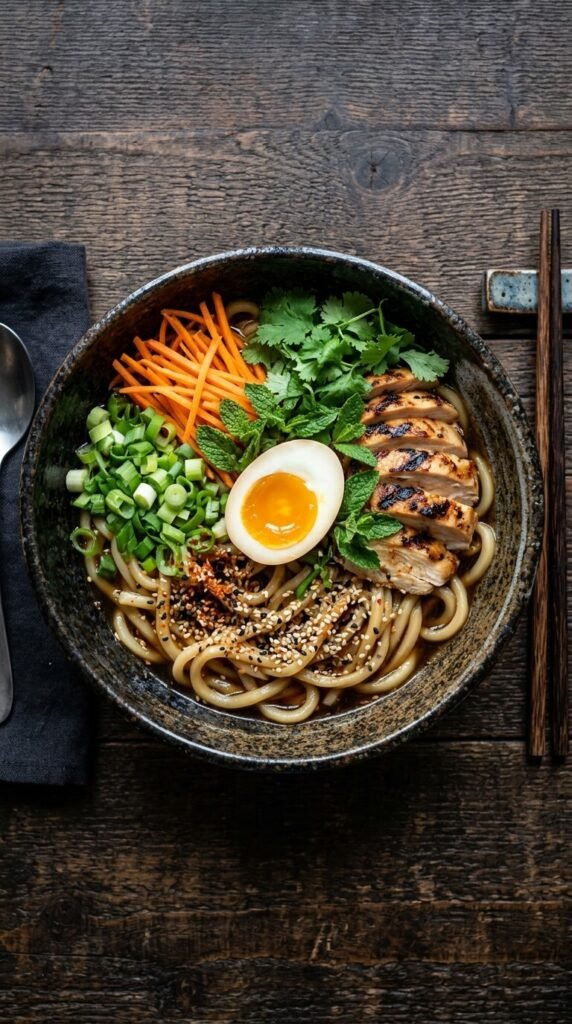
Start With the Right Noodle for the Job
Not all noodles behave the same way, and choosing the right one sets the foundation for the whole bowl.
Popular options and what they’re best for:
- Rice noodles — light, slightly chewy, great with Thai or Vietnamese-style bowls
- Udon noodles — thick and chewy, perfect for heartier, savory broths and sauces
- Soba noodles — nutty flavor, works beautifully cold or in lighter broths
- Ramen noodles — springy and substantial, ideal for rich, savory bowls
- Regular spaghetti — a totally valid substitute in a pinch; cook it slightly past al dente for a softer, noodle-bowl-appropriate texture
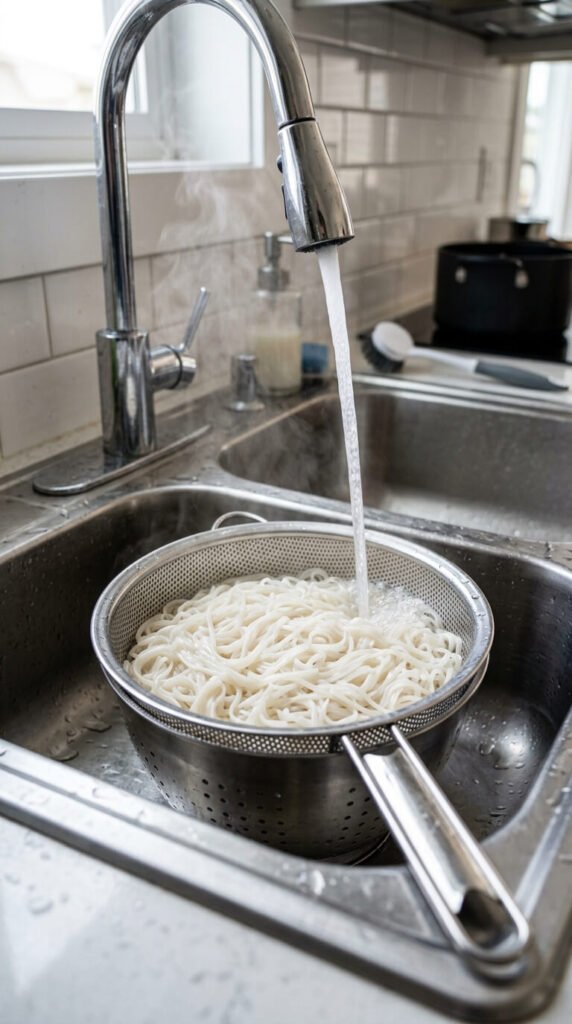
Cooking tip that matters: Always slightly undercook your noodles, then rinse them in cold water once drained. This stops the cooking process immediately and prevents them from turning mushy once tossed with hot sauce or toppings.
Build a Sauce With Layered Flavor
This is where most noodle bowls succeed or fail. A single-note sauce — just soy sauce, just peanut butter, just chili oil — never hits as hard as one with multiple flavor dimensions working together.
The five flavor categories every great sauce needs:
- Salty — soy sauce, fish sauce, or miso paste
- Sweet — honey, brown sugar, or maple syrup
- Sour — rice vinegar, lime juice, or tamarind paste
- Spicy — chili oil, sriracha, or gochujang
- Rich — sesame oil, peanut butter, or tahini
A reliable all-purpose noodle bowl sauce:
- 3 tablespoons soy sauce
- 1 tablespoon rice vinegar
- 1 tablespoon honey
- 1 tablespoon peanut butter or tahini
- 1 teaspoon sesame oil
- 1 teaspoon chili oil or sriracha
- 1 clove garlic, grated
- 1 teaspoon grated ginger
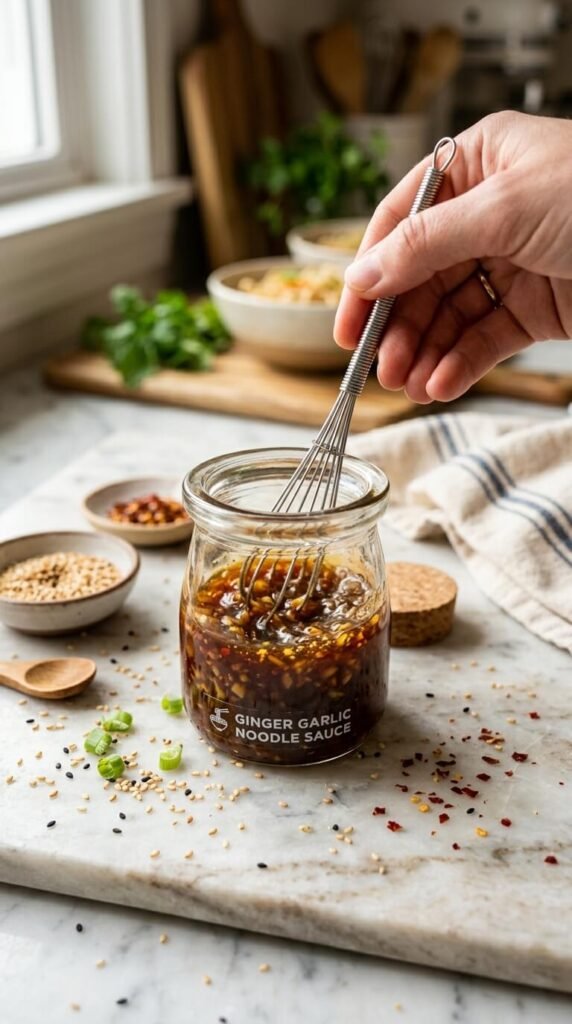
Whisk everything together until smooth. If it’s too thick, loosen it with a tablespoon of warm water until it reaches a pourable consistency.
Choose a Protein That Adds Its Own Flavor Layer
Your protein shouldn’t just sit there — it should contribute its own seasoning to the bowl, not rely entirely on the sauce poured over the top.
Best options and how to season them:
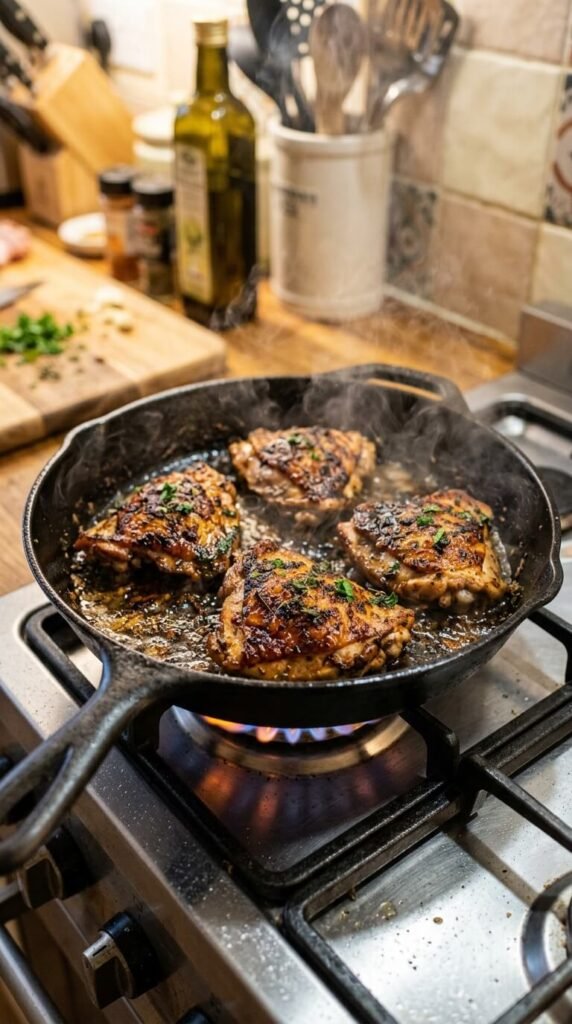
- Marinated chicken thighs — soy sauce, garlic, and a touch of honey, then seared until caramelized
- Crispy tofu — pressed, cubed, tossed in cornstarch, and pan-fried until golden on all sides
- Seared shrimp — quick sear with garlic and a splash of soy sauce, just 2–3 minutes per side
- Ground pork — browned with ginger, garlic, and a splash of soy sauce for a Thai-inspired bowl
- Soft-boiled egg — not a primary protein, but an essential topping that adds richness when the yolk breaks into the bowl
Cooking the protein with its own seasoning, rather than plain, means every bite carries flavor — not just the bites that happen to catch extra sauce.
Add Texture With Fresh and Crunchy Toppings
This is the step that takes a noodle bowl from “good” to genuinely exciting. Texture contrast matters just as much as flavor.
Crunchy and fresh additions:
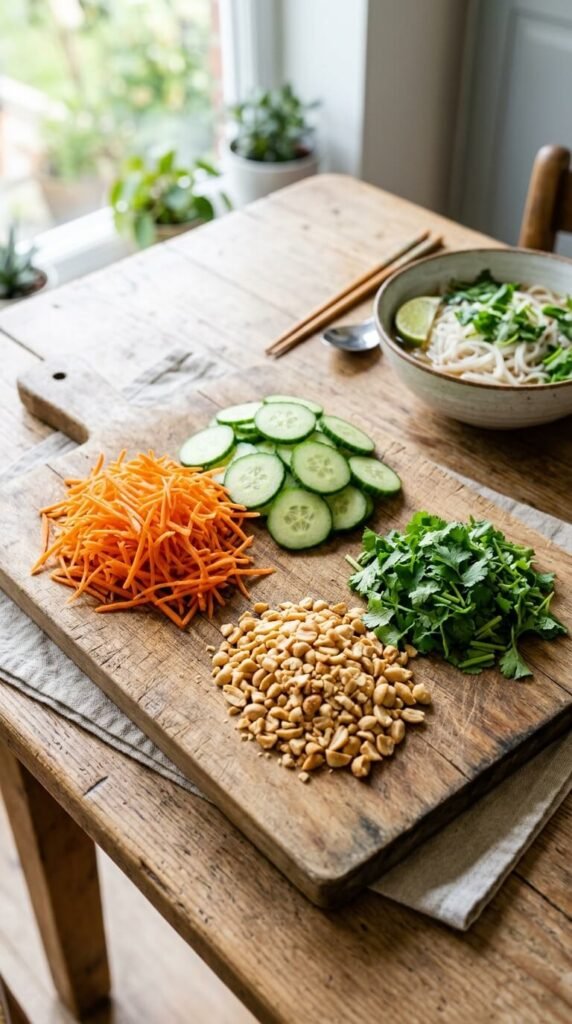
- Shredded carrots and cabbage
- Sliced cucumber
- Bean sprouts
- Chopped peanuts or cashews
- Crispy fried shallots or garlic
- Fresh herbs — cilantro, mint, or Thai basil
- Thinly sliced green onion
The rule of thumb: include at least one crunchy element and one fresh herb in every bowl. Without them, even a flavorful sauce can feel one-dimensional and heavy by the last few bites.
Assemble With Intention, Not Just a Dump-and-Mix
How you build the bowl actually affects how the flavors come together in each bite.
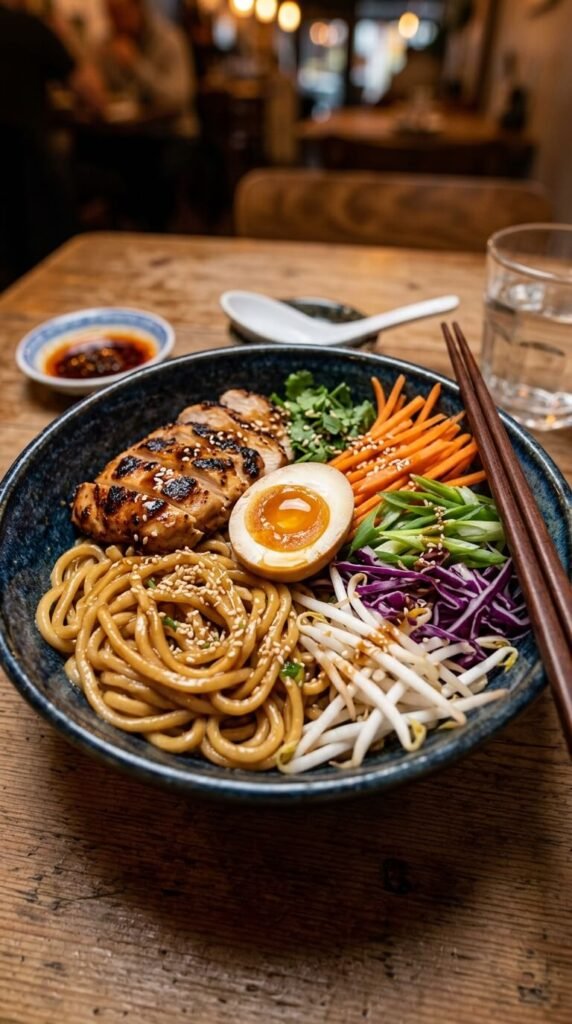
- Start with noodles as the base layer
- Toss noodles with a portion of the sauce before adding anything else — this ensures every strand gets coated, not just the top
- Arrange protein and toppings in sections rather than mixing everything together — this creates a more visually appealing bowl and lets people control their own bite combinations
- Drizzle remaining sauce over the top, focusing on the protein and noodles rather than the fresh toppings
- Finish with a sprinkle of sesame seeds and a final scatter of fresh herbs
Big Flavor, Every Single Bowl
The secret to a genuinely flavorful noodle bowl isn’t one magic ingredient — it’s layering. The right noodle, a sauce built across multiple flavor categories, a protein that’s seasoned on its own, and fresh crunchy toppings all working together. Once you understand the formula, you’ll never make a boring noodle bowl again.
Save this guide and start building your own flavor-packed noodle bowls tonight. 🍜🥢