You can do everything right in the kitchen — perfectly seasoned chicken, beautifully roasted vegetables, fluffy grains — and still end up with sad, stale meals by Thursday if your storage strategy is off. Freshness after the cooking is done comes down to fridge organization, smart freezing decisions, and knowing which ingredients age well and which ones don’t. Here’s the system that actually keeps meal prep tasting like day one, all week long.
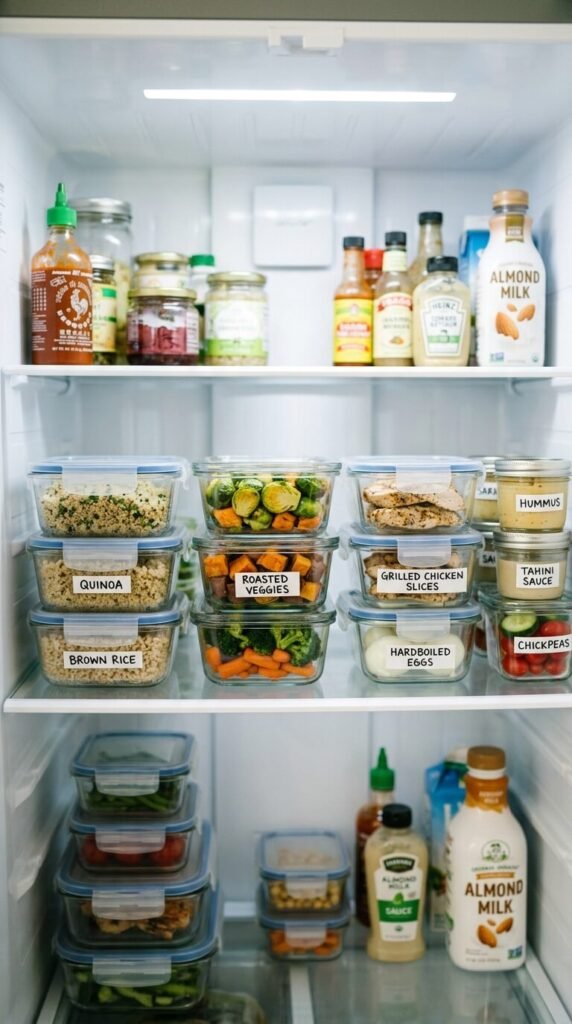
Understand Your Fridge’s Temperature Zones
Most people treat their fridge as one uniform cold space, but different areas actually run at different temperatures — and using that to your advantage extends freshness significantly.
- The back of the fridge is coldest — ideal for proteins, dairy, and anything you want to stay fresh longest
- The door is the warmest zone — best reserved for condiments and items that don’t spoil easily, not meal prep components
- Top shelves run slightly warmer than bottom shelves — good for ready-to-eat items you’ll grab first
- Bottom shelves stay coldest and most consistent — the best spot for raw proteins and your most perishable prepped items
- Crisper drawers are designed for produce, but humidity settings matter — high humidity for leafy greens, low humidity for fruits and vegetables that release ethylene gas
Organizing with this in mind means your most fragile prepped ingredients land in the zones that actually protect them best.
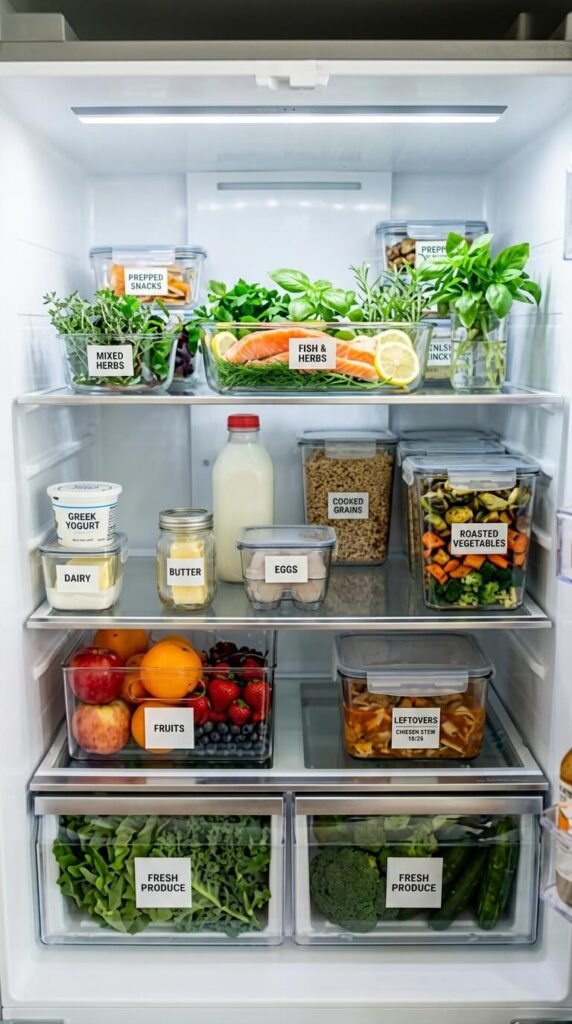
Group by “Eat First” vs. “Lasts Longer”
This single organizational habit prevents more food waste than almost anything else. Not everything in your meal prep ages at the same rate, so treating it all the same is a setup for some things going bad before you get to them.
Eat within 2–3 days:
- Fish and seafood
- Fresh herbs
- Leafy greens, once chopped
- Anything with a dairy-based sauce
Lasts 4–5 days:
- Cooked chicken, beef, and pork
- Roasted vegetables
- Cooked grains like rice and quinoa
- Hard-boiled eggs (in the shell)
Lasts close to a week:
- Canned beans, once drained and rinsed
- Sturdier raw vegetables like carrots and cabbage
- Vinegar-based dressings and sauces
The fix: Place your “eat first” items at eye level, front and center in the fridge. Out of sight genuinely does mean out of mind, and the back of a shelf is where forgotten food goes to spoil.
Know When to Freeze Instead of Refrigerate
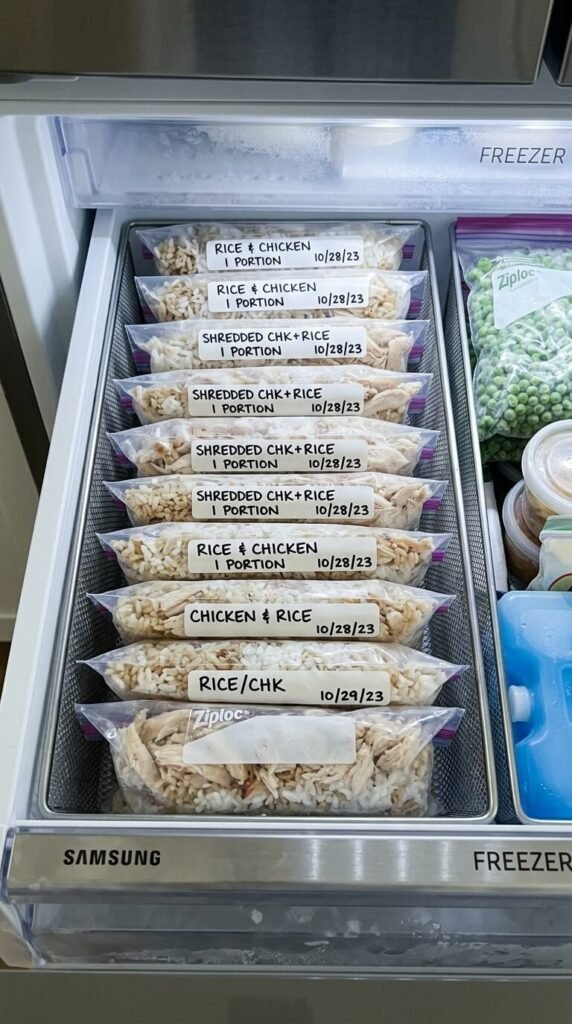
This is the step that saves the most food from going to waste, and it’s worth building into your prep routine from the start rather than as an afterthought once something’s already starting to turn.
Freezes well:
- Cooked ground meat and shredded chicken
- Soups and stews
- Cooked grains like rice, quinoa, and farro
- Sauces, especially tomato-based ones
- Baked goods like muffins or breakfast bars
Doesn’t freeze well:
- Raw, crisp vegetables like cucumber or lettuce — they turn watery and limp once thawed
- Dairy-based sauces — they often separate and turn grainy
- Fried or crispy foods — they lose their texture entirely
A smart habit: if you’ve made a big batch of something that freezes well, portion and freeze half immediately rather than waiting to see if you’ll actually eat it all within the week. This single decision prevents an enormous amount of meal prep from quietly going bad in the back of the fridge.
Keep Moisture Where It Belongs
A huge amount of “this went bad too fast” complaints actually trace back to moisture management, not the food’s natural shelf life.
- Let hot food cool completely before sealing it — trapped steam creates condensation, which speeds up spoilage significantly
- Line containers with a paper towel under leafy greens or herbs to absorb excess moisture
- Store cut vegetables slightly damp, but not wet — a barely moist paper towel wrapped around herbs keeps them fresher far longer than a dry or soaking one
- Keep sauces and dressings separate from anything you want to stay crisp — moisture migrates, and it only takes a few hours of contact to soften something that was perfectly crunchy
Build a Simple Weekly Check-In Habit
Even the best storage system benefits from a quick mid-week review. This takes less than five minutes but meaningfully cuts down on waste.
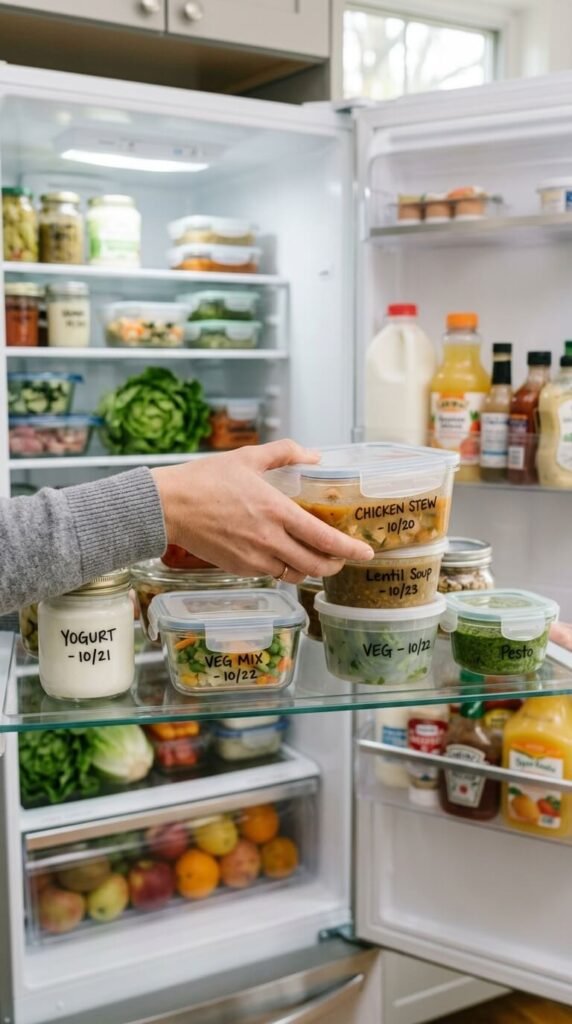
- Do a quick fridge scan every 2–3 days — move anything close to its “eat by” window to the front
- Smell-check anything uncertain before assuming it’s still good or automatically tossing it
- Reorganize as you go — once a container is empty, shift things forward rather than leaving gaps
- Plan one “clean out the fridge” meal later in the week, using up odds and ends in a stir-fry, soup, or grain bowl
A System, Not Just a Shelf
Keeping meal prep fresh all week isn’t about luck or a single magic container — it’s about understanding your fridge’s zones, prioritizing what needs to be eaten first, knowing when to freeze instead of refrigerate, and managing moisture carefully. Build these habits once, and they keep paying off every single week.
Save this guide and put the system to work next time you meal prep — fresher food, less waste, way less stress. 🧊🥗